Questions That Decide a Mixed Mirror Order Quote
A single inquiry can hold four different mirrors and still be one job — a wooden mirror for a hotel corridor, an arch mirror over a dressing table, a gym panel for a fitness studio, and the word mirroire in the subject line. Four words, four sets of questions. Get the questions wrong and the quote is wrong too.
We build mirrors for importers, hotel projects and retail brands, and mixed inquiries reach us weekly. Here is the order we ask them in, and what each answer changes on the production sheet.

What does the word mirroire actually tell a factory?
It tells us the buyer found a reference image before they found a supplier — and nothing about the glass.
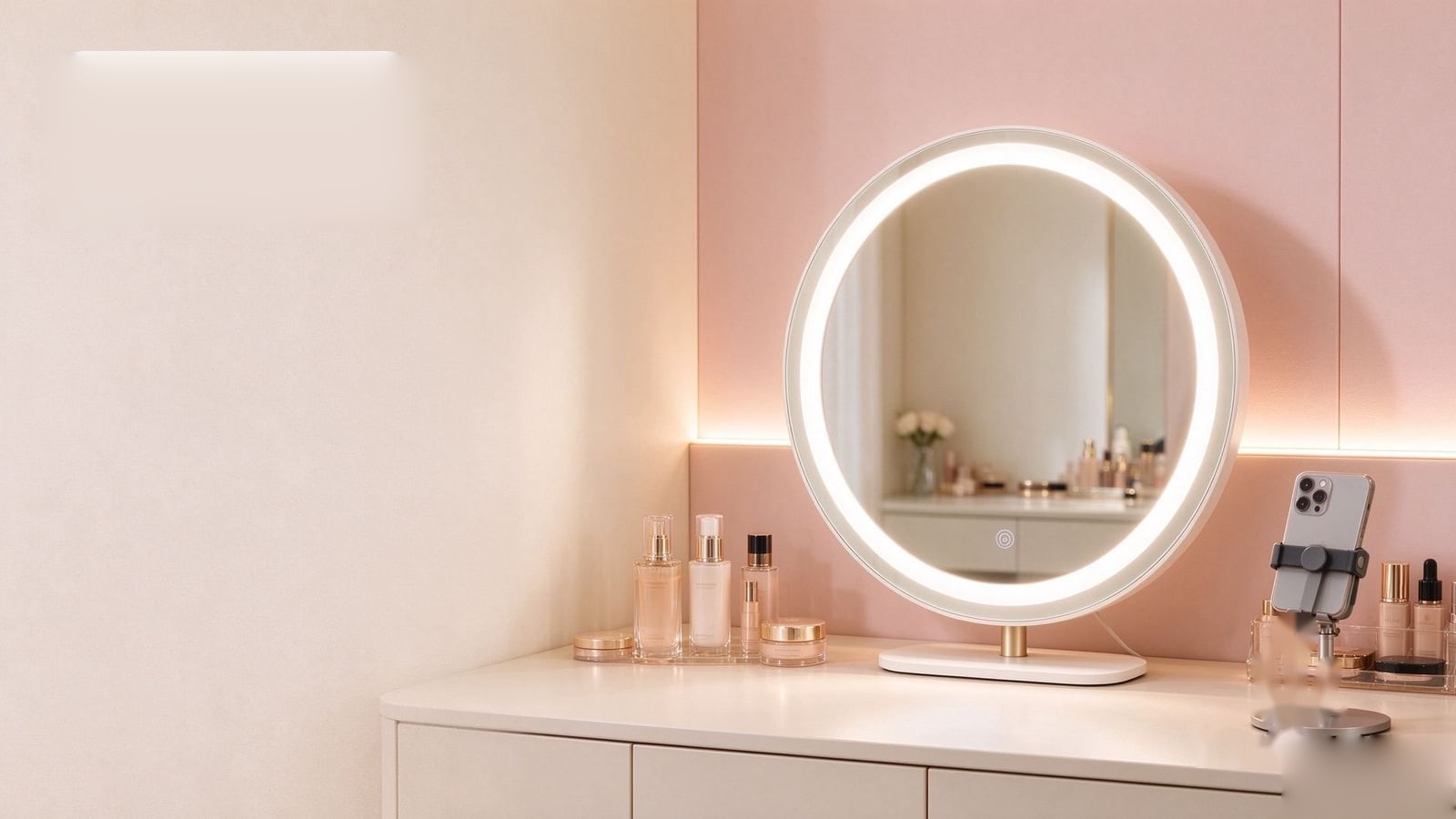
Mirroire is a misspelling of the French miroir. Spanish buyers write espejo, German speakers write Spiegel, and the person copying a Pinterest caption writes mirroire. That is useful information.
It is not a specification. Nothing in a mirroire brief tells us the glass thickness, the edge work, or whether the back needs a safety film.
So we treat it as a mood and go looking for the drawing or photo behind it.
Nine times out of ten the reference turns out to be a wooden mirror with a slim frame, or a frameless panel with a polished edge — two different production paths.
Ask yourself: could your supplier build your mirroire from the word alone? If yes, they are guessing.
Is the wooden mirror load-bearing or decorative?
This is the fork in the road for any wooden mirror order, and buyers skip it constantly.
A decorative wooden mirror hangs on a wall and carries its own weight plus the glass; the frame is mostly a visual device.
A load-bearing frame — a full-length hotel mirror, a floor-standing piece — is a structural component, and the joinery has to be specified as such.
The same drawing can be quoted two ways, with wildly different results. Three frame details settle it:
- Species or finish. Oak, walnut, ash and MDF-with-veneer all behave differently with humidity.
- Frame depth. A shallow frame looks elegant in a bedroom and warps cheerfully in a wet room.
- How it meets the glass. Rebate, clip or adhesive bed — each changes how the unit is serviced later.
A wooden mirror for a hotel guest bathroom and one for a reception wall are not the same product, even at identical dimensions. Tell us the room, not just the look.
How many measurements does an arch mirror need?
Three — width, total height and a radius tied to something specific.
Everyone measures a rectangle the same way. Arches are where drawings and reality part company.
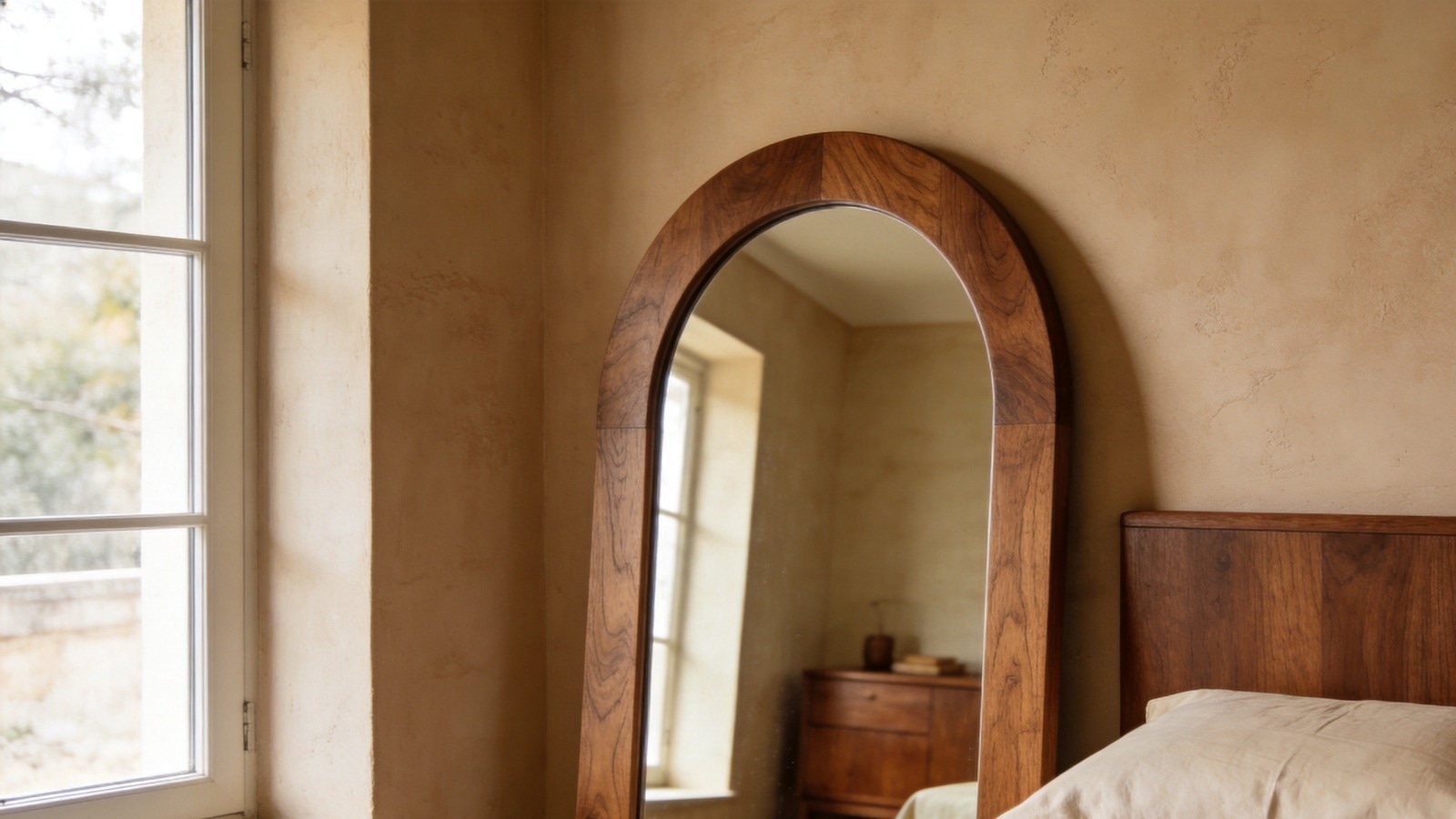
Is the arch a true semicircle on a straight body, a segmental arc with a shallower sweep, or an eyebrow shape that never closes?
Those are three cutting programs, three templates and three polishing setups on the curved edge. For any arch run we ask for a 1:1 template or a CAD file with the arc defined by points, not by eye.
A phone photo is fine for a mood board, not for a cutting table. Then there is the wall. The arch needs its spring line to land somewhere sensible above the fixture below.
We have seen a beautiful arch foul a light fitting by 20 mm — noticed on installation day, after the container had sailed.
One more thing: the curve shows every flaw. Edge polishing on a radius takes longer than on a straight run, and that time sits in your unit price.
If an arch quote comes back identical to a rectangle quote of the same area, ask why.
Why is a gym mirror a performance brief, not a size label?
Because weights get dropped and equipment gets wheeled past — the assembly takes knocks a bedroom mirror never sees.
Gym mirror requests arrive looking simple: big panels, mirrored wall, done. They are not simple, and the conversation moves onto three practical points.
- Panel size versus handling. Wider panels mean fewer seams, but more weight per unit and more risk in transit and on the lift.
- What happens behind the glass. Backing, safety film and mounting method are the parts nobody photographs and everybody regrets skipping. Put the backing spec in writing on the quote.
- Who installs it. Gym walls are often drywall over studs, sometimes block. The anchor schedule has to match the wall — a site decision, not a factory one.
We would rather slow a project at the question stage than rebuild a panel after a site failure.
Which wall and which market is the order destined for?
Two mirrors with identical dimensions can need different paperwork depending on where they ship.
We ship to North America and Europe, and both markets expect evidence. Our products carry CE and ETL certification, and buyers should ask for the certificate numbers early.
The artwork, labelling and packaging often have to reflect them. Finding that out after the cartons are printed is an expensive way to learn.
Then the wall itself. Solid masonry, drywall with timber studs, tile over cement board and rented accommodation with a no-drill clause all pull the design in different directions.
That single question — what is behind the plaster — has killed more mirror specifications than any other.
How do four briefs become one purchase order?
They don't share tolerances, packing or inspection criteria — they share a project name and a delivery address.
Mixed inquiries are normal, and not a problem. The trick is to split them before they reach the factory floor.
| Line item | What drives the spec | What must be approved separately |
|---|---|---|
| Wooden mirror | Frame species, depth, humidity | Frame construction and finish |
| Arch mirror | Width, height, radius | 1:1 template or CAD arc points |
| Gym panel | Wall construction, impact risk | Backing, safety film, anchor schedule |
| Mirroire reference | The photo behind the word | A drawing before quoting |
For reference, our standard terms sit at a 50-piece minimum order with a 15–25 day lead time, and custom work runs through OEM/ODM. Those numbers apply to the order, not to each mirror type.
When we return a price on a mixed inquiry, we send the assumptions with it: frame spec, edge treatment, backing, certification route and packing method.
If any assumption is wrong, the buyer can correct it before tooling — that is the whole point of asking four questions instead of one.
常见问题 → FAQ
Can a wooden mirror and an arch mirror ship in the same order?
Yes, but they are quoted and approved as separate line items. The frame construction and the curved-edge work are different processes, and the 50-piece minimum applies to the order as a whole.
What does "mirroire" mean on a purchase order?
It is a common misspelling of the French word for mirror. We treat it as a reference to a style rather than a technical specification, and we ask for a drawing or photo before quoting.
How thick should a gym mirror be?
That depends on panel size, mounting method and the impact risk on site. We do not quote gym panels from a size alone — send the wall construction and the panel layout, and backing and thickness follow from that.
Do your mirrors come with CE and ETL certification?
Yes. Both are part of our standard documentation for North American and European shipments. Ask for the certificate details at the quotation stage so labelling and packaging can be planned around them.
How long does a custom arch or wooden mirror order take?
Our standard lead time is 15–25 days. Arch mirrors with a new radius, or wooden frames in a new finish, may need a sample approval step before the main run, so build that into your launch date.
Author: Yucron Content Team | Company: YuCron (驭辰科技), Shahe, Hebei, China Last updated: 2026-10-25 Data sources: YuCron company profile, certifications list and manufacturing capabilities pages (yucron.com, accessed 2026-10). Scope note: Commercial terms (MOQ 50, 15–25 day lead time) reflect YuCron's published terms as of October 2026. Confirm current terms in each quotation.
Related Yucron Products
- antique carved full-length mirror
- arched dressing mirror for bedrooms
- freight questions before a mirror order
- Reference note: Quote-stage safety checks start from the US glazing rules in 16 CFR 1201 (view)