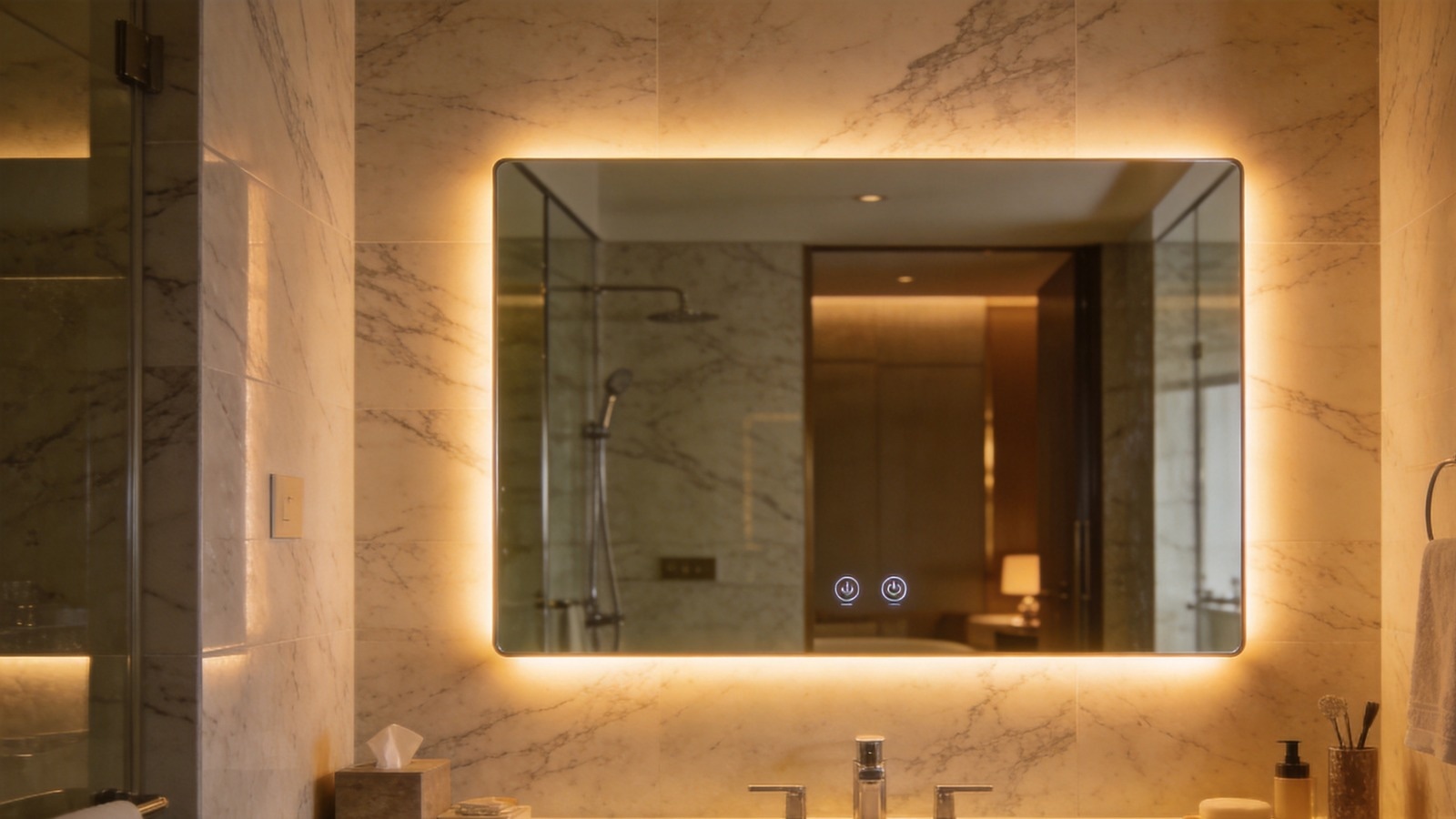

Choosing an LED smart mirror supplier is not the same job as choosing a mirror. A plain mirror is glass, a frame and a carton. A smart mirror adds a driver, a touch sensor, a demister pad, a colour-temperature board and sometimes a wireless chip — each one a place where a weak supplier saves money quietly. That saving surfaces later as blocked certification, dead units on arrival, or a returns rate that eats the margin your price list promised.
Vetting Beats Bargaining
A two-dollar gap in unit price looks decisive on a spreadsheet. It rarely is. The cost that decides whether an order makes money sits in four places:
| Cost driver | What a weak supplier does | What it costs you |
|---|---|---|
| Certification file | Sends paperwork with a different model number | Customs delays, marketplace takedown, re-testing at your cost |
| Electronics | Uncertified driver, undersized heat path | Field failures and warranty claims |
| Packaging | Thin carton, single-layer foam | Transit breakage becomes a claim you fund |
| Feature QC | Ships touch panels with no burn-in | Returns and lasting review damage |
Bargaining comes after vetting. Reversed, you negotiate a discount on a product you cannot sell.
Step 1 — Factory or Trading Company?
A trading company is flexible on small mixed orders and slow on engineering change; a factory controls the driver, the glass and the panel, and fixes a defect at its source. Three questions settle it on the first call: is the anti-fog pad bonded on your own line, which electronics do you buy in and from which brand, can I see the line and QC station on a live video call. The factory-direct guide runs the full channel comparison and the five checks that separate a factory from a reseller.
Step 2 — Read the Certification File Like an Inspector
A photograph of a CE or UL mark proves nothing. What matters is a document set naming your exact model.
- EU: CE declaration of conformity plus LVD, EMC and RoHS reports; a Radio Equipment Directive file once Bluetooth or WiFi is added.
- US: UL 1598 for lighting, UL 62368-1 where a screen or wireless module is fitted, FCC for transmitters.
- GCC: 220–240V specification plus Gulf-region electrical documentation for your market.
Model numbers catch most problems. A certificate for S-6040 does not cover S-6040B with a Bluetooth board, and customs teams compare strings rather than brands. Our US importer checklist lists the paperwork questions to copy into a first email; the certification library shows what a complete file looks like.
Step 3 — Set the MOQ and Price Ladder First
State your target quantity before asking for a price, then ask for the ladder rather than a single figure.
| Quantity band | What to ask for |
|---|---|
| Sample | Ex-works unit price, so models compare like with like |
| Trial order | The band where the price steps down |
| Full container | Freight-inclusive figure and loading plan |
Standard LED smart mirror MOQs commonly fall between 2 and 10 pieces; custom sizes, frame colours and private-label cartons usually push the minimum to 50 or more. Ask which features sit inside the standard minimum and which trigger a separate run.
Figures above are typical industry ranges, not a factory commitment. Confirm against the written quotation.
Step 4 — Build a Sample Test Protocol
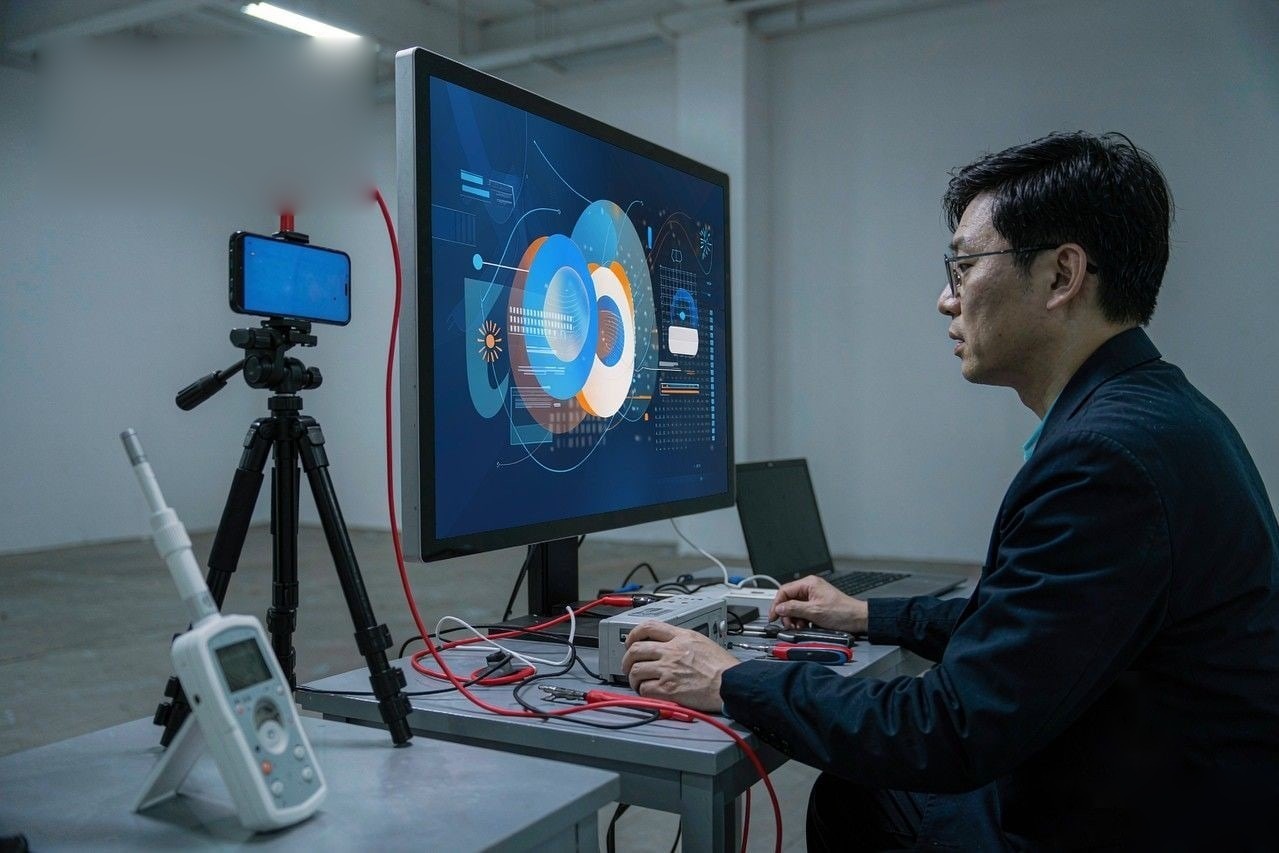
A sample confirms colour and finish, not reliability — which is what you are actually buying. Run this for a week before the deposit:
- Cycle the touch switch a few hundred times, noting missed presses.
- Run the demister for a week; check the pad for delamination and the surface for hot spots.
- Switch colour temperature repeatedly and confirm the settings stay distinct.
- If wireless is fitted, pair, unpair, re-pair, then leave it connected overnight — reconnection behaviour is where returns originate.
- Drop the carton from handling height, then inspect the frame corners.

A supplier that resists a written protocol is telling you the test will fail. Once vetting clears, the next step for brand owners is OEM/ODM customization.
Step 5 — Audit the Line, Not the Showroom
Showrooms are staged. Ask for the QC station: the burn-in rack where smart units sit powered before packing, the driver and panel supplier names with their own certification, and the defect record of the last few runs by type.
Step 6 — Lock Packaging, Defect Rate and Warranty
Three clauses decide who pays when something goes wrong. Put all three in the contract:
- Packaging: carton grade, foam structure, corner protection and the drop-test standard the carton is built to.
- Defect rate: the acceptable percentage, how it is measured, and whether the remedy is replacement, credit or a claim.
- Warranty: term and scope — driver, sensor, pad and glass listed separately.
For European orders, the importer duties that apply are summarised in our floor mirror Europe guide.
One Spec, Three Markets
A single specification across all three markets will over-specify for one and under-document another. The EU, US & Middle East compliance guide breaks each market down market by market.
Red Flags
A supplier that does any of the following does not deserve a sample budget:
- offers to arrange a certificate for a model it does not produce;
- will not name the driver or panel brand;
- quotes a price before asking your market or voltage;
- sends a certification PDF with a model number differing from the quotation;
- asks for full payment up front on a first order.
FAQ
What certifications should an LED smart mirror supplier provide? EU: a CE declaration of conformity with LVD, EMC and RoHS reports, plus a Radio Equipment Directive file for wireless models. US: UL 1598 for lighting, UL 62368-1 for units with a wireless module, plus FCC. GCC: a 220–240V specification and Gulf-region electrical documentation.
What is a normal MOQ for LED smart mirrors? Standard models commonly start between 2 and 10 pieces; custom sizes, finishes or private-label packaging usually raise the minimum to 50 or more.
How long should sampling take? Budget a week, not a day. Touch cycling, a continuous demister run and a wireless reconnection test each need time to expose a fault.
How do I confirm a certificate covers my order? Match the model number on the certificate against the quotation and the carton artwork. If the three do not match exactly, the document does not cover the goods.
Shortlist Suppliers on Evidence
These six checks take about two weeks and cost one sample order. Skipped, they cost a container. New to the category? Start with the smart mirror wholesale sourcing guide.
Send your market (EU, US or GCC), channel (wholesale, project or marketplace) and target quantity. We return model options, the certification file for the exact models quoted, and a sample plan you can run yourself. Browse the LED mirror range or request a quote — we reply within one working day.
Reference & Standards
- Reference note: EU supplier vetting starts with the GPSR obligations explained by the European Commission (view)