Three defects drive the overwhelming majority of full-length mirror returns and complaints: glass distortion, tip-over instability, and transit damage. A B2B buyer who checks these three points in order — flatness test, frame and stand structure, packaging spec — can eliminate the problems before a single container ships. Standard full-length mirror orders run from 50 pieces with a 15–25 day lead time, which leaves room to run every check in this guide on a sample unit before mass production starts.
This is the quality-control checklist we hand to distributors, hospitality buyers and Amazon sellers who source full-length mirrors, written to be run in 15 minutes with no lab equipment.
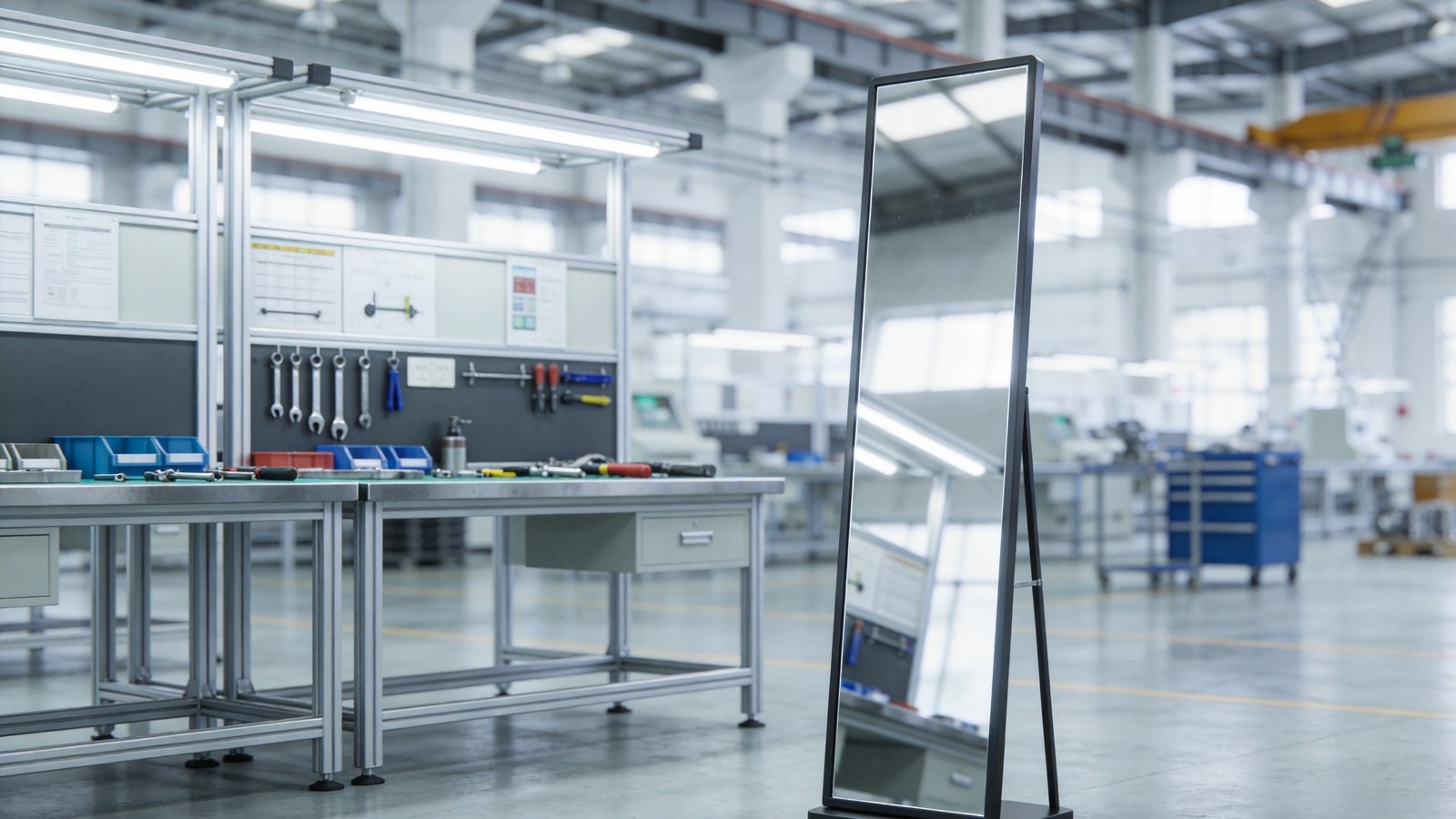
Why Distortion Is the First Thing to Test
A full-length mirror exists to show a true full-body reflection — the moment the glass bends light unevenly, the product fails at its only job. Distortion comes from glass that is not truly flat: wave or roller distortion from lower-grade float glass, or stresses introduced during cutting, edge grinding and framing.
The test is simple. Stand about 1 metre in front of the mirror and observe a straight reference — a door frame, a wall corner, or a striped curtain reflected in the glass. Move slowly left to right across the full width. On a quality panel, straight lines stay straight everywhere, including the outer 10 cm near the frame, which is exactly where cheaper mirrors bend. Then repeat vertically: full-length glasses are tall, and vertical bowing is what makes legs look shorter and shoulders tilted — the reflection buyers photograph and post in one-star reviews.
Two factory-side details predict the outcome. First, glass grade: export full-length mirrors should use high-definition float glass with a silvered, copper-free coating — copper-free coatings resist the edge corrosion that later reads as "cloudy" or "black spots". Second, thickness: thinner 3 mm panels bow more easily in tall formats; 4–5 mm is the working standard for mirrors above 150 cm.
Frame and Stand: Where Stability Lives
The second return driver is structural. A full-length mirror has three mount styles, and each has its own failure point:
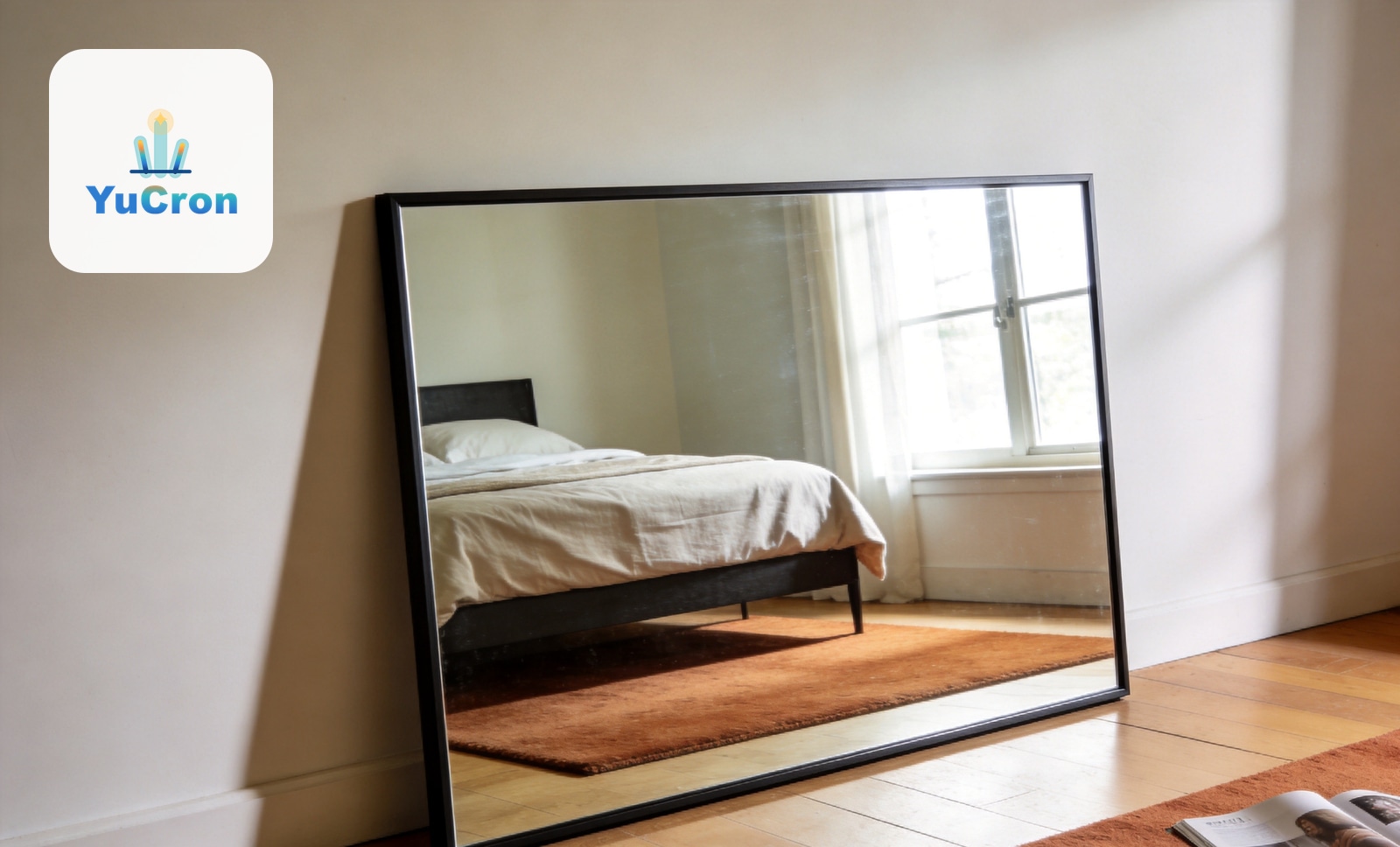
- Leaning (wall-supported): the glass and frame lean against the wall at the buyer's home. The failure point is frame rigidity — a soft aluminum profile flexes, and the reflection vibrates every time someone walks past. Slim profiles look modern, but the alloy wall thickness is what stops flex.
- Free-standing (fold-out stand): a rear stand swings out to hold the mirror upright. Check the hinge: it must lock positively in both open positions, and the stand footprint must be wide enough that the mirror does not tip when a door slams in the same room.
- Wall-mounted: the heaviest duty option, but it shifts installation risk to the end user — for retail channels where buyers will not drill, this is the wrong choice.
Our slim black-frame full-length mirror ships both ways — wall-leaning or free-standing with a fold-out metal stand — across six stock sizes from 40 × 150 cm to 80 × 180 cm, with tool-free setup on both. For project and Amazon channels, the free-standing configuration travels better: nothing depends on the customer's wall.
Safety Backing and the Compliance Question
A full-length mirror is a tall sheet of glass standing at human height in a bedroom — so glass retention on impact is a legitimate specification, not an optional extra. The industry answer is safety backing film: an adhesive film laminated to the rear of the glass that holds the shards together if the panel breaks. It costs little, adds negligible weight, and is standard on our full-length line.
On the regulatory side, buyers often over-require or under-require, so here is the accurate map:
- United States: 16 CFR 1201 (CPSC safety glazing standard) covers architectural glazing in doors, shower enclosures and sliding patio doors — a free-standing furniture mirror is outside its scope. Amazon has no mirror-specific certification gate. In practice, most US retailers and hotel brands still specify safety-backed glass in writing, because it is the defensible choice for a consumer product.
- European Union: EN 1036-1 is the harmonised standard for silvered flat glass mirrors in building applications; REACH applies to coatings. LED-lit mirror variants add CE (LVD/EMC) and RoHS.
- Middle East: Saudi Arabia runs conformity through the SABER platform (product and shipment certificates); LED mirror variants with electrical components additionally need SASO's IECEE recognition, which is issued from CB-scheme test reports. The UAE requires ECAS conformity for electrical products.
For a plain (unlit) full-length mirror into the US or EU, no mandatory product certification exists — which is precisely why specifying glass grade, safety backing and a documented factory QC process in the PO is what separates a professional order from a gamble.
Transit Damage: The Amazon Seller's Real Cost
Glass plus logistics is where margins die. An oversized carton that arrives cracked is not just a return — for an FBA seller it is a stranded-inventory event with removal fees attached. Three packaging specifications prevent it:
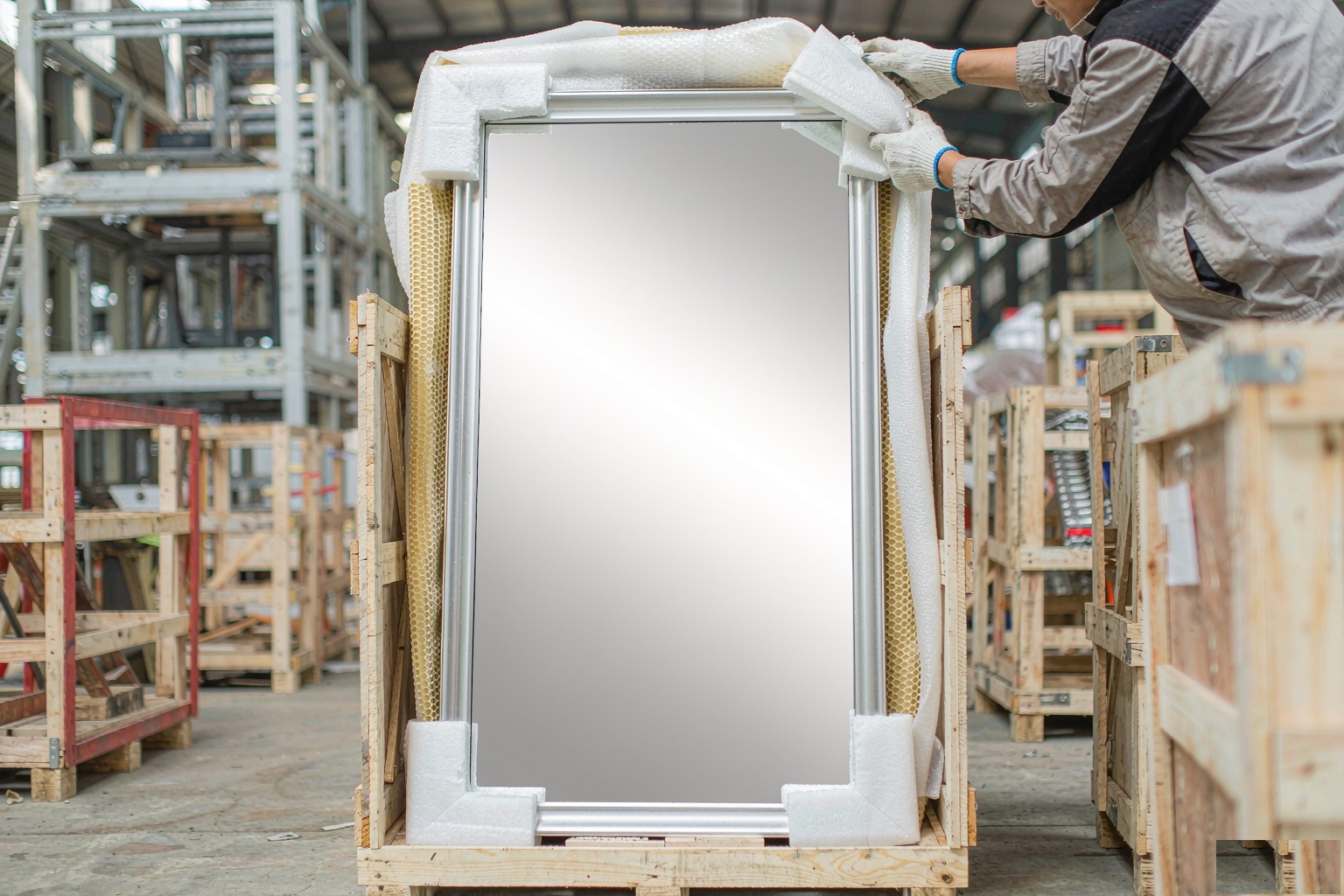
- Full-perimeter foam corners, cut to the mirror's exact dimensions, not generic L-profile. Corners are where impact energy concentrates.
- Double-wall export carton sized so the mirror does not shift inside; a mirror with 2 cm of play will migrate to the carton wall within a few hundred kilometres.
- A drop-test agreement before mass production — the carton dropped from standard height on corner, edge and face, then opened and inspected. Ask for the test photos in the sample stage, not after the first damaged claim.
For e-commerce channels, add the retail-ready layer: corner protectors visible in the unboxing, and assembly instructions printed on the carton's inner flap, since free-standing mirrors ship with the stand detached.
The 15-Minute Sample Check, in Order
Run this on the pre-production sample, and again on one random unit per production batch:
- Distortion sweep — straight-line reference across full width and height, watching the outer 10 cm near the frame.
- Coating check — inspect edges for corrosion, scratches or pinholes in the silvering under raking light.
- Thickness verification — calipers on the glass edge against the specified millimetres.
- Stand hinge test — open and close the fold-out stand 20 times; it must lock identically every time.
- Backing film — confirm the safety film covers the full rear surface, edge to edge.
- Packaging drop check — one carton through your own warehouse handling before approving mass production.
Buyers who want the factory-audit and documentation side of the same purchase — ISO 9001, Amfori BSCI, certification packs — will find that framework in Direct-Factory Full-Length Floor Mirrors: B2B Guide, and the European compliance detail (EN 1036-1, CE, packaging directives) in Full-Length Mirror Wholesale: Europe Buyer's Guide.
QC Pass Card: Six Checks Side by Side
| Checkpoint | What to verify | What passes | Failure it prevents |
|---|---|---|---|
| Distortion sweep | Straight-line reference at 1 m across width and height | Lines stay straight, including the outer 10 cm near the frame | The warped reflections that end up in one-star reviews |
| Coating check | Glass edges under raking light | No corrosion, scratches or pinholes in the silvering | Edge defects a photo check misses before shipping |
| Thickness verification | Calipers on the glass edge | Glass matches the specified millimetres | Spec drift between sample and mass production |
| Stand hinge test | Open and close the fold-out stand 20 times | Locks identically every time | Tip-over instability from a worn hinge |
| Backing film | Film coverage on the rear panel | Full surface covered, edge to edge | Glass retention failure on impact |
| Packaging drop check | One carton through your own warehouse handling | No shift or damage inside | The FBA stranded-inventory event |
Where These Checks Sit in the Range
The 15 stock floor and full-length formats — 40×150 up to 200×100 cm, aluminium, wood and LED-backlit frames — are built to these six checks; use that page to match a stock size to the sample you are testing.
FAQ
How do I check a full-length mirror for distortion before ordering? Reflect a straight line — a door frame or wall corner — and move across the mirror's full width and height. Straight lines must stay straight everywhere, especially within 10 cm of the frame. Order a pre-production sample and run this test before mass production.
What glass should a quality full-length mirror use? 4–5 mm high-definition float glass with a copper-free silvered coating. Copper-free coating resists edge corrosion; 4 mm is the practical minimum for mirror heights above 150 cm without bowing.
Do full-length mirrors need safety certification for the US market? No mandatory mirror-specific standard applies to free-standing furniture mirrors — 16 CFR 1201 covers architectural glazing (doors, shower enclosures), not furniture. Retailers and hotel brands typically specify safety backing film regardless, and it is standard on export-quality units.
What certifications does the Middle East require for mirrors? Saudi Arabia: SABER product and shipment certificates; LED-lit variants additionally need SASO IECEE recognition from CB-scheme test reports. UAE: ECAS conformity for electrical products. Plain unlit mirrors face general conformity requirements only.
What is the MOQ and lead time for full-length mirror orders? Standard orders start at 50 pieces with a 15–25 day production lead time. Six stock sizes from 40 × 150 cm to 80 × 180 cm, with custom OEM sizes available on drawings.
How should full-length mirrors be packed for e-commerce? Full-perimeter custom-cut foam corners, double-wall export carton with no internal play, and a pre-agreed drop test on corner, edge and face — verified with photos at the sample stage before mass production.