Mirror Room Math: Rectangular Layouts & Anthropologie Mood
A mirror room is not one purchase. It is a count. Give me a wall — say 3.6 metres wide, 2.4 metres high — and I will ask four things before anyone mentions price: how many rectangular mirror panels, at what size, with which edge, and fixed how. That is the whole game. We build LED smart bathroom mirrors, custom hotel mirrors and vanity mirrors in a factory that ships to North America and Europe, and the mirror room briefs that land on my desk almost never begin with a finish. They begin with a photo of someone else's wall — frequently an Anthropologie one — and a search box that says miror wall.
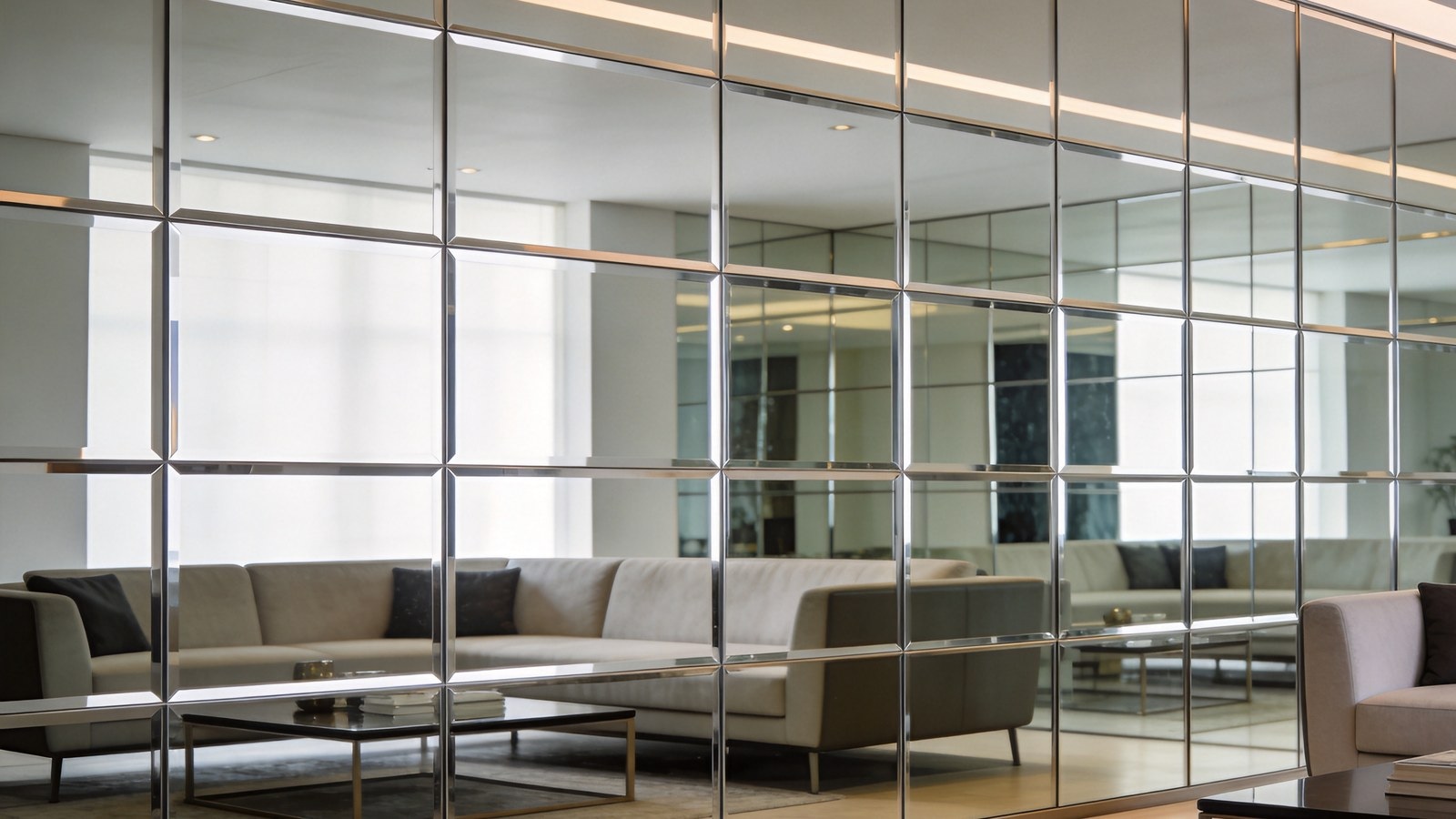
A Mirror Room Is Three Different Projects Wearing One Name
Buyers use the phrase loosely. The spec does not care.
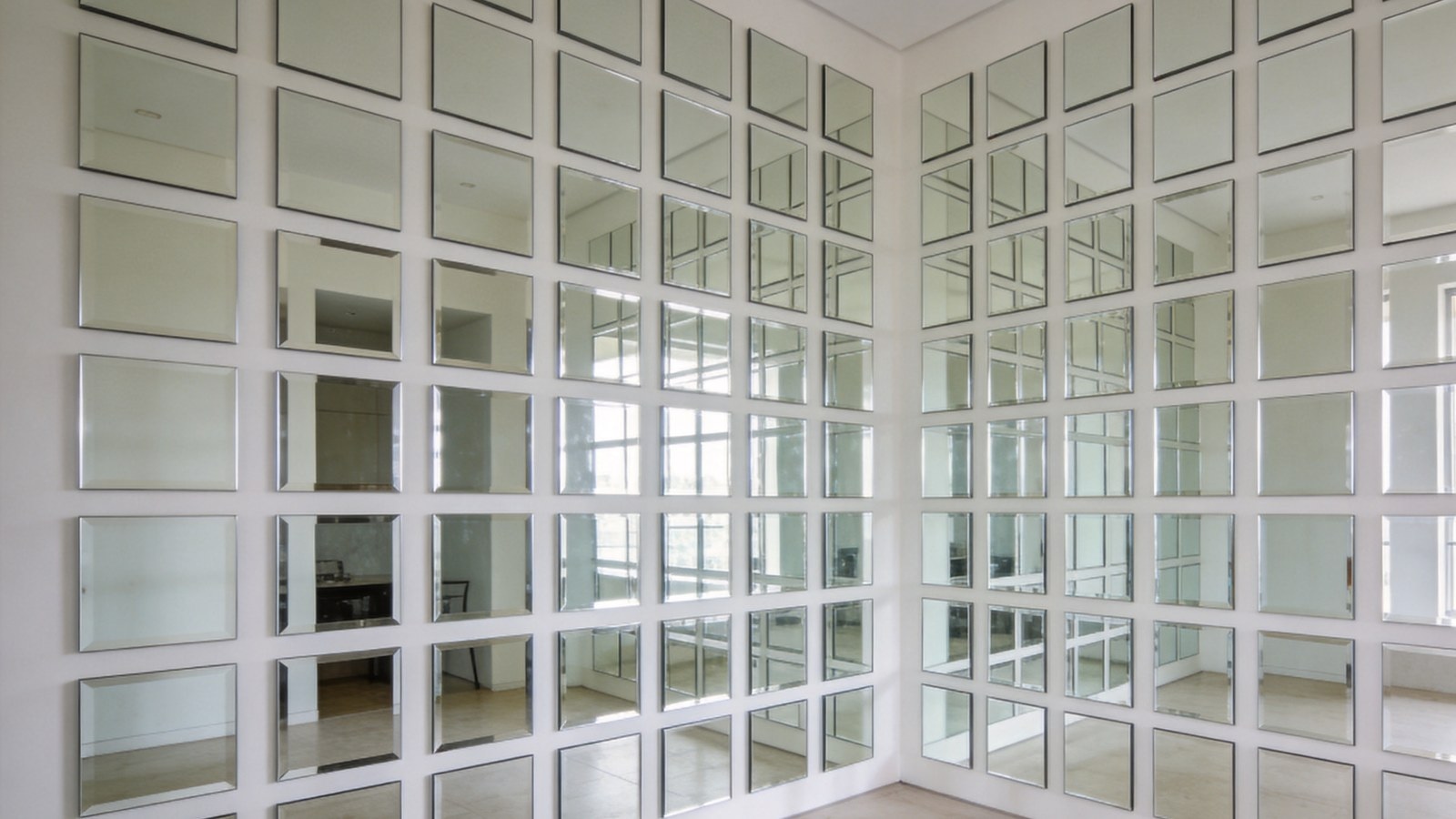
Coverage. A mirrored wall in a gym, a dance studio, a fitting room, a barre studio. Here the glass is not decoration, it is cladding. Nobody walks in to admire a bevel. They walk in to see themselves from four metres away, which means the panels must line up, the joints must be consistent, and one replacement panel must be available years later without a visible shade difference against the rest.
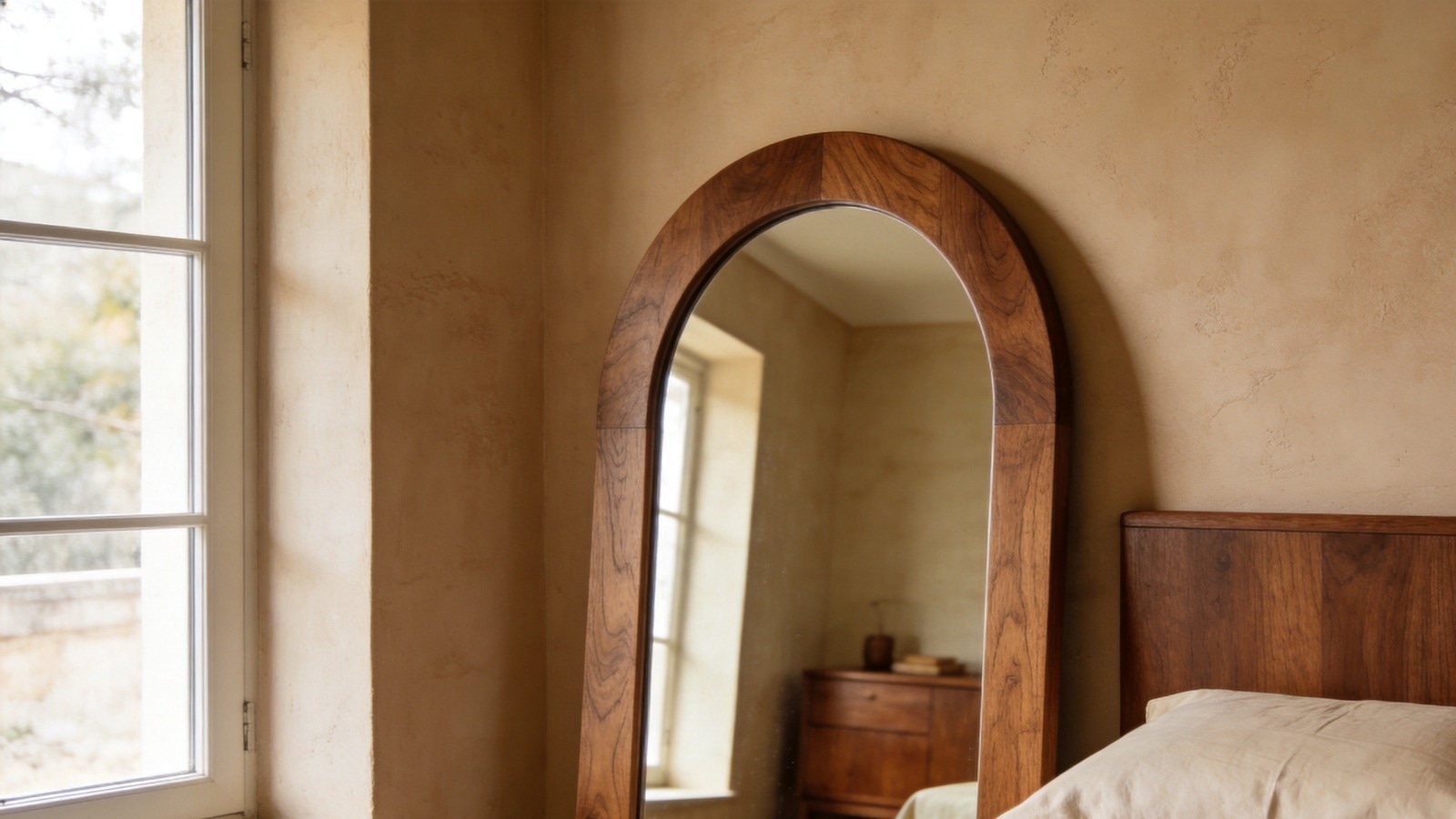
Vignette. Three to fourteen pieces arranged at different heights, styled with brass, timber, linen. This is the Anthropologie register — warm, layered, slightly vintage, deliberately un-gridded. It sells a mood, and it is photographed far more often than it is used.
Dressing area. A bedroom corner or a hotel suite with a full-length piece, a vanity mirror over a counter, and one or two smaller mirrors on the flanking wall. Different backing needs, different mounting, often different lighting altogether.
Same phrase on the brief. Three different factories' worth of decisions. If a buyer collapses them into one line item, the run will be wrong in at least two places.
Counting Panels Before You Count Cost
Start with the wall, not the catalogue.
Measure the usable width. Subtract door frames, sockets, radiators, anything you cannot drill beside. Then decide the band width you want each rectangular mirror to occupy. Anywhere from 600 mm to 900 mm reads well in most interiors; narrower starts to look like tile, wider starts to look like a window.
Then divide. A 3,600 mm clear wall against an 800 mm panel gives you 4.5 — you cannot buy half a panel, so the choice is four panels at 900 mm or five at 720 mm. That single rounding decision changes the joint rhythm of the room, and it changes the price, because more panels means more edge polishing, more packing, more crates.
Height matters just as much. A mirrored wall that stops short of the ceiling leaves a stripe of painted wall above it. Sometimes that is what you want. Sometimes it looks like a mistake. Decide deliberately.
Two more numbers people forget until the sample arrives: does the panel sit flush to the wall, or stand off on clips with a shadow gap? And is the mirror a single fixed pane, or does one section need to swing open over a service panel? Both answers push the fixing hardware up a tier.
Why the Rectangular Mirror Carries the Room
Round mirrors are accents. The rectangular mirror is the load-bearing format of any mirror room, and there are practical reasons.
It stacks. Two, three, four panels of the same width align without arguments about centres. Round pieces hung in a row are a styling choice; rectangles in a row are a system, and systems are what large walls need.
It cuts cleaner. Straight edges mean straight joints, and straight joints hide better than curved seams on a big plane. If you ever have to replace one panel, the neighbours forgive you.
It photographs honestly. On a wide wall, a rectangle gives the camera a stable plane. Circles on the same wall tend to look like they drifted, even when the spacing is mathematically perfect.
But here is the shift most buyers do not expect. In a mirror room, the rectangular mirror stops behaving like a decorative object and starts behaving like a material. Thickness, backing, edge work and safety film jump ahead of frame style in priority. Buyers who spec a mirrored wall the way they spec a single bathroom mirror are usually the ones filing claims after installation.
What the Anthropologie Reference Is Actually Telling You
When a buyer sends over a mood board and says "like Anthropologie," they are rarely asking for a specific SKU. They are describing a feeling: mixed eras, warm metals, some aged glass, low gloss, nothing too sharp. Fair enough. It is a useful shorthand.
Where it goes wrong is at the point of conversion. A merchandised display is a composition — a large anchor, a couple of mid-size pieces at contrasting heights, a small round or two tucked in, a bench, a plant, bad lighting fixed with good lighting. A purchase order is a flat list. Nine mirrors arranged by a visual team become nine line items with nine sets of dimensions, and the shop floor reads line items, not moods.
My advice after enough of these: steal the proportions, not the arrangement. Note the ratio of anchor height to the wall, the spacing between the largest and second-largest piece, the way the display deliberately breaks its own alignment. Then rebuild it against your actual wall dimensions. A composition that works at 2.6 metres rarely survives translation to 4.1 metres, and nobody at the shoot will warn you.
One more thing. Mirrors reflect. Before you approve the plan, look at what your mirror room will reflect — ceiling services, an exit sign, a stockroom door left open, a badly placed downlight. In a store that becomes a photograph problem. In a home it becomes a "this looks wrong and I cannot explain why" problem.
The Miror Wall Search, and What Sits Behind It
People misspell things. "Miror wall," "miror," "mirrow wall" — the queries arrive constantly, and they almost always mean one of two things: a full wall of mirror glass, or one wall-mounted mirror for a room. That spelling will not appear anywhere on a proper drawing, and it changes nothing technically. It does tell you something useful, though: the person searching has a picture in their head and no vocabulary for it yet.
What actually determines the build is a shorter set of questions. Adhesive or anchored? Glass or a lighter sheet material? Fixed panel or openable section? Dry room or wet room? The last one matters more than most buyers expect — humidity changes the backing, the sealing and the fixing, and it is the reason a bathroom mirror order should never be quoted from a hallway mirror drawing.
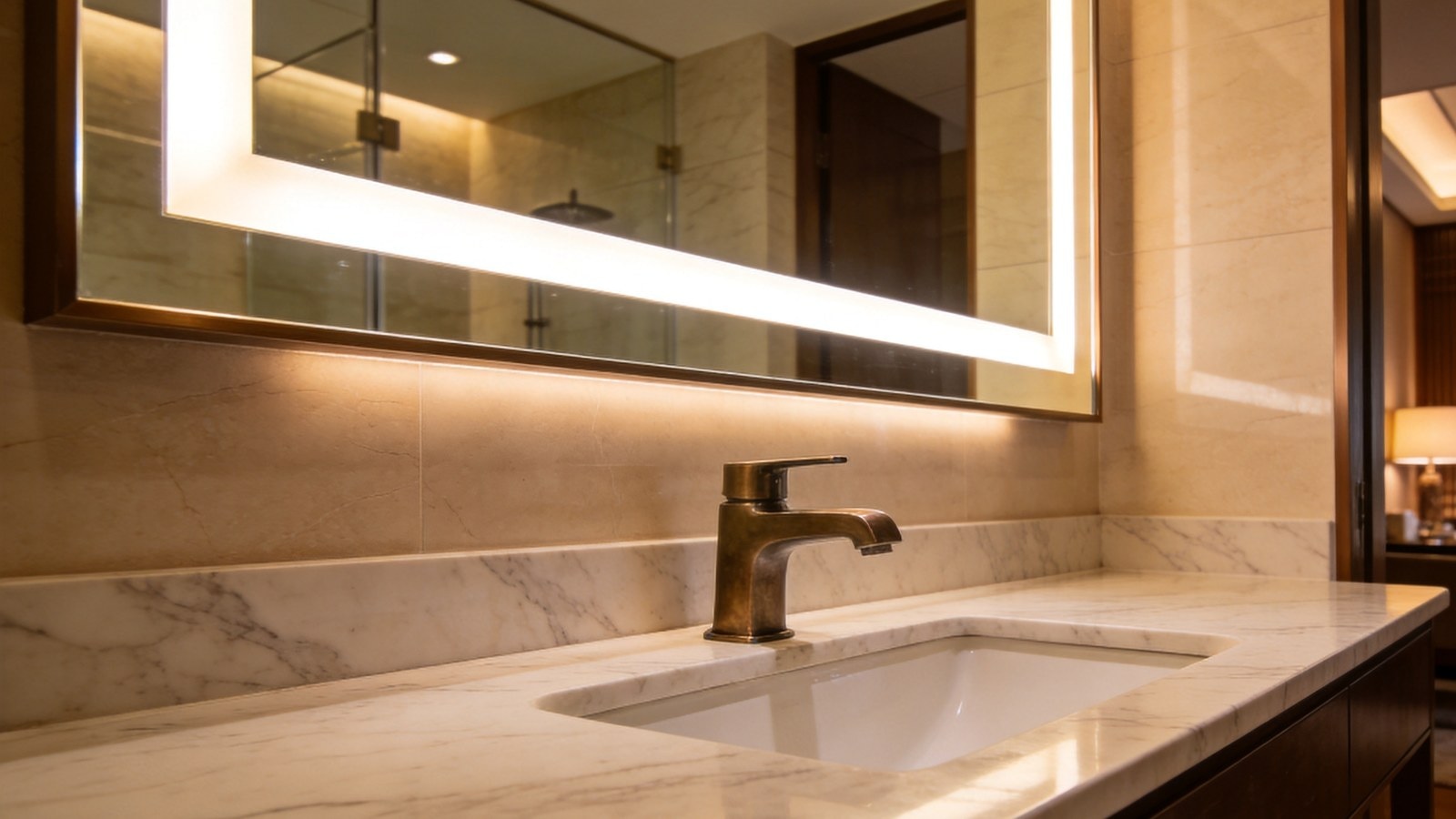
For a wet area, we build LED smart bathroom mirrors as a standard product family, which sidesteps a lot of this: the electrical work, the sealing and the housing are solved together instead of assembled from three suppliers' parts. For everything else, a plain rectangular mirror panel is usually the cheapest way to cover a large surface, provided the mounting was designed for the wall it is going on.
The Order Side: Minimums, Lead Time, Certification
Four facts decide whether a mirror room is buildable on your timeline.
Count. Our minimum order quantity is 100 pieces. That is the entry point for a production run, and it applies across the mirror programmes we make — LED bathroom mirrors, hotel custom mirrors, vanity mirrors and plain panels.
Lead time. Plan on roughly 35 days for production. That clock starts when the drawings, the finishes and the packing are signed off, not when the enquiry arrives. Most of the pain I have seen on mirror orders came from a customer assuming the 35 days covered a spec that was still moving.
Certification. CE for the European market and ETL for North America. If the mirror is purely glass and carries no electrics, certification is not the bottleneck. If it lights, dims, defogs or plugs in, it is, and it should be settled at the quotation stage rather than at the port.
Customisation. OEM and ODM work is part of what we do — sizes, logo, packaging, the mirror's own housing. The earlier that conversation starts, the more of it fits inside the standard run instead of becoming a separate project.
A Short Checklist Before You Send the Enquiry
Write these on one page and most mirror room problems disappear: wall dimensions and clear width; panel count and size in millimetres; edge and corner treatment; backing and safety film required; fixing method and wall construction; wet area or dry; electrical or not; destination country; target install date; and one photograph of the space as it stands right now, clutter included. That last item has saved more orders than any drawing I have received.
The Certificates a Panel Count Adds
Splitting one wall into panels multiplies paperwork along with SKU lines. Multi-panel glass heading to the US rides on impact-test classes referenced in 16 CFR 1201, and the EU buyer of the same mirrored wall answers for the whole set's technical file under the General Product Safety Regulation — panel count included.
| Wall width | Typical panel count | Order note |
|---|---|---|
| Under 2 m | 1–2 panels | Single crate, one glass file |
| 2–3.6 m | 3–5 panels | Batch tolerance per panel |
| Over 3.6 m | 6+ panels | Sequence plan + spare rate |
Frequently Asked Questions
How many rectangular mirror panels do I need for a mirrored wall?
Divide the clear wall width by the panel width you want, then round to a whole number. A 3,600 mm wall with 800 mm panels gives 4.5, which becomes four panels at 900 mm or five at 720 mm. Panel count affects joint rhythm, packing and cost, so settle it before requesting a quote.
What does a buyer mean when they search "miror wall"?
It is a misspelling of mirror wall, and the intent is usually a full mirrored wall or a single large wall mirror. It has no technical meaning and does not change any specification. What matters is whether the panel is adhesive-fixed or anchored, and whether the space is dry or humid.
Can I copy an Anthropologie-style mirror display directly into a purchase order?
You can copy the proportions, not the layout. A styled retail display is a composition of pieces at deliberate heights and sizes; a purchase order is a flat list of dimensions. Rebuild the mood against your real wall measurements, and check what each mirror will reflect before you approve it.
What are the minimum order and lead time for a mirror room project?
Our minimum order quantity is 100 pieces and production normally takes around 35 days. The lead time begins once drawings, finishes and packaging are approved rather than at first enquiry, so a spec that is still changing will push the ship date back.
Do large mirror orders need CE or ETL certification?
CE applies to the European market and ETL to North America. Plain glass panels without electrics generally avoid that bottleneck, but any mirror with lighting, heating or other electrics needs the relevant certification confirmed at quotation stage, well before shipping.