Planning a Mirror Wall: From Query to Quote
A mirror room is a planning problem wearing a glass costume. Seams, orientation and mounting decide the result before any panel is cut.
Why Is a Mirror Room a Planning Problem First?
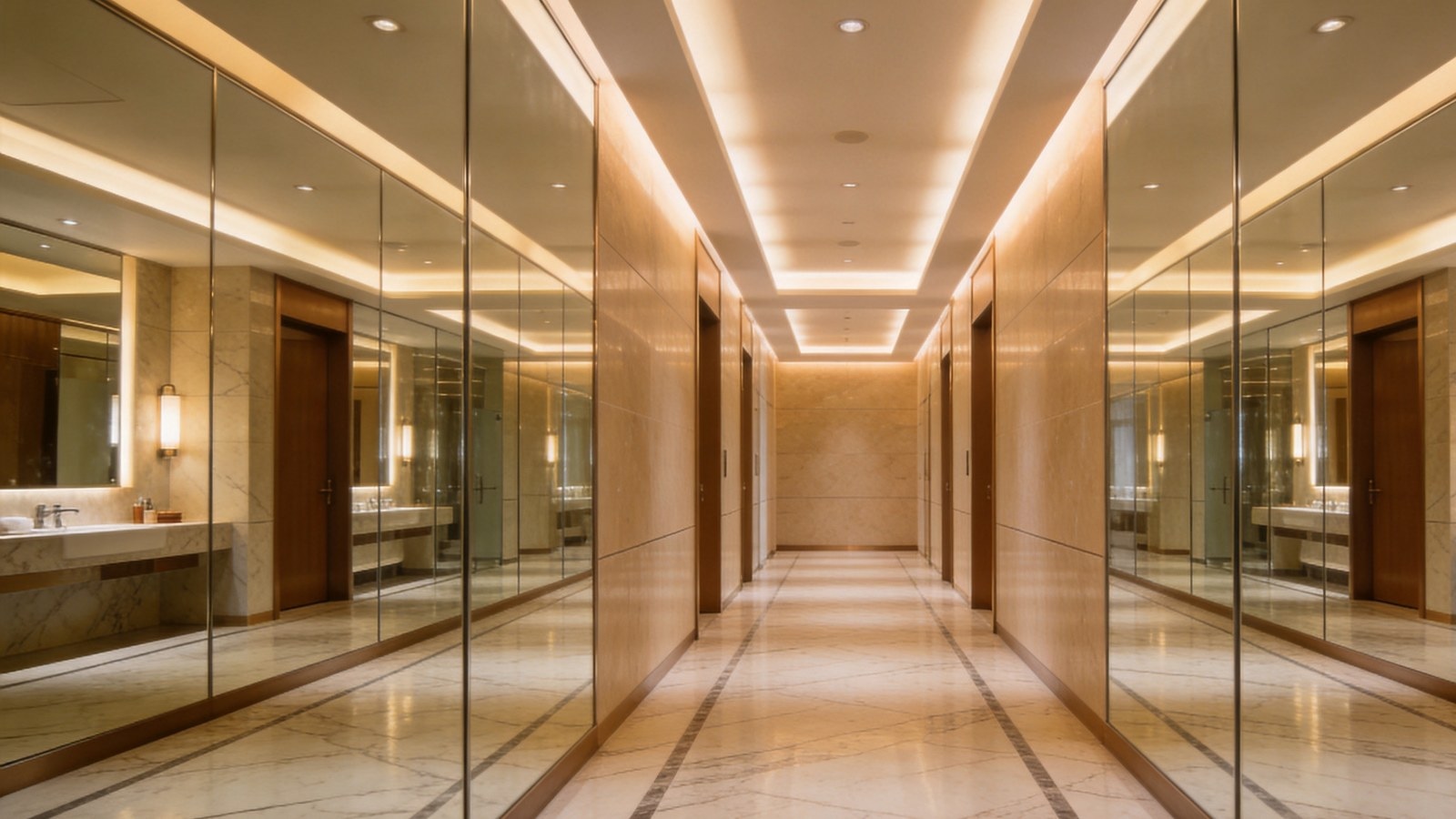
A mirror room is what happens when mirror stops being an object and becomes a surface: hotel bathrooms, spa corridors, fitting areas, an apartment wall that needs to look twice as wide.
The glass is rarely the hard part. Start with the seam: a full-height wall is built from panels, and the joints are the first thing the eye finds.
| Seam direction | Visual effect | Suits |
|---|---|---|
| Vertical | Makes a low ceiling feel taller | Low rooms, corridors |
| Horizontal | Stretches a narrow room | Tight residential walls |
| Grid (both) | A design decision, intended or not | Retail and spa features |
Then decide what the mirror faces: a mirrored wall doubles whatever sits opposite it, from a towel rail to a tangle of cables. In hospitality that is welcome; in a small bathroom it is brutal.
Finally decide the fixing. Some markets want mechanical fixing into studs; rentals and pop-ups want something that comes off without a plasterer. These are different products, not accessories.
Why Does the Rectangular Format Carry the Room?
Rectangles outnumber everything else on a mirror line, and not because of fashion. It is because they tile.
A rectangle covers a wall with predictable waste: three panels across an 1,800 mm wall, each 600 mm before the joints.
Change one panel to a circle and the geometry fights you with borders and fillers.
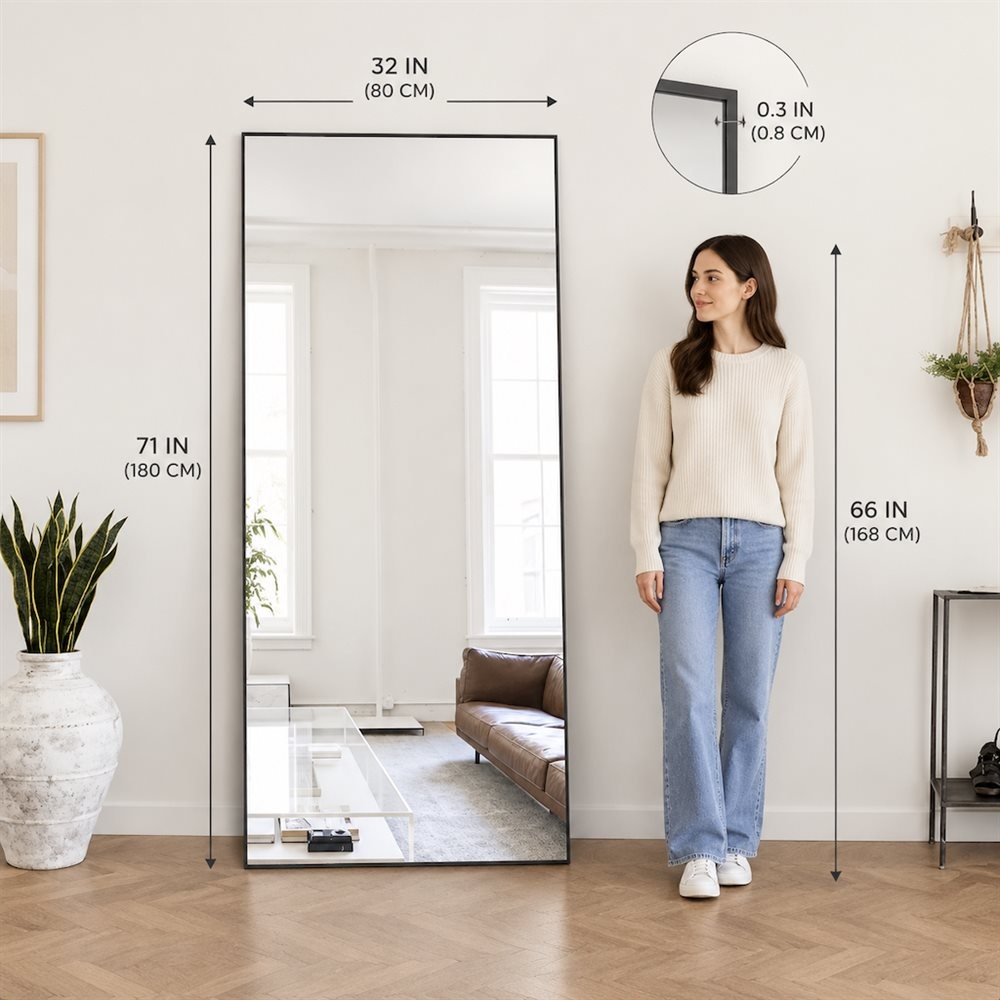
Orientation matters more than buyers expect. Portrait makes a powder room feel taller; landscape above a double vanity widens the composition and lines up with tap spacing.
Two spec-sheet notes. Align panel joints with tile grout lines, because a 4 mm offset between grids gets photographed and complained about.
And ask how each format is edge-finished and crated, since handling margins change with size.
What Should You Do With miror wall Traffic?
Misspelled queries show up in every wall-mirror collection's search report. The visitor behind miror wall is early in the process and low on vocabulary: they know the effect, not the product.
Four things worth doing with that traffic:
- Name formats plainly: a rectangular wall mirror, 600 × 900 mm, adhesive or anchored beats a poetic name.
- Answer the mounting question on the page, not in a PDF — renters abandon carts over this.
- Use the misspelling once in an FAQ so the query has somewhere to land.
- Never build product titles around a typo; the catalog should read like a catalog.
Clarity travels. Cleverness does not.
Can a Craft-Scale Assortment Ride the Same Run?
Small decorative formats are not our headline line, but the query arrives often and the overlap is real: what craft retail buyers need is volume, consistency and retail-ready packing.
The honest constraints: the minimum is 50 pieces and production runs 15 to 25 days.
The workaround is simple — mix sizes and finishes inside one run so the pieces spread across a small range instead of one guess.
If the small format carries lighting, the compliance path applies exactly as on a full bathroom unit.
CE test reports are available on request, so check which documents your destination expects before committing to a design.
And if you run a mirror room project on one side and a retail assortment on the other, consolidate: one factory, one purchase order, one freight plan.
Which Three Questions Route Any Inquiry?
Wording varies wildly across inquiries; the routing questions underneath are always the same three.
- Where does it hang, and what is behind it? A tiled hotel wall, painted drywall and a glass partition are three different answers.
- How is it fixed, and who fixes it? If the client's contractor installs, the hardware and instructions become part of the product.
- Which market is it entering? The compliance path differs by region, and buyers who leave that to the last week miss their opening date.
After that it is straightforward manufacturing. OEM and ODM work accepts a finished drawing or a mood board and a rough size; either can become a shipped order.
常见问题 → FAQ
What is the minimum order for a mirror room project?
Our minimum is 50 pieces, and a full mirrored wall typically exceeds that without effort. If your project is smaller, talk to us about combining formats in one production run.
Can a rectangular mirror be made in custom sizes for a full wall?
Yes. Send the wall dimensions and the seam layout you want, and we quote panels to that grid. Custom sizes fall under our OEM and ODM work.
Should I put miror wall in my product titles to catch the traffic?
No. Use it once in an FAQ or an alternate-name field so the query lands somewhere useful, and keep product titles spelled correctly and descriptive.
Do you produce small mirrors for crafts?
We manufacture small formats within the 50-piece minimum and a 15 to 25 day production window, and a run can spread across several sizes or finishes. Our core line remains LED bathroom, hotel custom and makeup mirrors.
How long does a first order take from brief to shipment?
Plan on 15 to 25 days of production once the specification is locked, plus transit. The variable that moves most is not the factory — it is how quickly the mounting method and compliance path get settled.
Need pricing on any model mentioned? Send models and quantities — unit price, MOQ and lead time within 4 working hours.
Related Yucron Products
- wave full-length LED wall mirror
- mirror room math: rectangular layouts & mood
- Reference note: Historic mirror-room examples are documented in the V&A collection (view)