Big Mirror, Right Wall: A Living Room Proportion Audit
Last month a buyer sent me a photo of an empty living room wall and one question: will a big mirror fit? I asked for two more photos—one taken from the sofa, one from the doorway—because the answer is rarely about the wall alone. A big mirror changes what you see from where you sit. That is the whole job. What follows is the proportion audit I run before quoting a decorative wall mirror for a living room. It works for one sample or a 100-piece program, and it starts before anyone talks about frame style.
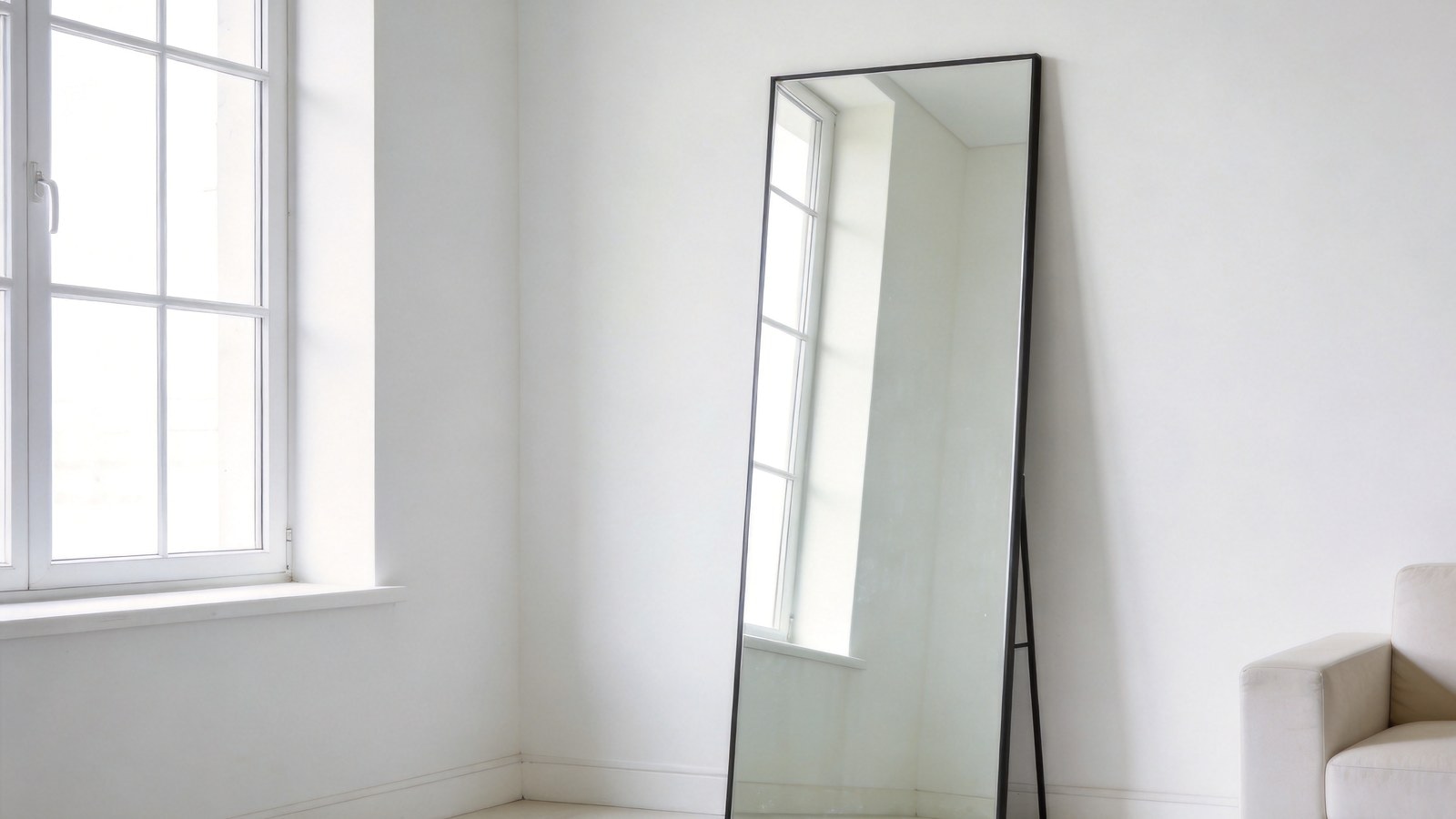
The Photo That Starts the Wrong Conversation
Most inquiries open with a photo of a bare wall and a mirror size. I understand why. If your search is wall mirror decoration living room, you have probably seen the same photos I have: tidy rooms, one perfect rectangle, no tape measure. But a bare wall photo hides the two things I need: the sofa, and the view from the sofa.
A mirror is not wallpaper. It reflects. If the reflection is a ceiling fan, a cable box, or the back of a TV, the big mirror will make that object twice as important. We have seen buyers approve a sample for its frame and then reject the production run because the mirror made the room feel busier. The frame was not the problem. The wall was.
So before I quote, I ask for a short video: walk into the room, sit down, pan left and right. That clip tells me more than a rendered image. It shows the sightline.
Measure the Wall, Then the Furniture Under It
A big mirror should relate to something. On a living room wall, that something is usually the sofa, a console, or a pair of chairs. I start with the furniture width, not the full wall width. A mirror that spans roughly two-thirds of the sofa reads as deliberate; one that matches the sofa exactly can look like a second headboard. That is a starting point, not a code. The wall may have a door, a radiator, or a light switch that changes the math.
Then I check the negative space. Leave room for the wall to breathe. A big mirror pushed into a corner looks like a mistake, even if the glass is beautiful. If the mirror will hang above a console, the gap between the console top and the bottom edge matters. Too tight, and the mirror looks like it is sitting on the furniture. Too high, and it floats.
The Big Mirror Is a Window, Not a Poster
This is the part buyers underestimate. A decorative wall mirror works when it borrows a view. In a living room, that view might be a window, a piece of art, a plant, or a lit alcove. If it reflects a blank wall, the mirror becomes a black hole with a frame. If it reflects clutter, the room gains clutter. I have stood in showrooms where a large mirror was hung opposite a beautiful window and the whole room doubled. I have also seen the same size mirror hung opposite a hallway door, and it looked like a security monitor.
So ask a simple question: what will this big mirror show? If the answer is “the room,” be more specific. Which part of the room? From the main seating position, the reflection should include something with color or light. That is the difference between the wall mirror decoration living room photos people save on Pinterest and a mirror that still works after the cushions are flattened.
Sitting Height Beats Standing Height
Most living room mirrors are checked while standing. Buyers walk in, look at the wall, and decide. But the mirror will be lived with from a sofa. Sit down. Mark the point where your eyes land on the wall. For a mirror above a sofa, the center of the glass usually wants to sit near that seated eye line, not at standing eye level. This is not a fixed number; ceilings and sofa heights vary. The point is to test it from the chair, not from the doorway.
Hanging height also affects how big the big mirror feels. Lower, and it can feel grounded with the furniture. Higher, and it can feel like a picture. Neither is wrong. But decide on purpose. I have seen a few inches of shift change a living room from “hotel lobby” to “home.” That is not a glass problem. It is a placement problem.
Leaning, Hanging, or Built In
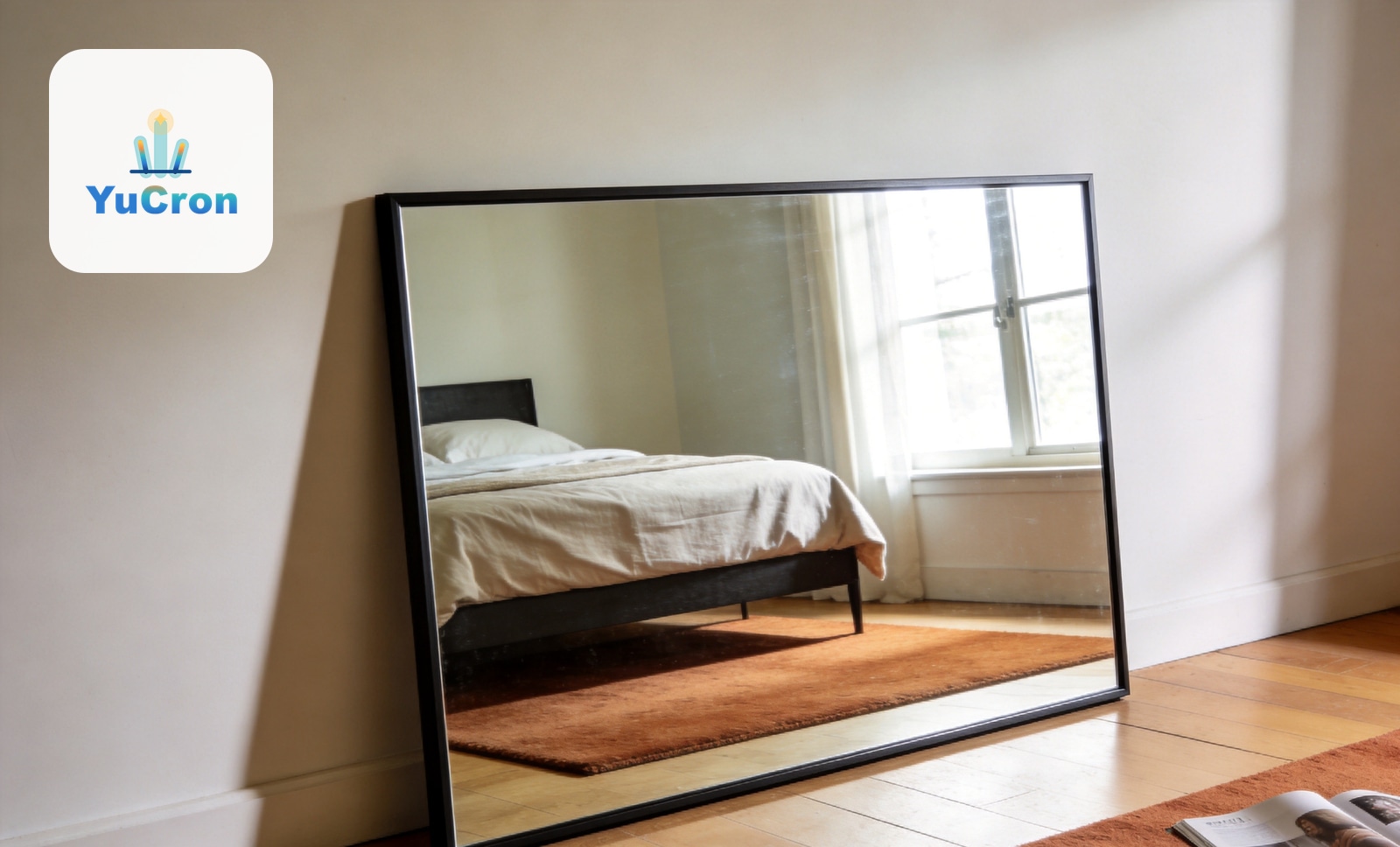
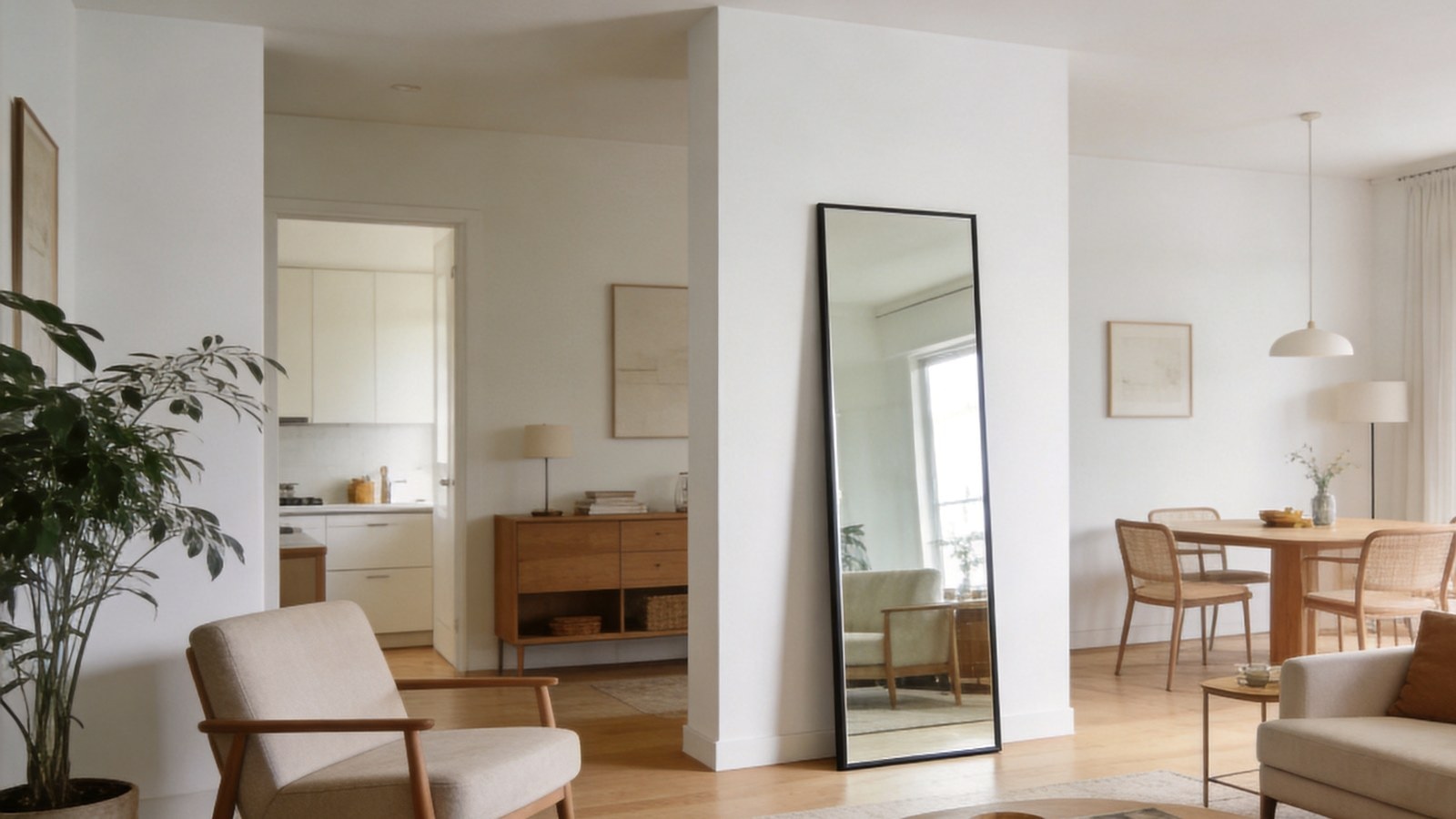
A big mirror can lean, hang, or sit in a frame that is fixed to the wall. Each choice changes the order. A leaning mirror needs a stable floor, a wall strap, and enough depth for the base. It also needs a buyer who understands that a leaning mirror is furniture, not a wall covering. A hanging mirror needs the right anchor for the wall type and the weight. I would not treat a big mirror as a peel-and-stick item. Small espejos decorativos sometimes go up with adhesive; a full-height living room mirror is a different risk.
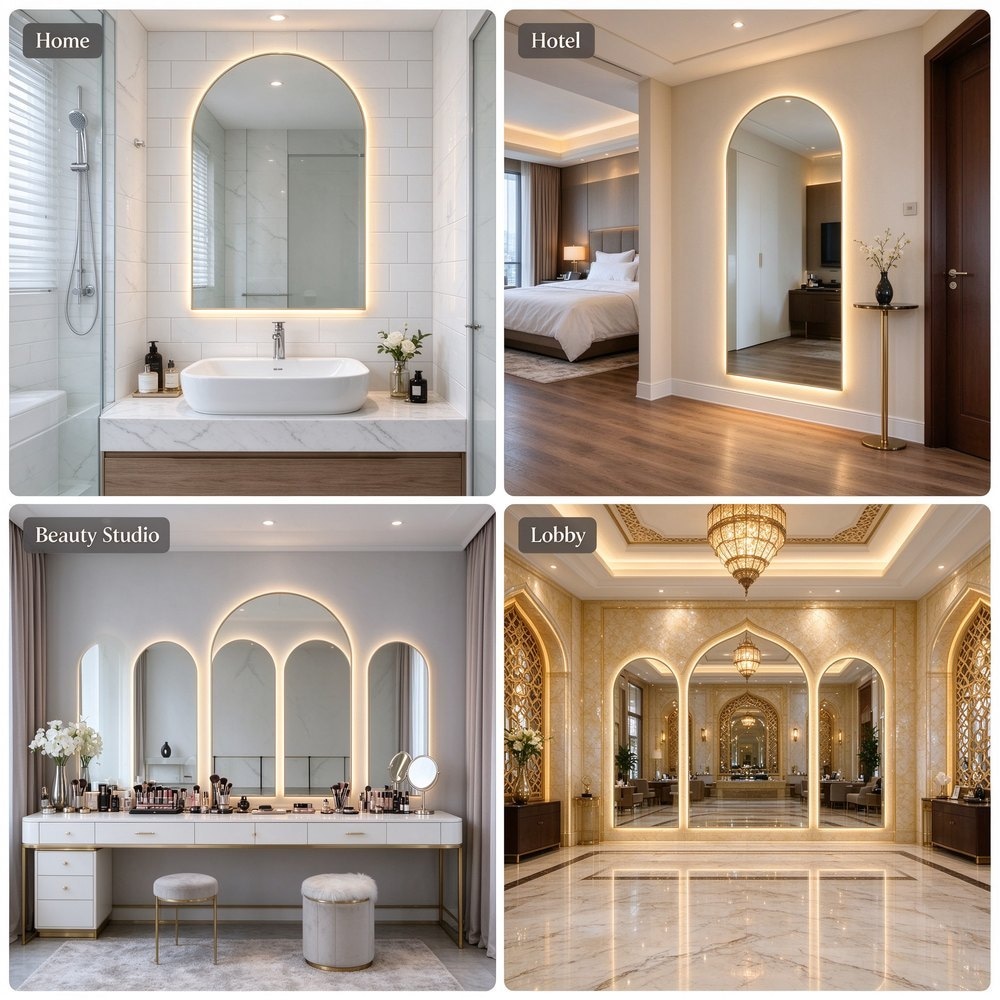
For hotel and residential projects, we often see a third route: a custom mirror that is part of the joinery. That is where OEM/ODM work starts early. If the mirror is going into a recess, the opening size and the edge finish need to be agreed before the millwork is built. Changing a big mirror after the wall is closed is expensive. Changing a small decorative wall mirror is annoying. Changing a big one is a site meeting.
Frame, Edge, and the Decorative Wall Mirror Decision
Once the proportion is set, style gets a fair hearing. This is where the search term matters. English buyers type decorative wall mirror. Spanish-speaking buyers type espejos decorativos. Same shopping job, different words. Both usually mean a mirror chosen for how it looks, not just for function. That can be a framed piece, a shaped piece, or a clean-edge mirror that lets the room do the talking.
I like to separate “decorative” from “detailed.” A decorative wall mirror can be quiet. A thin frame and a large sheet of glass can be more decorative than a busy frame because the reflection becomes the pattern. On the other hand, a living room with plain walls may need the frame to carry the color. There is no universal answer. There is only the wall in front of you.
The Order Sheet Behind the Pretty Picture
When a design is settled, the factory side is boring on purpose. For Yucron, the production list is LED smart bathroom mirrors, custom mirrors for hotels, and makeup mirrors; our export work is focused on North America and Europe. CE and ETL certification sit in the paperwork. Minimum order is 100 pieces, and a run takes about 35 days. OEM and ODM are part of normal conversation. None of that tells you where to hang a living room mirror, but it does tell you what to plan for once you have chosen one.
For a decorative wall mirror program, I want the wall photo, the furniture plan, the installation method, and the destination market. If the mirror is for a hotel, I want to know whether it is a guest room, corridor, or public area. If it is for retail, I want to know how it will be packed and displayed. The more of that you send, the fewer surprises later.
A Checklist for the Wall
- Sit where you will sit. Look at the wall. What does the mirror reflect from there?
- Measure the furniture, not just the wall.
- Leave breathing room at the sides and above.
- Decide leaning or hanging before you order hardware.
- Check the switch, socket, or radiator. Do not let a big mirror cover something you need.
- For espejos decorativos, confirm whether the look depends on the frame or the glass.
- For a 100-piece run, lock the installation method before production, not after.
The Paperwork Underneath a Big Pane
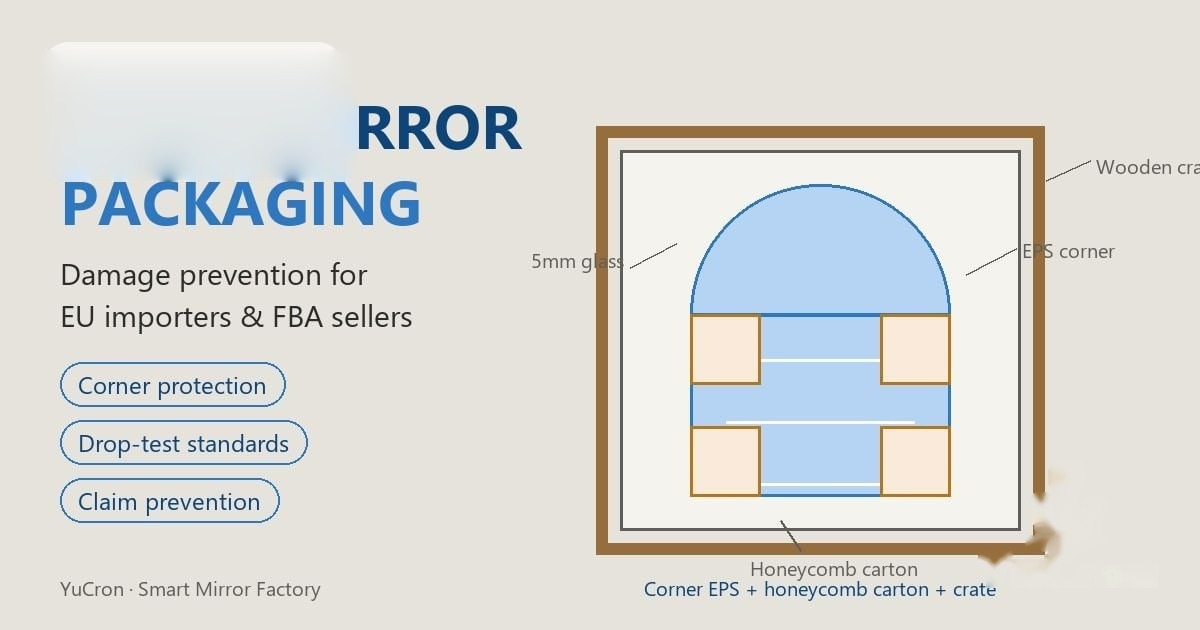
Oversized decorative panels still count as glass in code terms once they ship. The impact-test classes used for safety-backed glazing in the US are published in 16 CFR 1201, and the buyer who imports the same wall mirror into the EU becomes the economic operator answerable for its technical file under the General Product Safety Regulation. Neither document changes the proportions above; both belong in the PO file before the deposit.
| Glass width range | US file note | EU file note |
|---|---|---|
| Under 100 cm | Safety-backing line on spec | Technical file per GPSR |
| 100–150 cm | Impact-test class on file | Glass class + finish approval |
| Over 150 cm | Crate spec + edge protection | DoC carried in buyer's name |
Frequently Asked Questions
1. What size counts as a big mirror for a living room?
There is no universal number. I judge it against the wall and the furniture below it. A mirror that spans about two-thirds of the sofa is a useful starting point, but doors, windows, and traffic paths can change that. The real test is the view from the sofa.
2. Will a big mirror make a small living room look bigger?
It can, but only if it reflects something with light or depth. A big mirror opposite a blank wall or a cluttered corner can make the room feel tighter. Placement matters more than size.
3. Where should a decorative wall mirror go in a living room?
Start with the main seating position. The mirror should reflect a window, art, or a lit part of the room. Avoid placing it where it doubles a TV, a ceiling fan, or a pile of cables.
4. Can espejos decorativos be ordered as an OEM or ODM project?
Yes. Espejos decorativos is simply the Spanish search phrase for decorative mirrors. As a factory, we handle OEM and ODM work, with CE and ETL certification in the package. The minimum order is 100 pieces, and lead time is around 35 days.
5. What do you need to quote a decorative wall mirror order?
Send a photo of the wall from the seating position, the furniture dimensions, the preferred installation method, and the destination market. If the mirror is for a hotel or a retail program, say so early. That helps us match the brief to the right production line.