Why Importers Choose Custom LED Bathroom Mirrors
Importers move from catalog mirrors to custom LED bathroom mirrors for three measurable reasons: wet-area compliance changes by market, buyers want their own ladder of light and sensor options, and a brand only sticks when it is printed on the spec sheet rather than shrink-wrapped onto a box. Here is what customization covers, where it changes the paperwork, and what it does to margin.
What Custom Changes on the Spec Sheet
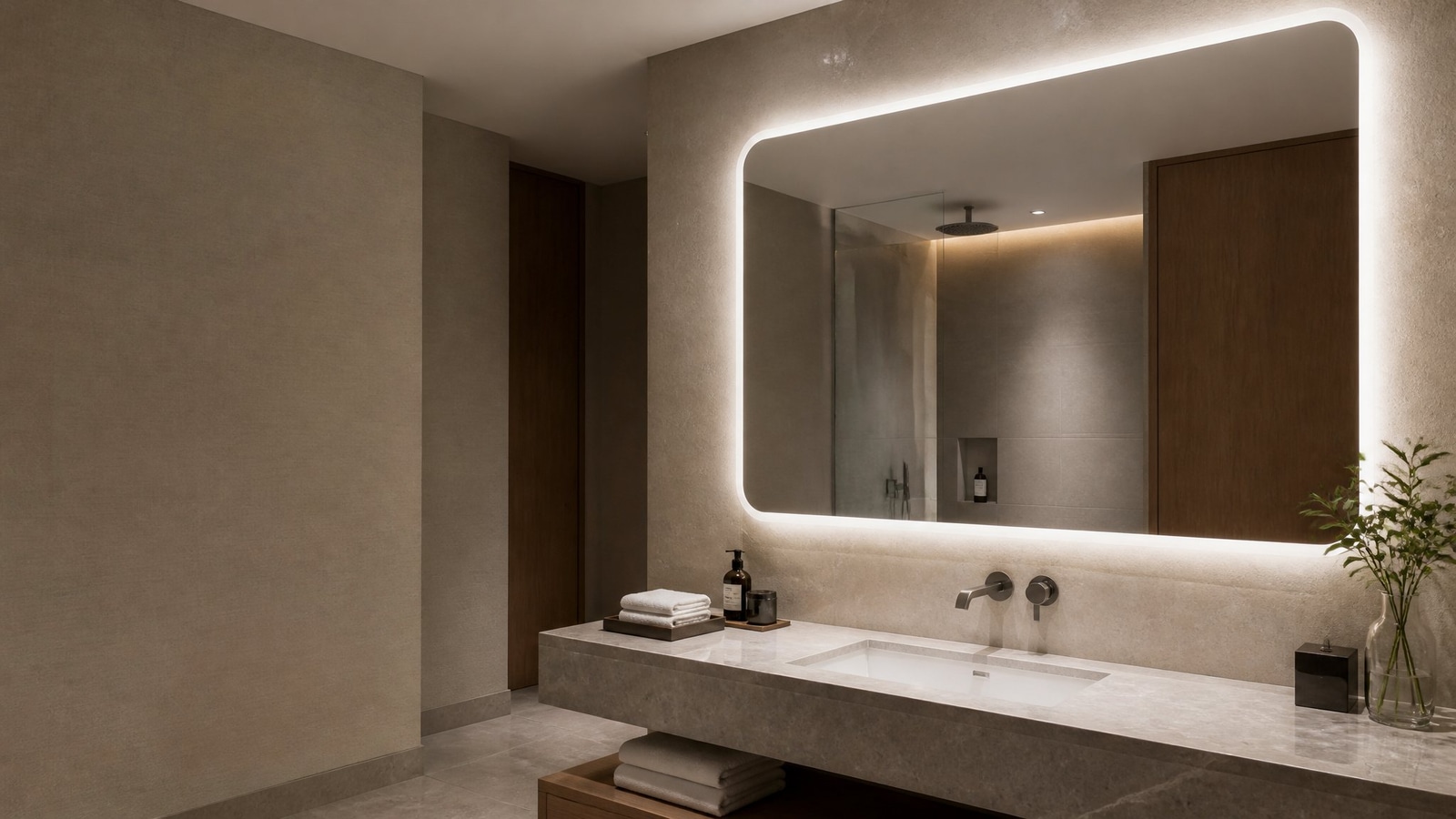
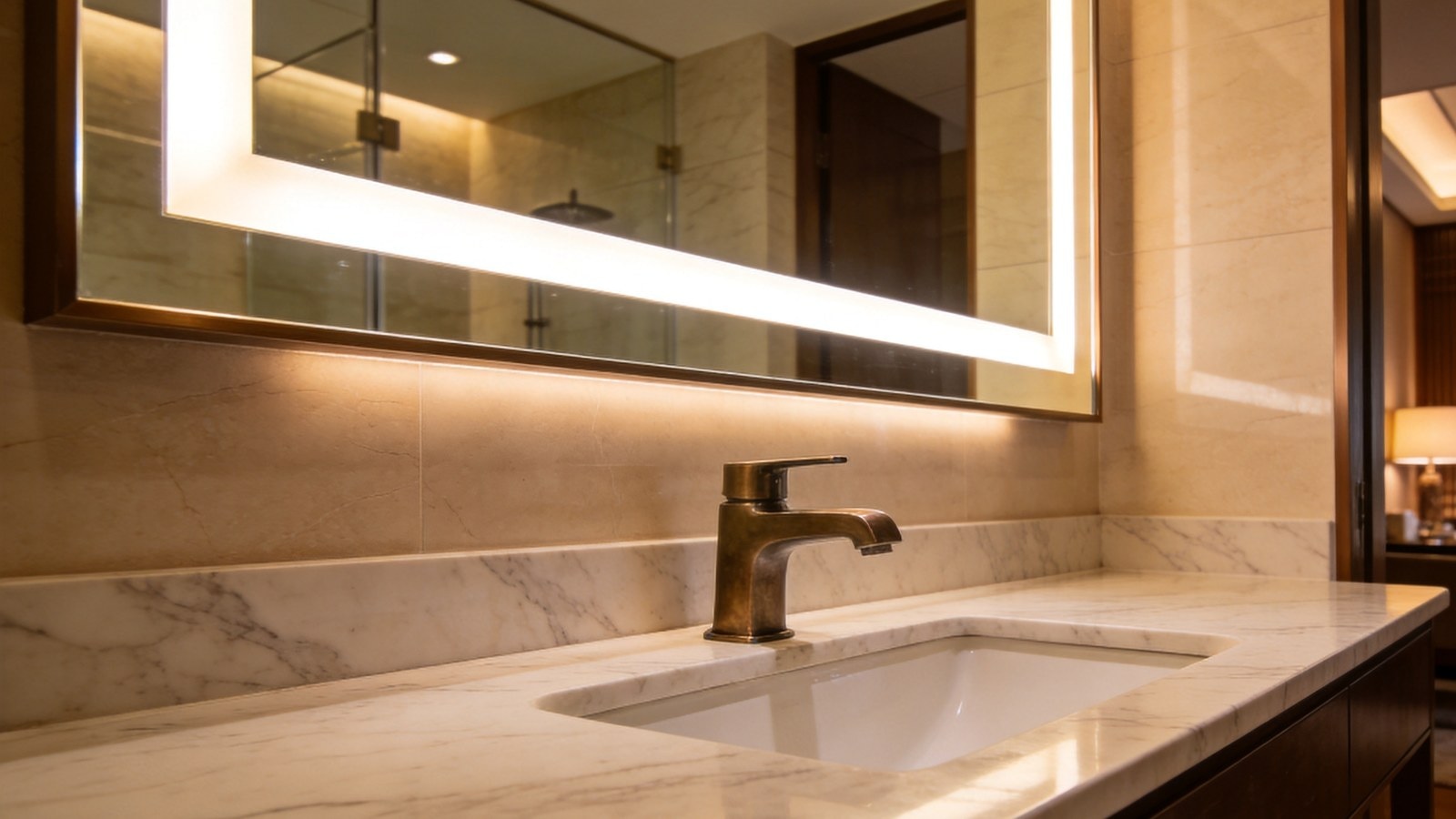
A catalog mirror arrives with fixed dimensions, one color temperature and the factory's controller. A custom order starts from the same 5 mm copper-free silver glass and lets the buyer set the rest: mirror diameter or rectangular format, the 3000K / 4000K / 6000K touch-dimmable light tiers, IP65 for shower-adjacent walls or IP44 for vanity splash zones, and the plug standard for each destination market. The electronics follow the enclosure — touch sensors and drivers are specified per SKU, not inherited.
The commercial point is simple: two importers buying from the same factory can serve different segments — one hotel renovation packages, one retail bathroom sets — without their listings overlapping on the same search page.
The Compliance Math That Decides the Order
Customization does not exempt anyone from electrical compliance; it re-aims it at the buyer's own markets.
| Requirement | What it means on a bathroom mirror | Where it is defined |
|---|---|---|
| IP rating | IP65 for wet walls, IP44 for splash zones | IEC 60529 |
| EU product-safety file | Technical file plus DoC in the importer's name | General Product Safety Regulation |
| US market record | Public incident and recall database | US Consumer Product Safety Commission |
| Glass safety class | Impact-test classes for safety-backed glass | 16 CFR 1201 |
The IP row is the one custom orders get wrong most often. The rating has to match the installation zone the marketing claims: a carton that says "bathroom" needs the wet-area test report to back it.
Customization Tiers and What They Cost
| Tier | What changes | Typical MOQ | Lead time |
|---|---|---|---|
| Logo + packaging | Silkscreen logo, custom carton | Lowest of the three | Shortest |
| Sizes + finishes | Diameters, edge polish, frame options | Mid | Standard 15–25 day range |
| Electronics + CCT ladder | Driver, sensor, dimming per market | Highest | Adds test and re-test time |
A tier-3 order re-runs electrical tests for each market variant, which is why experienced importers lock the CCT ladder first and add markets second.
Catalog vs Custom: The Real Trade-offs
| Factor | Catalog model | Custom order |
|---|---|---|
| Time to first container | Fast — existing SKU | Slower — sample round first |
| Listing differentiation | Low; price is the lever | Real; unique spec ladder |
| Compliance control | Factory's file, your risk | Your file, your spec |
| Margin at scale | Thin and shrinking | Wider, but MOQ-funded |
Where Custom Orders Go Wrong
Three failure modes eat the schedule. The brief arrives in three emails, so the factory quotes the wrong baseline and the sample round corrects it at the buyer's cost. The CCT ladder is copied from a competitor's listing without test data, so color consistency drifts between waves. A market is added after the file is built, so the DoC covers the wrong plug and voltage — and the fix is another electrical round at the worst possible moment, with the container booked.
The pattern behind all three is the same: customization decisions made outside the spec sheet. Buyers who keep one spec document, one approval date and one change log per variant rarely pay for re-tests they did not plan.
How to Brief the Factory
Send a one-page spec per variant: dimensions, glass thickness, IP rating per zone, light tiers, plug type, logo artwork, target MOQ and destination market list. Ask for the sample round, the electrical test report per market, and the DoC template before the deposit. Factories quote custom orders faster than buyers expect — what slows them down is a brief that arrives in three separate emails.
FAQ
Can custom LED mirrors keep IP65 if the buyer changes the light panel?
No. The enclosure and the light panel are tested together; changing the panel or driver means the IP report must be re-validated. Budget re-test time on tier-3 orders.
Does a custom logo change CE paperwork?
It changes whose name sits on the Declaration of Conformity. Importers selling under their own brand sign the DoC and hold the technical file.
What MOQ should a first custom order start at?
Factory-direct smart mirror lines commonly open around 20 pieces per variant; tier-3 electronics changes push the practical minimum higher.
Do custom mirrors ship with the destination plug?
Yes, when the plug standard is written into the spec: one variant per market, with the driver matched to the mains voltage.
How long does the first custom order take?
Sample round first, then production: spec sign-off, sample approval, then a production window typically inside the 15–25 day factory-direct range, plus ocean freight. Budget the certificate or DoC work as a parallel track from day one.