Decorative Wall Mirror Planning: 5 Quiet Mistakes
Almost none of the living room mirror problems we hear about start in the factory. They start in a measurement sheet, a render, or a single word typed into a search box. A buyer asks for a big mirror, approves a decorative wall mirror from a photo, then discovers on site that the proportions are wrong or the finish reads grey next to the sofa. This piece walks through the five slip-ups we see most often on wall mirror decoration living room projects — and what to write into the brief so they don't reach your sample round.

Mistake One: Treating "big mirror" as a number instead of a relationship
"We need a big mirror" is the most common opener in our inbox, and it tells us nothing. A 1200 × 800 mm panel can swallow a narrow chimney breast and look lost on a double-height wall in the same building.
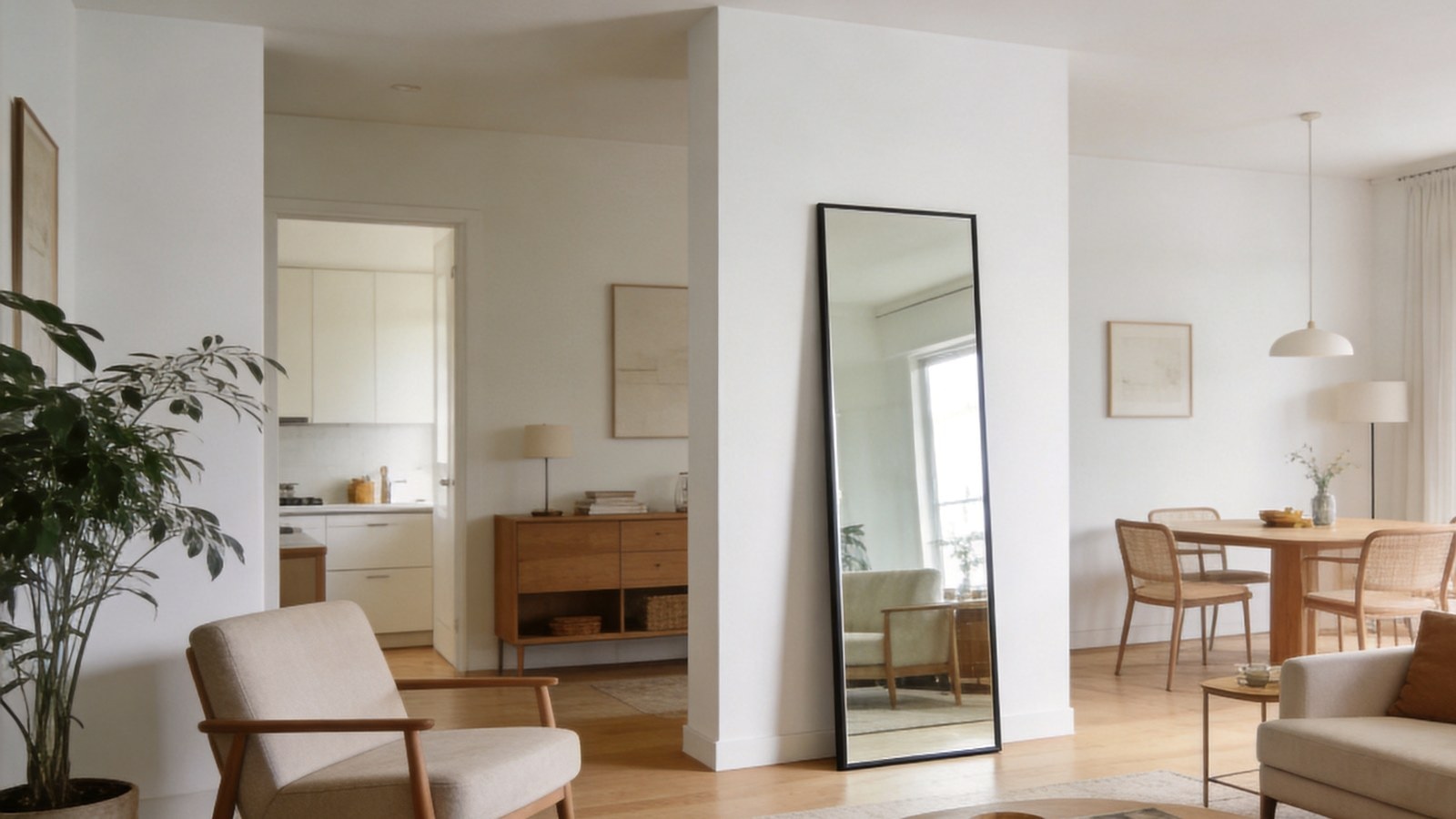
Big is a relationship between three things: the mirror, the furniture under it, and the empty wall around it. Practical habit from the projects we've shipped — keep the panel width inside the footprint of the sofa or sideboard it sits above. Slightly narrower reads calm; wider reads deliberate and dramatic. Neither is wrong, but you have to pick one on purpose.
Two more fields belong on the sheet:
- Bottom edge height. Too low and the mirror reflects skirting and cables. Too high and it stops talking to the seating.
- Weight and hanging method. A genuinely large panel needs anchoring into structure, not plasterboard alone. Ask early what the piece weighs and what it ships with, because that answer changes the installer's day.
Also worth a thought: what will it reflect? A big mirror aimed at a blank wall is expensive grey space. Aimed at a window, a plant, or artwork, it earns its place.
Mistake Two: Assuming "decorative" lives in the glass
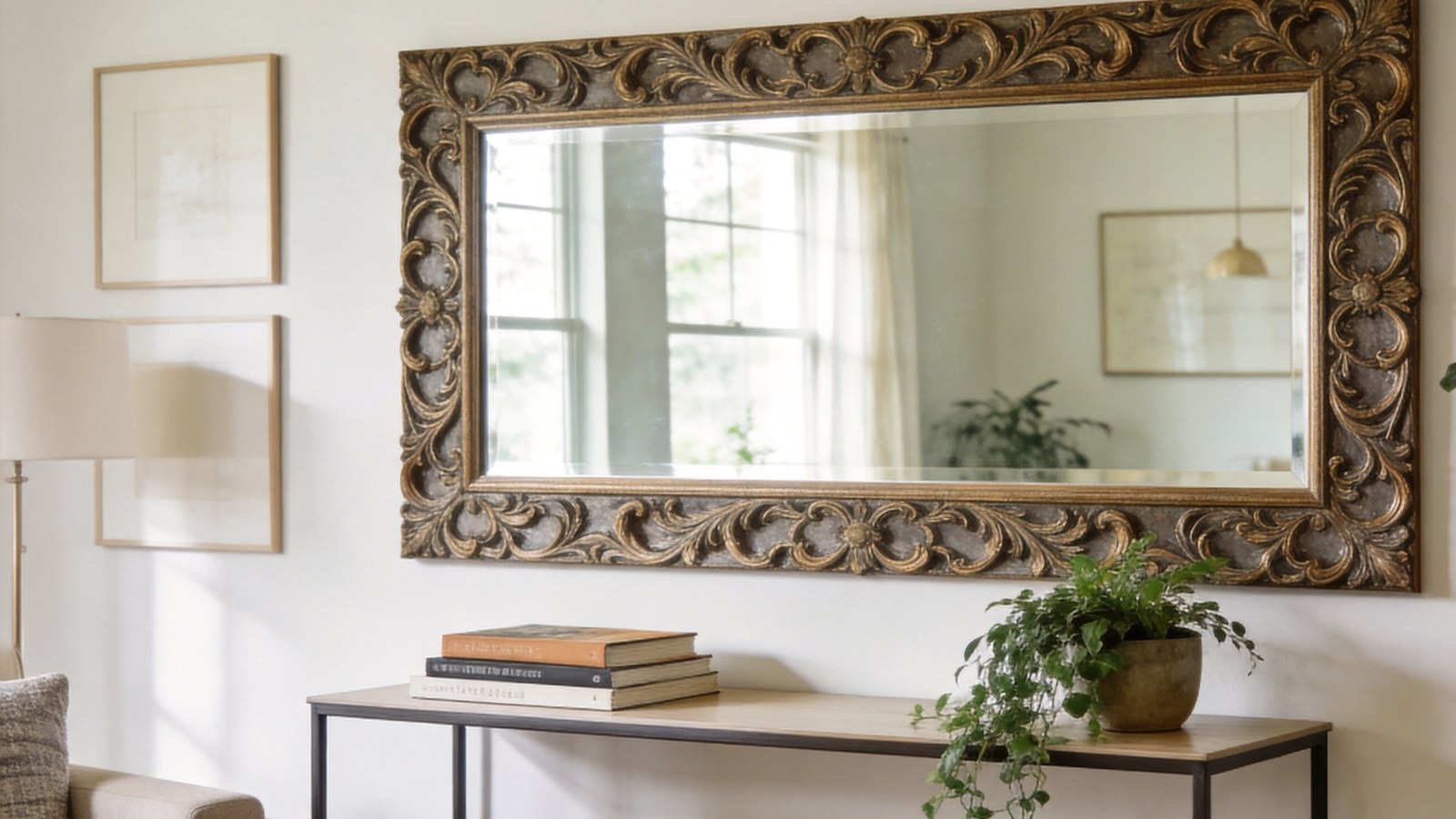
Here's the thing about a decorative wall mirror. The glass is often the least interesting part of the quotation.
On a 100-piece run, the variables that decide whether the buyer is happy are the frame profile, the finish consistency batch to batch, the backing, the edge work, and the packaging. We have watched two suppliers quote the same drawing and come back with numbers 30 percent apart — and the gap was almost never the mirror itself. It was the frame machining and how many pieces they expected to break in transit.
So ask for a physical finish sample before you sign anything. Photos lie under warm showroom light; a swatch in your hand next to the actual sofa fabric does not. And if the design is yours, not ours, say so at the start — we run both OEM and ODM work, and the difference changes who owns the drawing and who approves the tolerance.
Mistake Three: Reading "specchio" as one product
European buyers — Italian ones especially — will send a short brief that says specchio and little else. Understandable. It's just the word for mirror. But it doesn't tell the factory whether you want a framed panel, a frameless sheet, a bevelled edge, a shelf integrated into the frame, or a piece with lighting built in.
We've learned to answer that email with three questions: a sketch with dimensions in millimetres, a section detail of the frame, and the orientation. Metric dimensions matter more than people think. A design drawn in inches and converted loosely can land a millimetre or two off on a 100-piece order, and on a bevelled or mitred frame that shows.
Certification sits in the same conversation. Shipments into the EU need CE marking; North American buyers want ETL. Our factory holds both, which is why a specchio query from Milan and a living room wall mirror query from Ohio often end up on the same production schedule with different labels on the carton.
A note on vocabulary drift
If your team writes "specchio" and your factory reads "wall mirror", both of you are right and neither of you has specified anything. Agree on a drawing. Words travel badly; dimensions don't.
Mistake Four: Approving the wall mirror decoration living room plan from a render
Renders flatter everything. A 900 mm mirror looks generous in a 3D view and small on a real wall, because the render has no ceiling height reference and no human being standing next to it.
Two cheap fixes we recommend before anyone books a mould or a frame run:
- Cut the panel size out of cardboard and tape it to the wall for a day. Ugly, quick, brutally honest.
- Order a pre-production sample. On hotel custom mirror work this is standard — a mock-up room gets signed off before the floor package is released — and it's just as sensible for a retail living room line.
The sample round is also where you catch the things nobody puts in a brief: how the finish reads at 7 a.m. versus 7 p.m., whether the frame shadow line is too heavy, whether the edge catches a reflection you didn't want.
Mistake Five: Choosing the mirror before the light
A mirror is a lighting decision wearing a furniture costume. Two identical panels on two walls of the same room can look like different products.
Before the spec is locked, walk the room and note: window direction, ceiling fixtures, any wall sconce within a metre of the frame, and where the television sits. A mirror opposite a bright window will throw glare across the seating all afternoon. A mirror beside a warm sconce will pick up the frame finish and warm it.
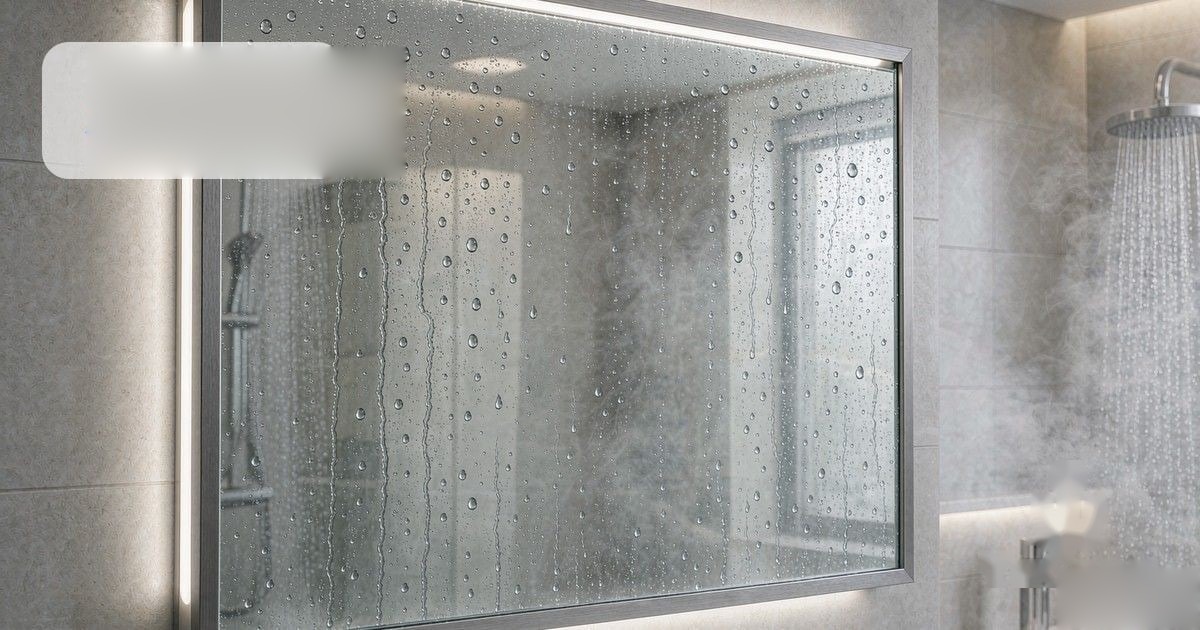
This is also where a living room order can quietly overlap with a bathroom one. If the same project includes LED smart bathroom mirrors, the wiring and driver placement plan needs to exist before the wall is closed up — and if a matching decorative wall mirror is going into the bedroom or hallway, order them on the same schedule so the finishes match. Mixing production batches across a project is how you get two "identical" frames that aren't.
A Five-Line Brief That Saves a Sample Round
We ask buyers to send this, and the quotes come back cleaner:
- Drawing with dimensions in millimetres, plus quantity per size.
- Frame profile and finish reference, with a photo of the surrounding materials.
- Mounting intention — anchored, or surface-fixed with concealed hardware.
- Destination market, so CE or ETL labelling is decided early.
- Target ship date, so the 35-day production window can be checked against it.
Five lines. It won't make the mirror, but it stops the fourth email.
Where the Factory Side Fits
For context on what we actually do: our line covers LED smart bathroom mirrors, hotel custom mirrors and vanity mirrors, with North America and Europe as our main export markets. Minimum order is 100 pieces, production runs around 35 days, and we take OEM and ODM work. If your living room programme is 20 pieces for one boutique hotel, that's a conversation worth having early rather than a reason to walk away.
The mistakes above aren't technical failures. They're decisions made too fast, in the wrong order, with the wrong words. Fix the order — survey, sample, then order — and the rest is manufacturing.
The Standards a Spec Sheet Hides Behind
Each mistake above eventually lands on a document. The jump from render to order is where US buyers confirm their glass carries impact-tested safety backing measured against 16 CFR 1201, and where EU buyers learn the mirror's technical file sits with them as importer under the General Product Safety Regulation. Neither check rescues a wrong proportion, but both belong in the order file before anything ships.
| Stage | What to attach | Where the requirement lives |
|---|---|---|
| Sample approval | Signed finish + dimension sheet | Factory QC record |
| Purchase order | Glass impact-test class | 16 CFR 1201 (US-bound) |
| Import clearance | Technical file in importer name | GPSR (EU-bound) |
Frequently Asked Questions
Is one big mirror better than several smaller ones in a living room?
It depends on what the wall is doing. One large panel over a sofa reads calm and architectural; a group of smaller pieces reads collected and works better on a wall with interruptions like doors or radiators. Decide the composition first, then the sizes. Skipping that step is how people end up with a big mirror that fights the furniture.
Does "specchio" mean something different from a wall mirror on an order?
No — it's Italian for mirror, nothing more specific. The word does not describe frame type, thickness, edge treatment or orientation, so a brief that says only specchio is not yet a specification. Send a dimensioned drawing and the answer becomes unambiguous.
What are your minimum order and lead time?
100 pieces per order, with production typically taking about 35 days. Both are worth confirming against your target ship date before you commit to a retail window or a hotel installation schedule.
Can you produce to our own design?
Yes. We handle both OEM and ODM work, so you can bring a finished drawing or a concept for us to develop. Certification for the destination market — CE for Europe, ETL for North America — is part of that conversation and should be settled before production starts.
Do you supply hotels and retail brands from the same line?
We do. Hotel custom mirror programmes and retail living room lines run alongside our LED smart bathroom mirror and vanity mirror output. The difference is mostly in the paperwork and the tolerance callouts, not in the machinery.