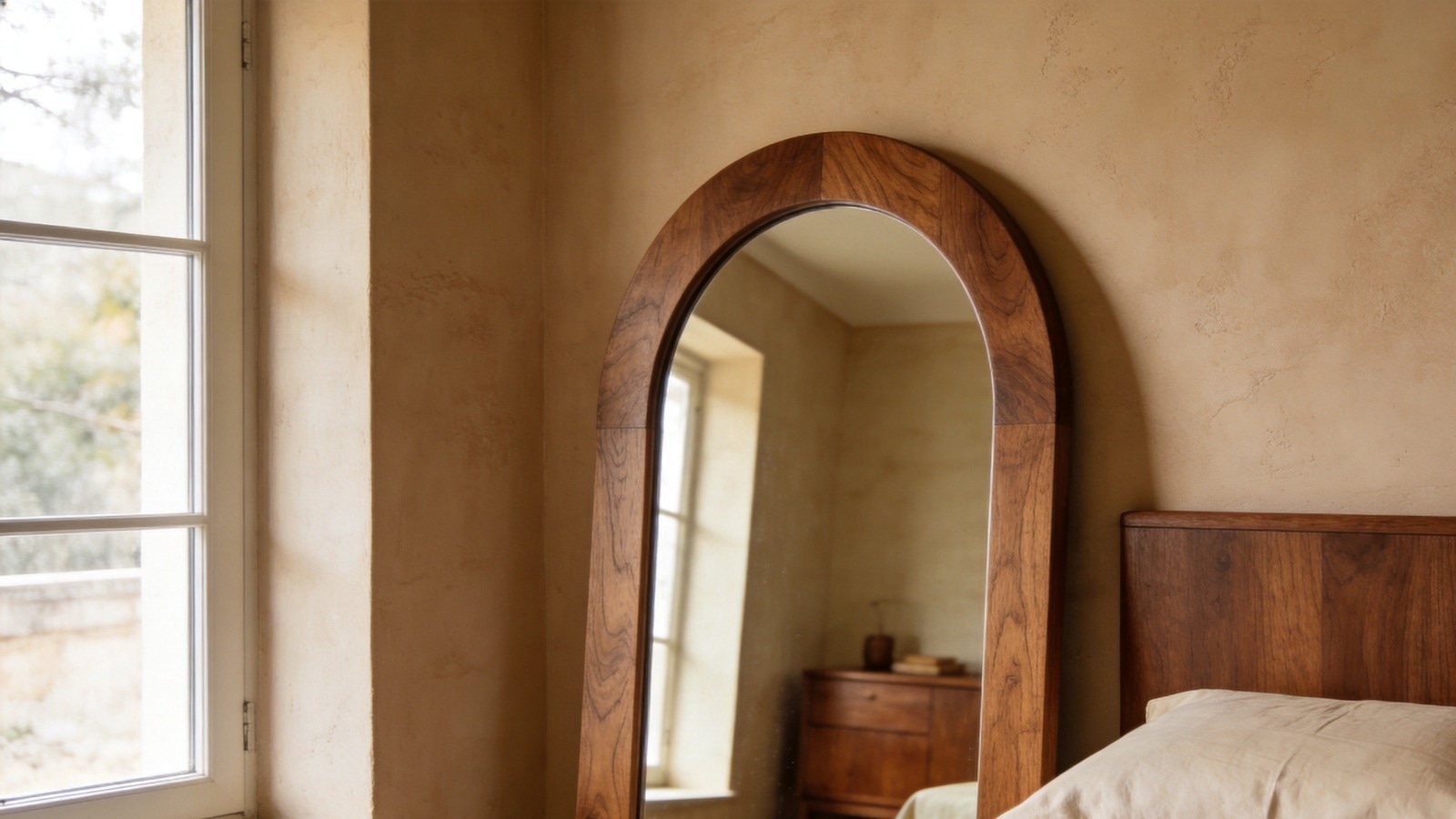
Adhesive Mirrors for Renter-Friendly Decor
A four-word brief — renter friendly, no drilling — is a mounting decision in disguise. Where adhesive panels win, where they fail, and how to carry both formats.

What Is a Search Term Actually Saying?
A search phrase tells you what the customer is afraid of, not what they want to buy.
Take espejo adhesivo: Spanish-speaking shoppers are usually describing one frustration — a mirror on this wall, and no permission to drill. The phrase is a constraint in disguise.
Stack mirrors decor wall home next to it and you get a second layer: decoration rather than optics.
A trade buyer searching wall mirror solves something else — hallway runs, hotel corridors, freight class. Same category, three jobs.
Mix them in one listing and the return rate tells the story first.
Why Are Adhesive and Framed Two Supply Chains?
An adhesive mirror and a framed wall mirror can look like siblings in a catalog and behave nothing alike in production.
An adhesive SKU lives or dies on the backing stack: release liner, adhesive layer, carrier behind the glass.
Small panels, tight tolerances, retail packaging that survives a warehouse shelf and a kitchen table.
A framed piece is a different animal: weight, bracket placement, joinery, corner protection.
Fold adhesive into a framed line item to save a purchase order and the factory has to guess. Guessing is expensive.
What Does the Glass Itself Decide?
Whatever the mounting method, the reflective surface still does the work. How cleanly the glass cuts, how the edge is treated, how the backing protects before install — that decides crisp or wavy.
- Edges matter more in humid rooms, where most field complaints start.
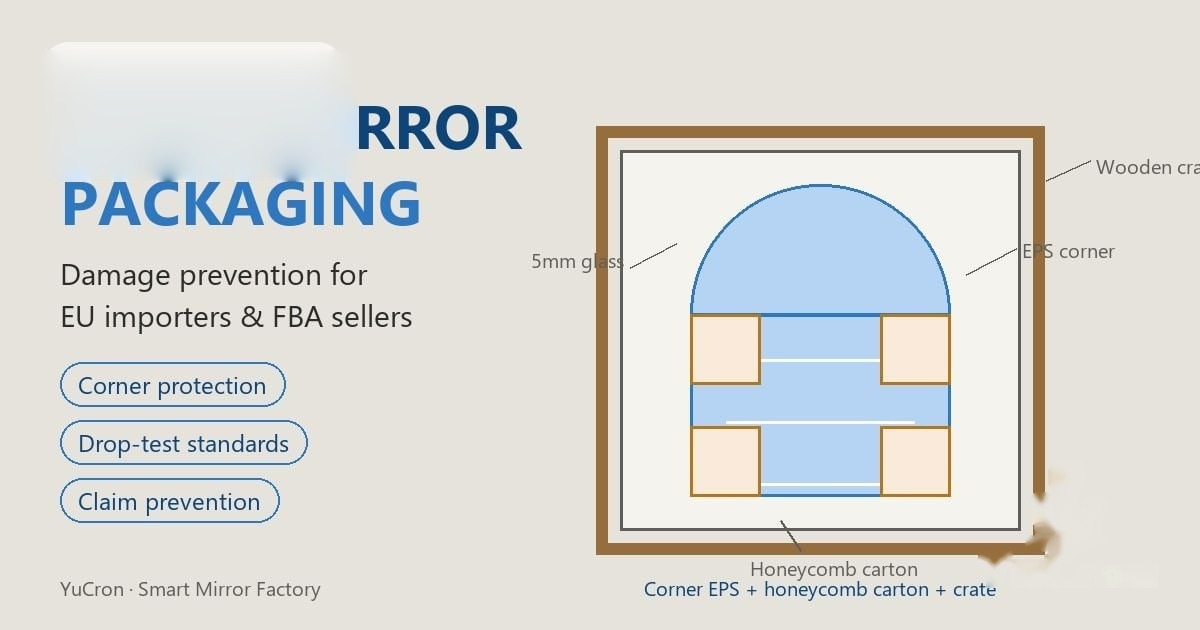
- Packaging matters more than buyers expect: a chipped corner is a return, and glass returns are never cheap.
A wall mirror forgives a lot. It never forgives the glass itself.
Where Does Adhesive Win and Where Does It Fail?
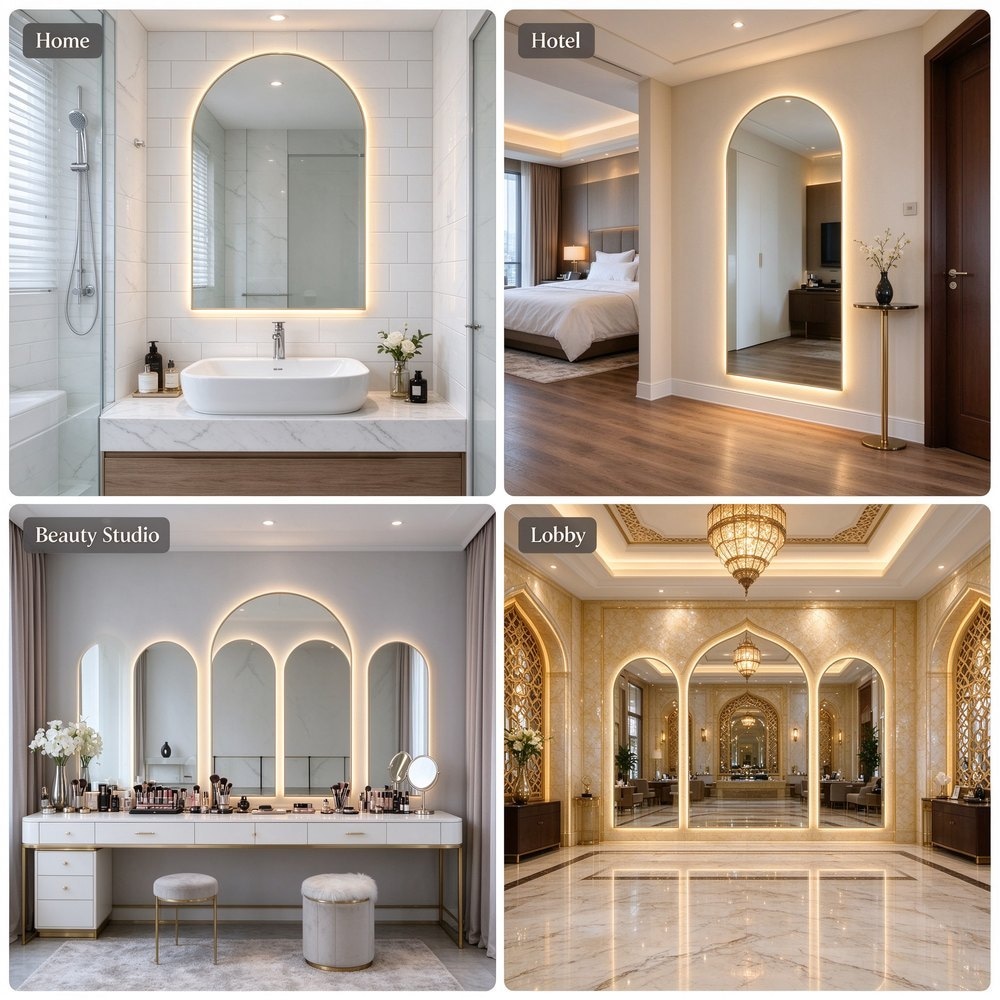
Adhesive formats earn shelf space in specific rooms: dorm walls, rental hallways where the lease says no holes, home gyms, kids' rooms, compact entries.
| Adhesive wins | Adhesive fails |
|---|---|
| Rental walls where drilling is banned | Steam-heavy bathrooms |
| Dorms, gyms, kids' rooms | Freshly painted or peeling surfaces |
| Compact entryways | Oversized panels needing two hands |
The adhesive is as good as what it sticks to, and once a piece needs a level, it is a bracket job.
Sell adhesive to the renter. Sell framed to the renovator. Do not sell adhesive to the renovator.
Which Brief Saves Three Weeks?
Put these on one page and send it: wall surface the end customer will use, panel sizes and quantity per size, whether adhesive is pre-applied.
Add retail packaging format, instruction language, and destination market.
The last point is not a formality. Exporting decorative mirrors into North America and Europe brings compliance questions, and questions answered late become delays.
What Are the MOQ and Calendar Numbers?
The entry point is 50 pieces per order, and the calendar typically runs 15 to 25 days from a locked specification. OEM and ODM work are both on the table.
Do not treat those numbers as a timer that starts the day you email. They start when the spec is locked, and every week spent debating adhesive versus bracket is a week the clock has not started.
Compliance paperwork follows the destination: CE test reports are available on request for European programs, with equivalents for North American runs.
How Do You Run Both Formats in One Range?
Retailers carry adhesive and framed pieces in one program constantly. The trick is separating them everywhere the customer touches.
- Separate SKUs, always. Never one listing with a mounting dropdown.
- Separate photography: show adhesive pieces on a real rental wall, not floating in white space.
- Separate care instructions for an adhered panel.
- Separate planogram zones: adhesive in the starter section, framed in the statement section.
Keep the lines clean and the formats help each other. The renter who buys adhesive today is the homeowner who buys a framed wall mirror in three years.
The keyword gets you the click. The mounting decision keeps the customer.
常见问题 → FAQ
Is espejo adhesivo the same thing as a wall mirror?
No, though shoppers use the terms loosely. Espejo adhesivo describes the mounting method — a panel that sticks with no bracket. A wall mirror hangs on brackets or hooks. The glass can be identical; the installation is not.
Can a standard glass panel convert to adhesive mounting later?
Sometimes, but it is not a simple swap. Adhesive formats are engineered with a specific backing stack as small panels. Adding adhesive to a heavier framed panel creates weight and safety problems. Decide before production.
What is the minimum order and lead time?
The minimum run is 50 pieces, and production typically takes 15 to 25 days from a locked specification. OEM and ODM projects are both supported, and timelines count from spec approval.
Which documents apply for North America and Europe?
CE test reports are available on request for European programs, with equivalent documentation for North American runs. Requirements vary by product type and importer obligations, so confirm before the order is placed.
Where do adhesive mirrors perform worst?
Steam-heavy bathrooms, freshly painted walls, and textured or peeling surfaces. For large formats or wet rooms, a bracketed wall mirror is the more reliable choice — and the cheaper one once returns are counted.
Need pricing on any model mentioned? Send models and quantities — unit price, MOQ and lead time within 4 working hours.
Related Yucron Products
- wave full-length LED wall mirror
- wall mirror mounting: adhesive vs anchored
- Reference note: Adhesive mounts still fall under US glazing-safety expectations in 16 CFR 1201 (view)