Drill-Free Demand and Your Decor Mirror Line
One shelf hides three products: adhesive, broad-term and hung. Mounting drives weight, backing, packaging and the questions your listing must answer.
Why Does One Shelf Hide Three Products?
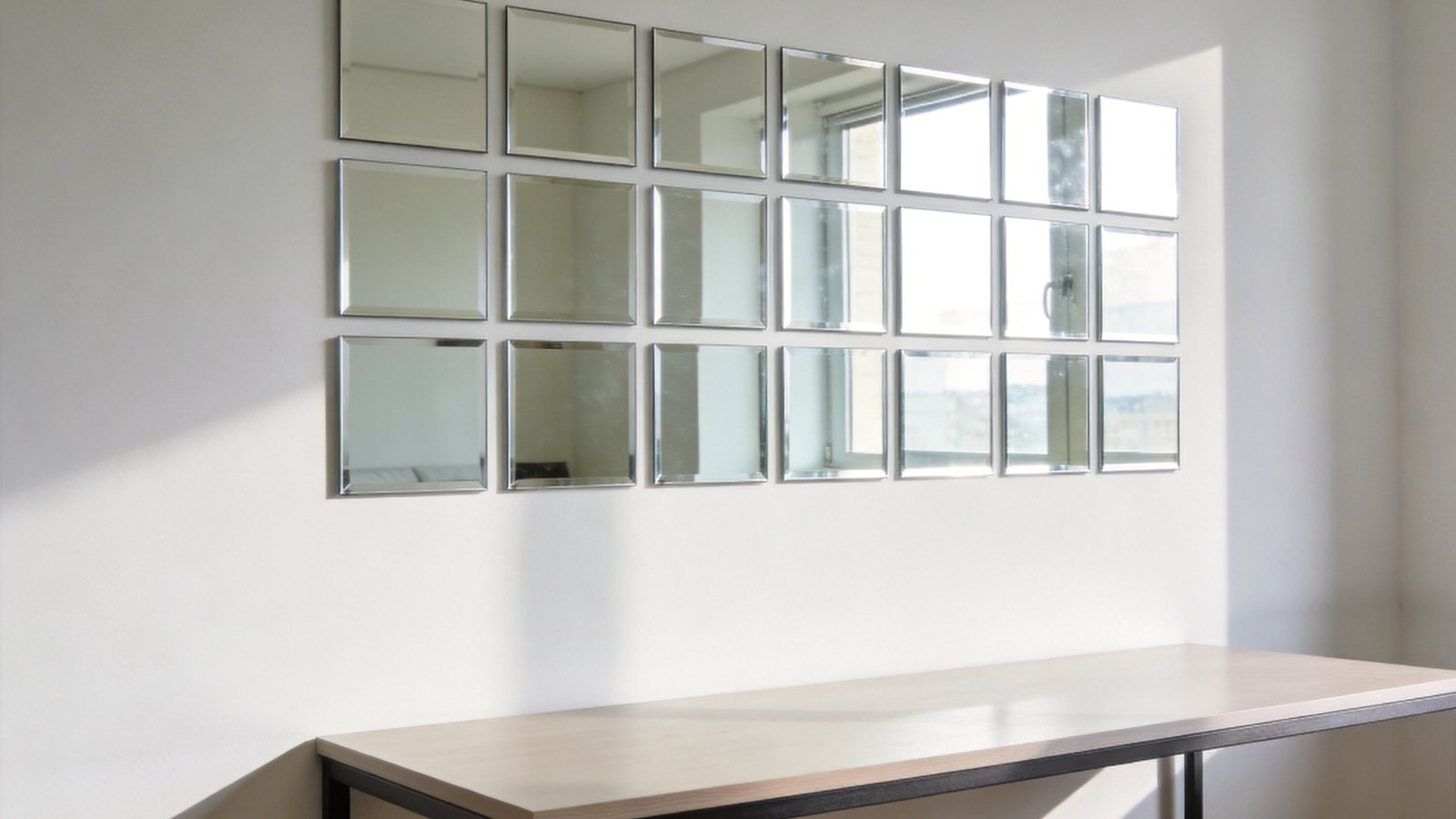
Most importers keep a single mental shelf labeled mirrors decor wall home. On it sit a frameless hallway panel, an arched piece above a console, and a peel-and-stick rectangle a renter buys because the lease says no holes.
The words promise different things. Espejo adhesivo is a method, not a style.
A wall mirror promises a location and says nothing about how it stays there. The category label tells a manufacturer almost nothing.
Mounting drives most real decisions: weight, the back, what happens when the customer moves, breakage in transit, the box.
Treat these as one SKU with two photos and you get returns — and a review saying the product was wrong when the factory built exactly what the PO described.
What Do Narrow and Broad Search Words Change?
Spanish and Swedish sit at opposite ends of precision, and the difference shapes your listing.
| Search term | Precision | Who does the qualifying |
|---|---|---|
| espejo adhesivo | Narrow: mirror and sticky | The keyword — shopper arrives half-sold |
| spegel | Broad: any mirror | Photos, dimensions and bullets |
| wall mirror | Middle: location, nothing on fixing | Your first reply: adhesive, or drilled? |
If you write a spegel listing for a Nordic market, assume the shopper is comparing four formats and cannot tell from the search term which one you sell.
Why Does Drill-Free Demand Keep Growing?
The pull toward no-drill formats follows housing, not fashion. Rented flats, student rooms, short-stay units — the faster a market's housing turns over, the more buyers ask about adhesive.
Damage deposits are real money, and a hole in the wall is the classic deduction. Rental-heavy city buyers ask first; hotel and project buyers ask later, for certain rooms.
Here is the surprise: an adhesive panel is not automatically cheaper.
Backing film, edge work, release paper and corner-safe packaging narrow the gap fast. It is a different product, not a discount version.
What Changes When the Backing Changes?
On the factory floor, the adhesive-versus-hanging decision opens a list.
- Substrate: smooth, flat, sealed surfaces. Textured plaster and brick are conversations, not assumptions.
- Moisture: bathrooms and kitchens run damp, so we ask about the room before agreeing on a method.
- Size: bigger panels mean more weight and more leverage along the adhesive line.
- Edge treatment: polished or beveled edges change handling, packing and risk.
- Hardware: brackets and screws, or a film and instructions.
- Packaging: flat, rigid, corner-protected — where most damage claims are won or lost.
None of this is exotic. It decides whether your range feels coherent or looks like three products wearing one name.
How Do Two Formats Share One 50-Piece Order?
The minimum is 50 pieces and a normal production window runs 15 to 25 days.
That is enough room to test an adhesive panel beside a standard wall mirror, provided the split is settled before artwork is approved.
- Pick the hero SKU: two equal formats usually means neither proves anything.
- Lock packaging language early; approve all three label versions together.
- Confirm compliance your channel wants: CE test reports are available on request, and anything beyond should surface at enquiry, not at the port.
- Agree one spec page — dimensions, mounting, edge, hardware, box — signed before production.
- Shoot photography around the mounting method, not the frame.
OEM and ODM are both available, so label, box and dimensions carry your brand rather than ours.
What Does a Brief That Survives Translation Say?
Write the brief for someone reading it in a second language: short lines, numbers with units, a sketch beside anything ambiguous.
Say adhesive backing, no drilling — not easy install. Say wall-hung, hardware included — not premium mounting.
The most expensive misreading is not a wrong color or dimension.
It is a buyer who assumed wall mirror meant adhesive because the reference photo showed one. Ten extra minutes on the brief beats a rebuild.
常见问题 → FAQ
What does espejo adhesivo mean on a purchase order?
It is Spanish for adhesive mirror, signaling a no-drill format: a glass panel with a backing film pressed onto a prepared wall. It describes attachment, not looks, so a factory still needs size, edge and substrate details before quoting.
Can an adhesive panel replace a wall mirror in a bathroom?
Sometimes, depending on the wall and the room. Damp conditions and textured surfaces make us cautious, and on larger sizes we recommend a hanging format. Tell us the room and the wall and we will say which way we would go.
Why do shoppers search spegel rather than a specific format?
Spegel is simply the Swedish word for mirror and carries no format information. The qualifying happens inside your listing — images, bullets, dimensions. Treat it as a broad head term, not a product name.
Should an online decor store stock both formats?
It depends on housing in your market. Where customers rent, an adhesive option earns its place; where hotel and project work dominates, the hanging wall mirror stays the workhorse. Plenty of buyers carry both and let the listing sort the traffic.
What are your terms for a first run?
50 pieces minimum, 15 to 25 days in production, CE test reports available on request for European programs with equivalents for North America, and both OEM and ODM programs. Send the market, the format and the wall type, and we quote from there.
Need pricing on any model mentioned? Send models and quantities — unit price, MOQ and lead time within 4 working hours.
Related Yucron Products
- wave full-length LED wall mirror
- adhesive mirrors for renter-friendly decor
- Reference note: Drill-free mounts still involve glazing panels, covered by US rules in 16 CFR 1201 (view)