The Gulf Cooperation Council (GCC) markets — led by the UAE and Saudi Arabia — are among the fastest-growing buyers of smart LED mirrors, driven by hotel construction booms, premium retail fit-outs and luxury residential villas from Dubai to Riyadh. For B2B suppliers and importers serving the region, the opportunity is real and so are the technical gates: voltage, certification and climate each change what a quote must contain. This guide maps the GCC-specific sourcing requirements for smart mirrors, and what to put on the RFQ before the first sample order.
For the full category overview — wholesale channels, certification and MOQ fundamentals — start from the smart mirror wholesale sourcing guide.
Voltage, Plugs and the Documentation Stack
GCC buyers run on 220–240V with the Type G three-pin plug standard across most of the region, which simplifies things for factories that already ship to the UK — but certification is where Gulf sourcing diverges. The stack every smart mirror needs for the region:
- SASO / SABER (Saudi Arabia): SABER is the electronic platform for importing regulated products into Saudi Arabia; smart appliances require conformity certification on the platform before shipment. This is a legal gate, not a marketing badge.
- GSO standards (wider GCC): Gulf Standard Organisation specifications harmonize technical requirements across member states; supporting the GSO framework shortens the path from one market to the next.
- CE + RoHS as the base: most Gulf schemes accept a solid CE technical file as the foundation, with RoHS evidence for electrical components — which is why we always build EU compliance first.
- Type G plugs and EMC: units destined for the Gulf should be configured with the regional plug or a certified adapter kit, and carry EMC documentation for the wireless functions (touch sensors, Bluetooth audio, if fitted).
For the cross-market certificate map (US, EU, Gulf), see our US, EU & Middle East compliance guide.
Climate Decides the Spec
Gulf humidity and dust change what a mirror must survive. Coastal cities like Dubai, Doha and Jeddah run high year-round humidity; inland Saudi summers push heat and sand. Three specs matter more here than in temperate markets:
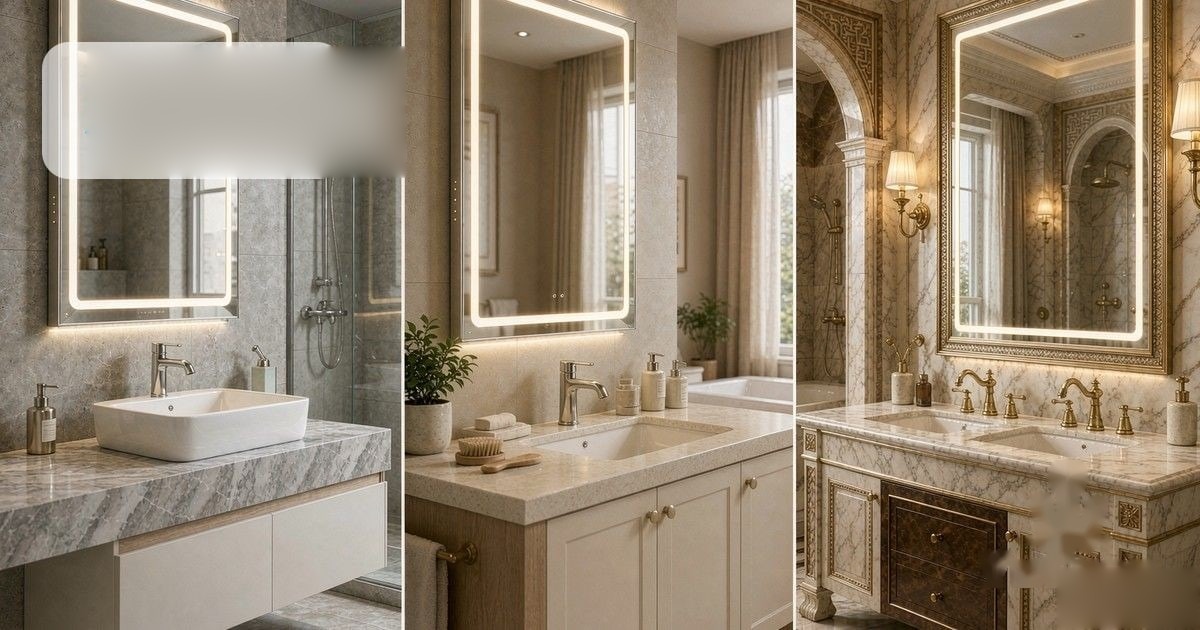
- IP65 over IP44: for bathrooms in villas and hotel suites, moisture ingress is the top failure mode. An IP65-rated unit seals against water jets and humid air, protecting the LED driver and electronics far longer than an IP44 splash rating.
- Copper-free HD silver glass: standard silver-backed glass corrodes at the edges in humid coastal air. Copper-free glass resists black-edge degradation and keeps the reflection clean for years — worth writing into the spec, not discovering after the first summer.
- Anti-fog as standard: temperature swings between air-conditioned interiors and humid bathrooms fog the pane within minutes. A full-surface heating demister clears it before use and is increasingly an expected feature in Gulf project RFQs.
Where GCC Demand Concentrates
Demand clusters in three segments, and each buys differently:
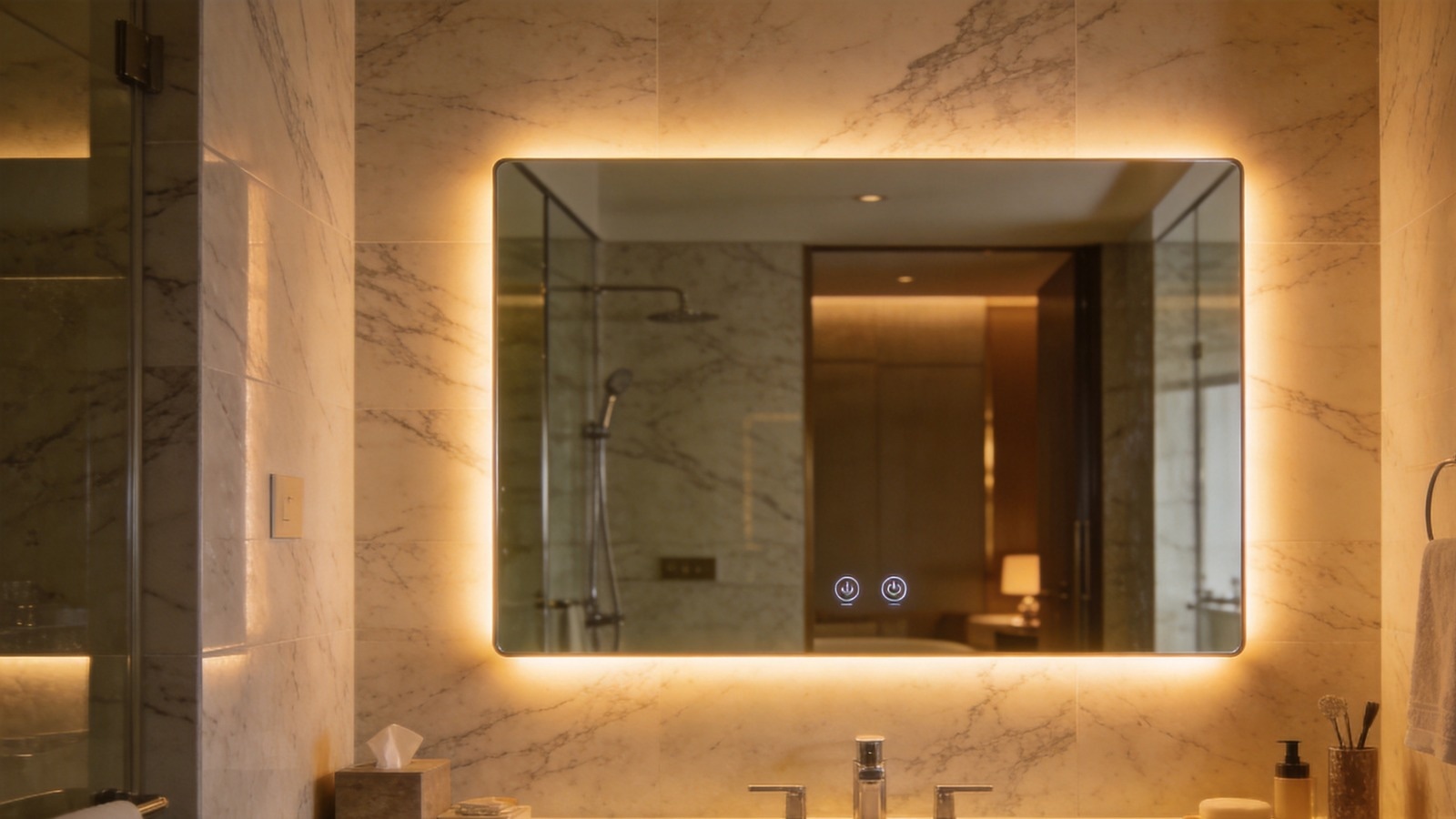
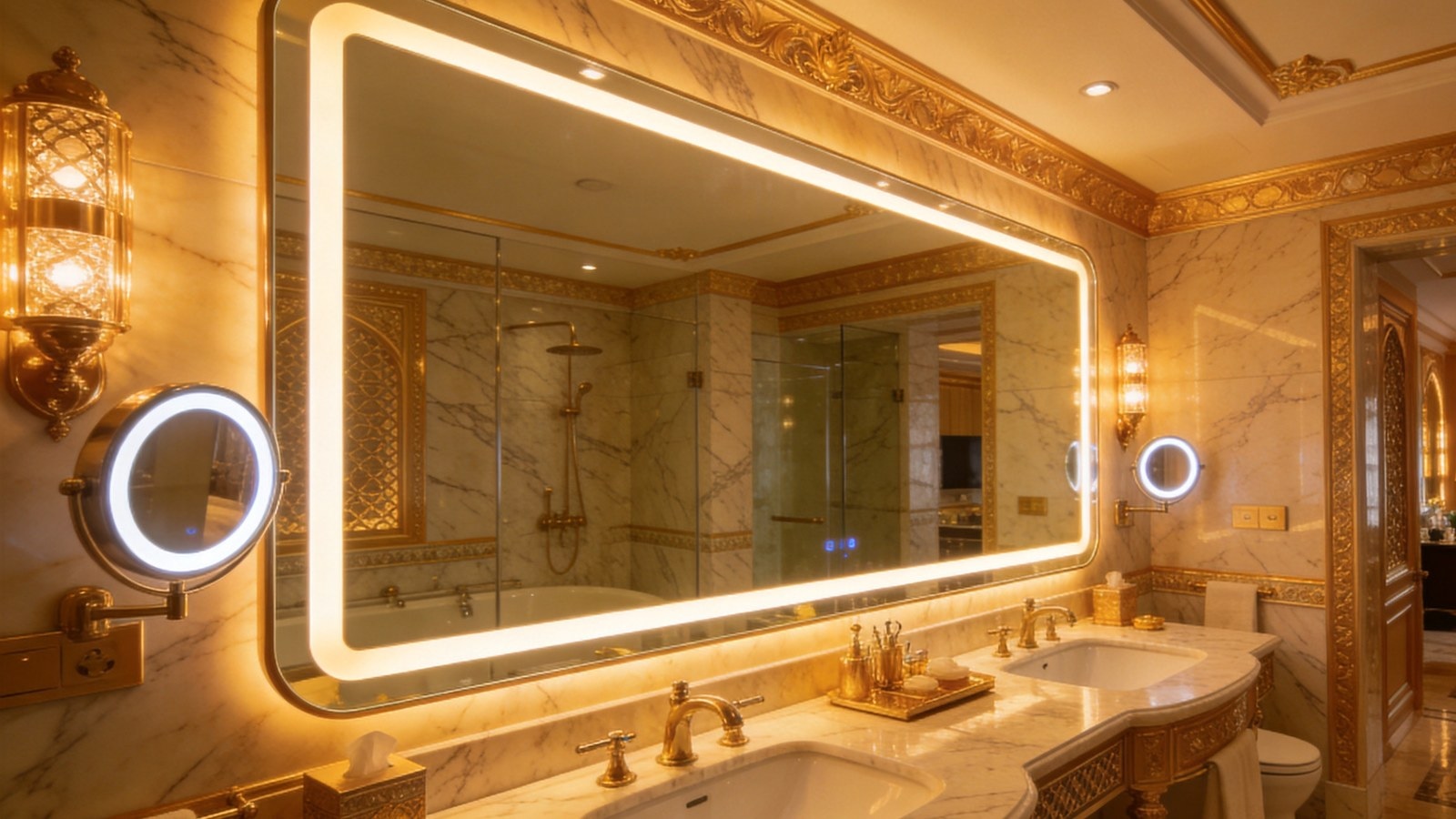
- Hospitality fit-outs: the UAE and Saudi hotel pipeline — from five-star towers to boutique resorts — spec backlit smart mirrors with tri-color lighting and touchless controls, usually through contractors and procurement consultants.
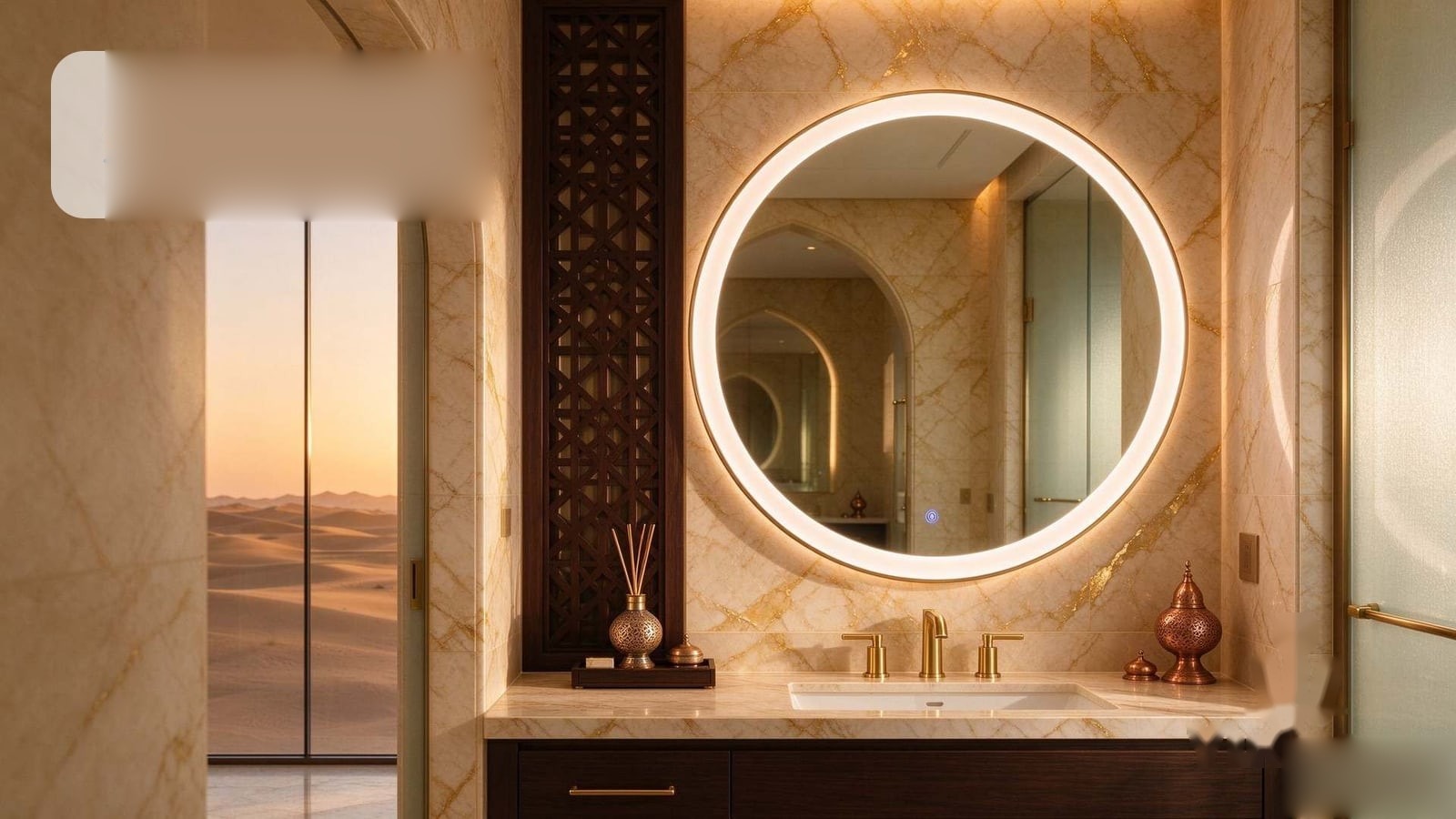
- Premium retail and residential showrooms: dealers and villa builders in Dubai, Riyadh and Doha stock smart mirrors as statement pieces, favoring frameless rounds, brass and black finishes, and large formats.
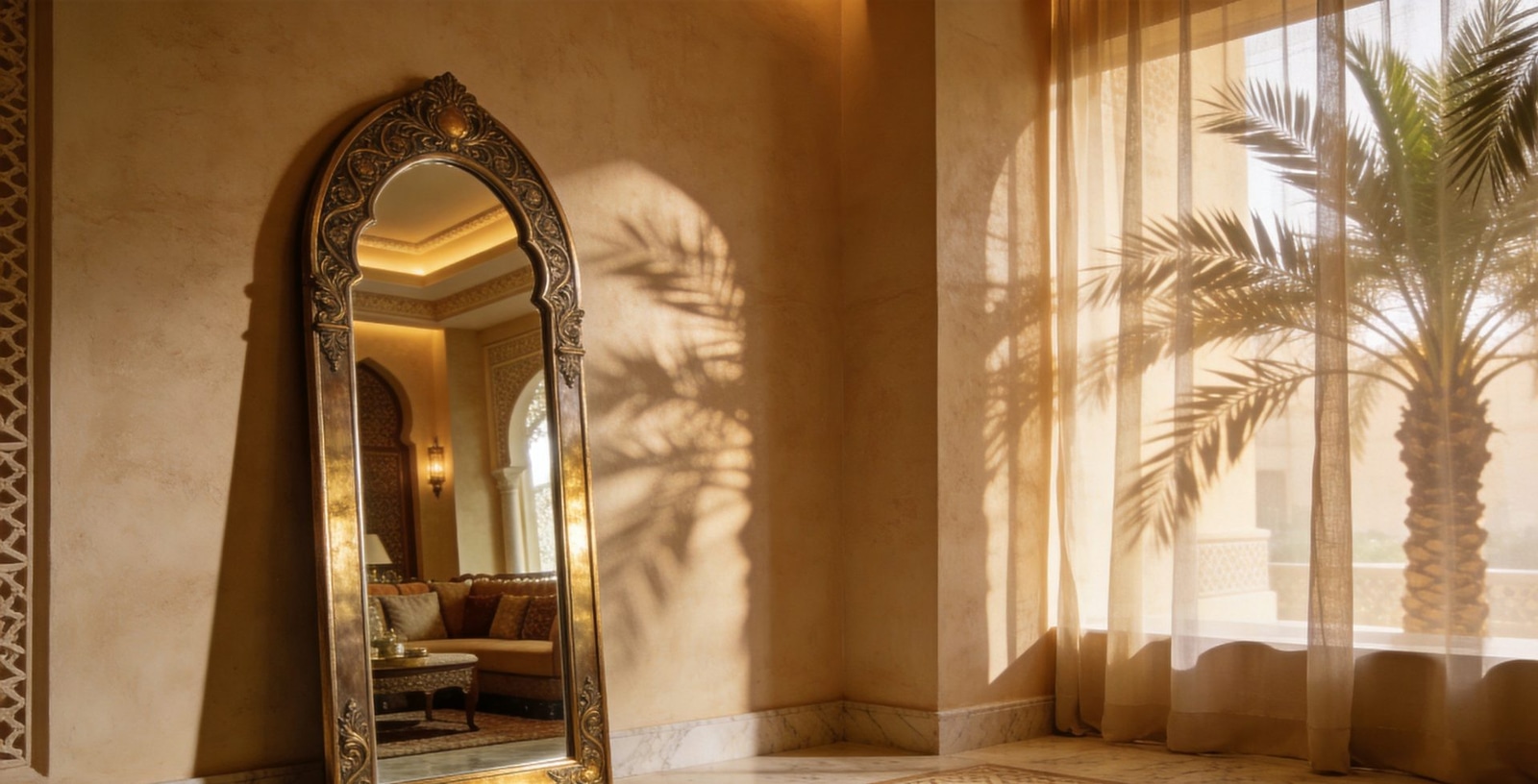
- Majlis and hospitality-style interiors: traditional majlis reception spaces and event venues increasingly integrate decorative illuminated mirrors into their design language — a niche where OEM customization (custom sizes, finishes, logos) closes orders a standard catalog cannot.
Wholesalers entering the region should read the factory-direct sourcing numbers before pricing their first container.
A GCC Buyer's RFQ Checklist
Send this with every Gulf request for quote:
- Destination country and final channel (hotel project, dealer stock, e-commerce).
- Certification files: SABER/SASO readiness, GSO alignment, CE base — ask for model-level documents, not brand-level claims.
- IP rating stated in writing: IP44 or IP65 per SKU.
- Glass spec: copper-free silver, 5mm, shatter-proof film on the back.
- Anti-fog wattage and full-surface coverage.
- Voltage and plug: 220–240V, Type G or certified adapter.
- Color temperature and dimming: tri-color (3000K/4000K/6000K) with touch or motion control.
- MOQ, lead time and ocean freight routing to Jebel Ali or Saudi ports.
A supplier who answers all eight with document references is ready for the Gulf; anything less is a quotation.
Where Each Gulf Requirement Is Official
The checklist points to real platforms: Saudi conformity runs through the SABER portal operated by SASO, and an IP65 claim meant to survive coastal humidity holds only as far as its IEC 60529 test report carries it.
| Line item | Official source |
|---|---|
| PCoC / SCOC certificates | SASO SABER portal |
| IP65 coastal claim | IEC 60529 test report |
| 230V mains compatibility | Saudi grid standard |
FAQ
Is SABER certification mandatory for smart mirrors in Saudi Arabia?
For regulated categories sold through import into Saudi Arabia, conformity certification via the SABER platform is mandatory before customs clearance. Confirm the current Harmonized System classification with a freight forwarder, since requirements evolve.
Do UAE projects accept CE documentation?
Yes, CE plus RoHS is the common technical baseline, with GSO harmonization easing movement between member states. Hotel brands and contractors usually name their exact requirement in the tender document.
What IP rating do Gulf bathrooms actually need?
IP65 for villas and hotel suites where humidity is high; IP44 can suffice for dry powder rooms. Buying IP65 across the board removes a failure mode and simplifies the SKU list.
Why does copper-free glass matter in the Gulf?
Humid coastal air corrodes standard silver backing, producing black edges and dull reflections. Copper-free glass eliminates that degradation and holds the mirror's resale and design value.
What MOQ and lead time should I expect from a factory?
MOQ 50 on stocked bathroom mirror lines; 15–25 days production after spec confirmation, plus ocean freight to Gulf ports. Custom sizes and certification documentation add lead time — start early.
Source with YuCron for the Gulf Market
YuCron is a Shahe, Hebei-based smart LED mirror manufacturer serving Europe, the Americas and the Middle East with CE/RoHS-ready products, IP54 stock enclosures, IP65 builds to order and OEM/ODM customization. For Gulf buyers we prepare the model-level documentation, regional plug configuration and project-level pricing that standard catalogs skip.
Planning a Gulf order? Contact the YuCron export team with your destination country and channel, and we'll return the certificate map, pack spec and FOB quote — in writing.