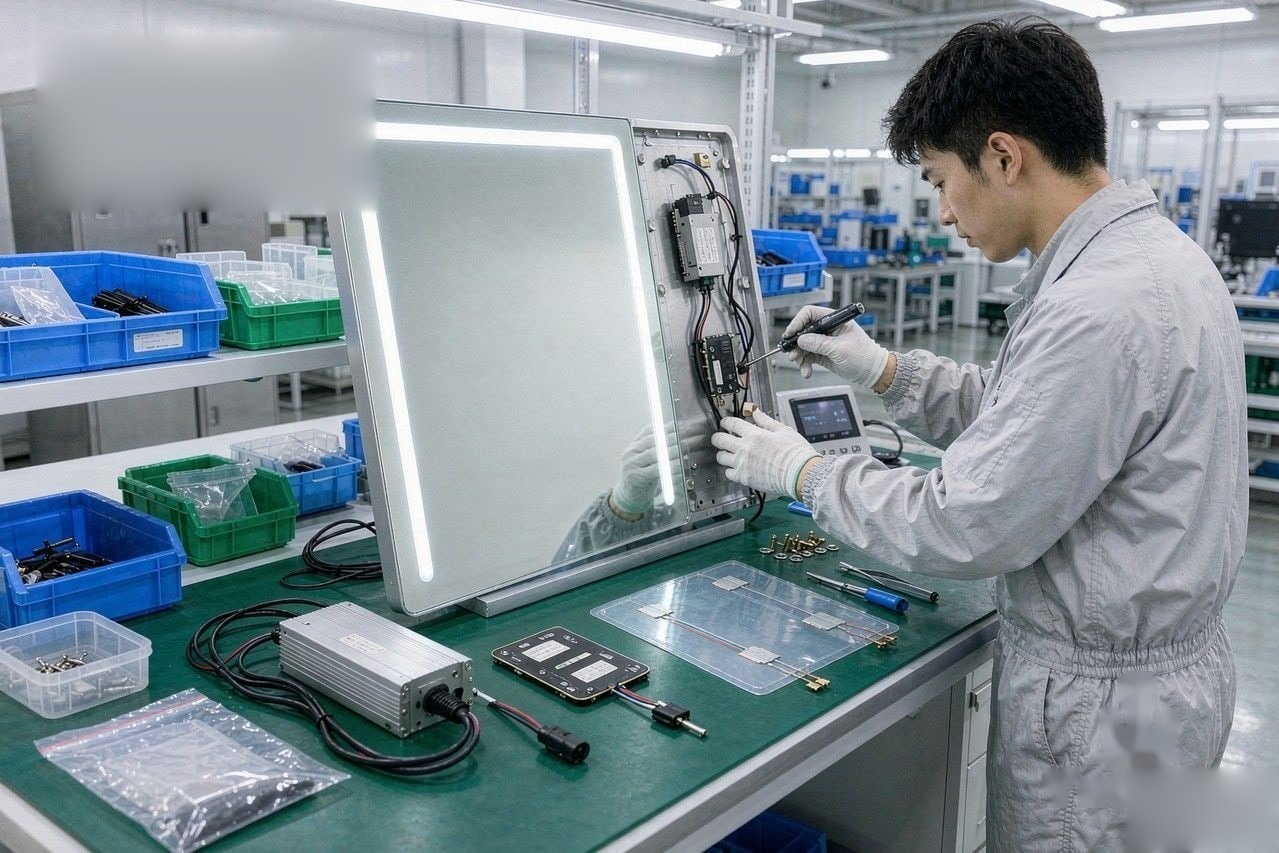
A private-label smart mirror program looks like a branding project. Most of the work is engineering. Four decisions decide the product: which glass, which driver, which frame extrusion, and which certification file carries your model number. Get those right and the logo printing is the easy part.
This is the spec sheet we use with private-label buyers — what customization actually changes, what only changes the carton, and the minimums attached to each. New to the category? Start with the smart mirror wholesale guide.
Three tiers of customization
Not every change costs the same. Buyers who know the difference stop overpaying.
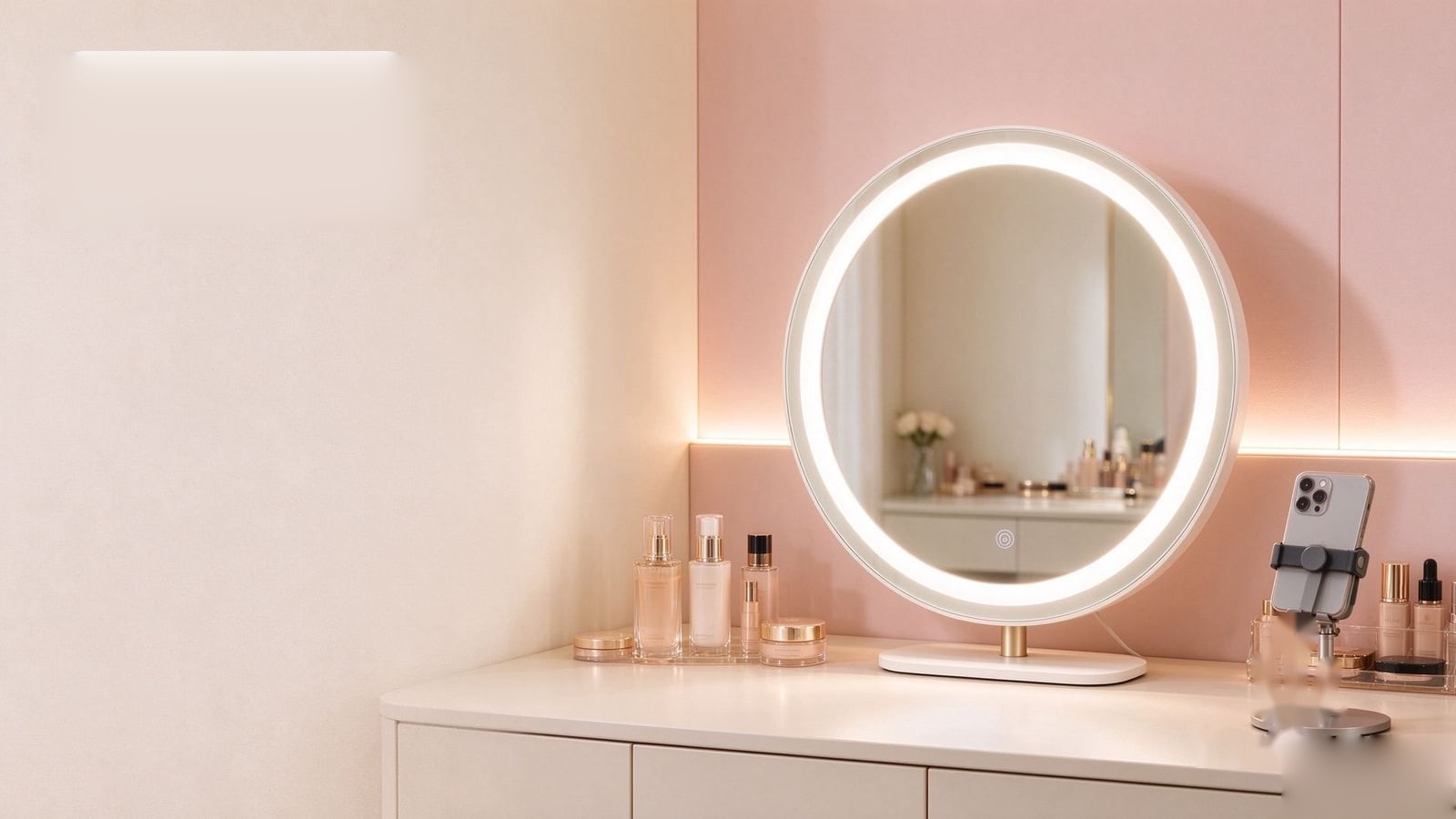
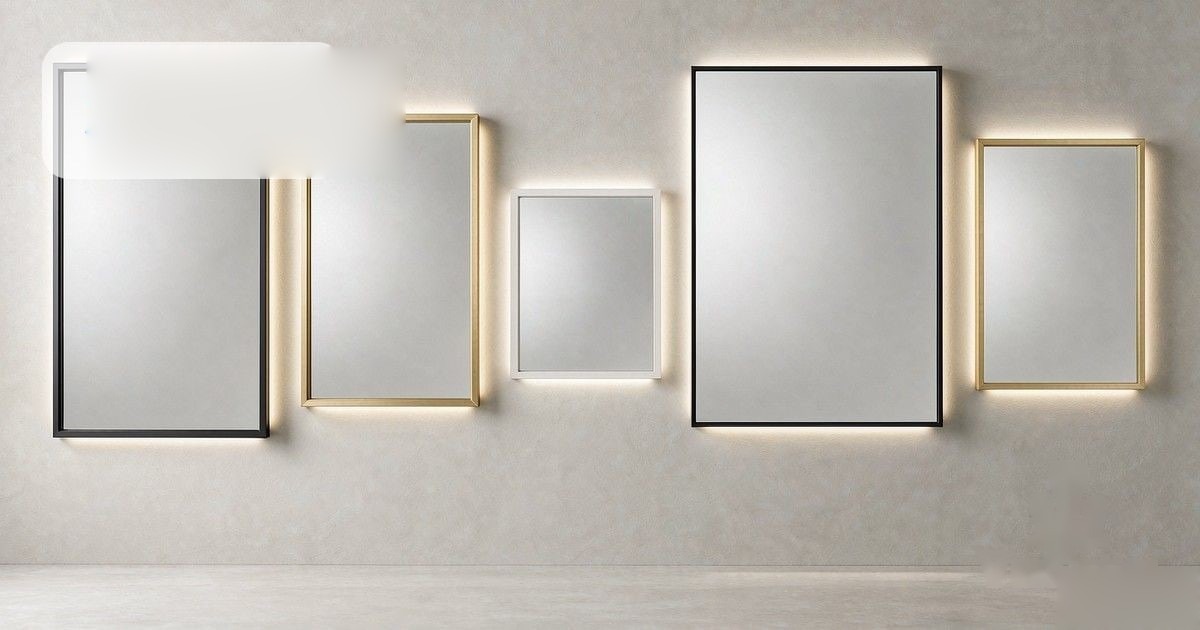
Tier 1 — finish and size (cheapest). Frame color swaps between silver, black and gold; the extrusion itself stays. Diameters run 50–90 cm on the round line, and the frameless backlit line covers 800×600 to 1200×700 mm in three stock sizes. Staying inside those bands keeps the unit on existing tooling. Push past them and you are paying for a new die.
Tier 2 — the feature stack (costs money, sells units). Anti-fog heating pad, three-color dimming at 3000/4000/6000K, a digital clock display, Bluetooth audio. Each one adds a component and a test step. The frameless backlit unit (YC-SM-E0025) pairs a smart touch panel with an optional Bluetooth speaker and a 30–60W anti-fog pad — that stack exists, so it prices as an option rather than a development project.
Tier 3 — glass and safety (don't skip it). 5 mm copper-free silver glass and an explosion-proof film bonded to the back. The film is what keeps a broken pane in one piece instead of across a customer's floor. European marketplaces treat it as table stakes.
What your logo does and doesn't change
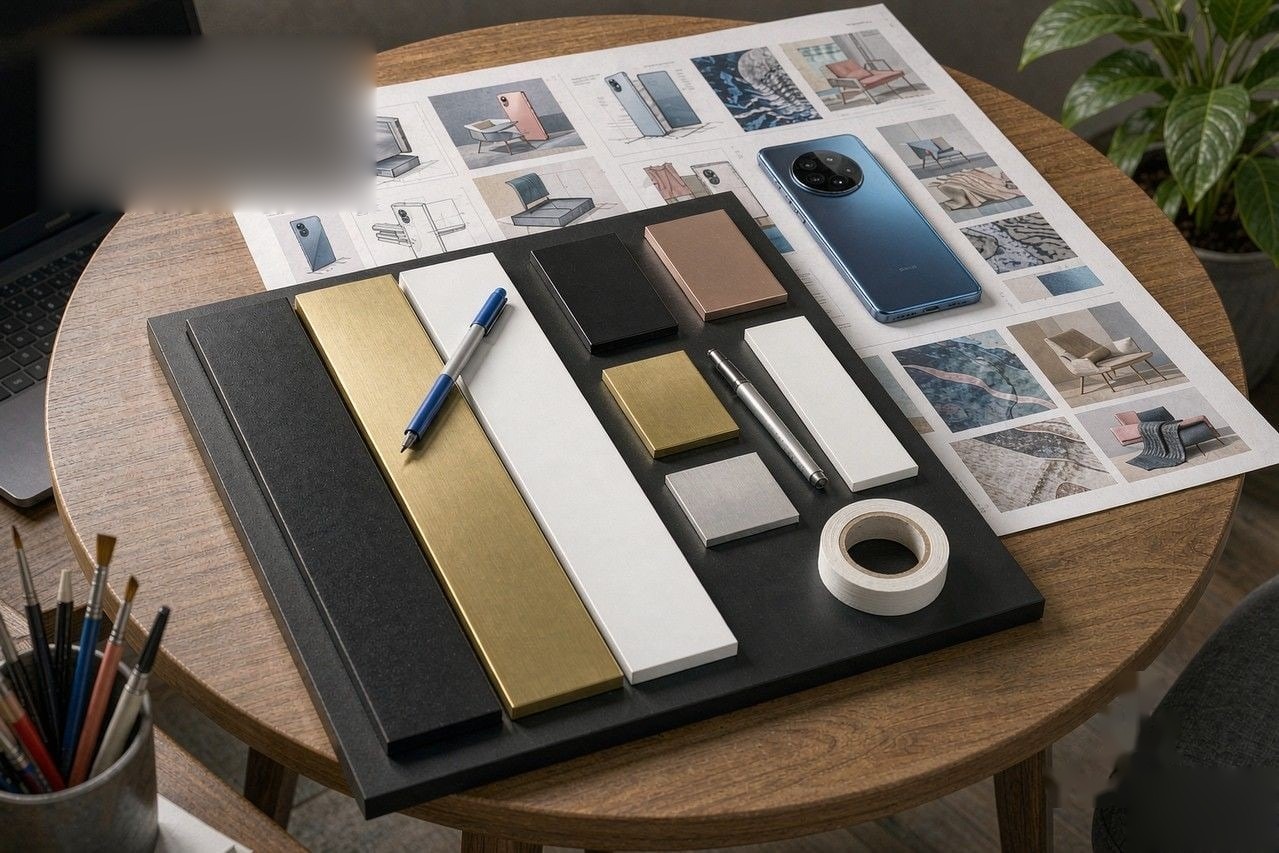
Logo printing, carton artwork and manuals are the visible layer. They do not change the electrical file — which is where private-label programs usually get hurt.
A certificate covers a specific model number. Add a Bluetooth board or swap the driver and the file that mattered no longer matches the unit you are shipping. That is the check customs and marketplaces actually run: the model number on the certificate against the model number on the carton. Two strings that differ by one suffix are two different products.
So the sequence is: lock the electrical spec, confirm the certificate covers it, then print the brand. Reversed, you brand a unit you cannot import. For the vetting steps before all this, the LED smart mirror supplier guide runs through the factory checks.
Minimums, per tier
- Tier 1 (finish and stock sizes): 50 pieces. Mixed sizes and frame colors in one container.
- Tier 2 (feature changes): the stack is modular on existing lines, so 50 pieces still holds on most configurations.
- Tier 3 (new glass sizes, custom extrusions, private-label cartons): the minimum moves. Custom sizes and printed cartons commonly land at 50 or more, because the run is set up for you rather than for stock.
Custom logos and printed cartons also add about a week, since the artwork and the carton order sit outside the mirror's own production time.
The timeline, end to end
- Technical drawings sign-off — 7 to 10 business days.
- Sample build — the unit you approve is the unit that gets built; approve it in photos and in hand.
- Production — 15–25 days after spec confirmation on stocked formats.
- Freight — 30–40 days ocean to major European and US ports.
A private-label program that starts in January lands for an April retail season. One that starts in March does not.
Where private label pays — and where it doesn't
It pays when the SKU is going to run for more than one season. Tooling, artwork and certificate updates are one-time costs spread across volume; on a single 50-piece test order they are dead weight.
It doesn't pay as a way to dodge the category's basics. A private label still needs the right IP rating for the room, a demister pad that covers the whole surface, and a driver that survives the local grid. Regional voltage, plug and paperwork differences are laid out in the EU, US & Middle East guide.
Whose Name Goes on the Paperwork
Private label moves compliance, not just branding. The importer whose brand sits on the glass answers for the product-safety file under the General Product Safety Regulation once the mirror ships under that brand, and resellers into Amazon's EU marketplace meet the same documentation expectations at inbound (seller requirements). A logo is marketing; the file is the business.
| Customization tier | Compliance carried over | Compliance re-issued |
|---|---|---|
| Logo + packaging | Existing test reports | DoC under brand name |
| Sizes + finishes | Glass class file | Updated technical file |
| Electronics + CCT ladder | — | Full re-test per market |
FAQ
What's the minimum order for a private-label smart mirror?
A: Fifty pieces if you stay on stock sizes and existing frame finishes — 100 on the round line. Custom dimensions, extrusions and printed cartons raise it further.
Can I put my logo on a stock model?
Yes — logo printing and private-label cartons are the cheapest customization tier. They do not change the electrical file, so the certificate still covers the unit.
Does adding Bluetooth change my certification?
It does. Wireless modules bring radio-equipment requirements into the file. Confirm the new model number is covered before you ship, not after.
How long from drawings to a shipped container?
About seven to ten business days for drawings, 15–25 days production, then 30–40 days ocean freight. Printed cartons add roughly a week.
Is private label worth it for a small test order?
Usually not. The one-time costs — artwork, carton runs, certificate updates — need a second season to pay back. Test on a stock model first, then brand it.
Start with your size list
The programs that go smoothly arrive with numbers: sizes, frame finish, feature stack, target market, and the quantity you expect in the first two seasons. Send those and we come back with what stays on stock tooling, what needs a new die, and the minimum attached to each.
Request a Quote → the frameless backlit LED bathroom mirror · Request a Quote