The first question a European retail buyer asks about a bathroom mirror isn't about the light. It's "what's the IP rating?" In Europe the bathroom is a regulated electrical environment, and a mirror that clears the rules sells into hotels, wet rooms and renovation programs. One that doesn't gets filtered out at the spec-sheet stage — before price is ever discussed.
This guide is for wholesale buyers, distributors and Amazon sellers building a bathroom mirror program for European markets: what the zones require, what the digits in an IP code actually promise, and which specs behind the rating decide whether the SKU survives two years of real bathrooms.
One Bathroom, Three Zones
European wiring rules treat bathrooms as a special location and split them into zones by distance from water. The UK spells this out in BS 7671 Section 701; continental systems derive from the same CENELEC HD 60364 series, so the geometry travels across borders.
- Zone 0 — the interior of the bath or shower tray. Equipment here must be immersion-rated IPX7 and run on separated extra-low voltage (SELV) at 12V AC or less. No mirror belongs in Zone 0.
- Zone 1 — the space above and around the bath or shower, up to the higher of 2.25m from the floor or the highest fixed shower head. Minimum IPX4, raised to IPX5 where surfaces get jet-cleaned.
- Zone 2 — a 600mm strip beyond Zone 1, over the same height. This strip takes in the washbasin, which means it takes in most bathroom mirrors. Minimum IPX4.
One wrinkle that matters for wet rooms: with no shower tray there is no Zone 2 at all — Zone 1 extends to a 1.2m radius from the fixed water outlet. A mirror near the shower in a wet room sits in Zone 1 territory, and the spec has to match.
What the Digits in IP44 Actually Mean
The IP code comes from EN 60529. First digit is solids, second is water, and the gap between the numbers is where cheap mirrors hide.
A 4 in the second position means splash-proof from any direction — the legal floor for Zones 1 and 2. A 5 means water jets. A 6 means powerful jets. So IP44 survives normal bathroom splashing, IP54 adds dust protection, and IP65 is dust-tight plus jet-resistant — beyond what Zone 2 requires, but exactly what a hotel that pressure-washes its bathrooms needs.
This is why the rating is a channel decision, not just a compliance line. IP44 clears residential listings over the basin. IP65 is the default ask from hospitality buyers, facilities managers and anyone selling into wet-room renovations.
Which Rating Your SKU Actually Needs
Start with where the mirror hangs. Over the basin in Zone 2, IPX4 is the minimum and IP44 meets it. Anywhere the mirror can catch direct spray — small bathrooms, wet rooms, commercial shower areas — spec IP65 and stop thinking about zones per project.
For Amazon sellers the rating doubles as listing copy. "IP65" in the bullet points answers the question European customers ask before it's asked, and it's a filter criterion on the hospitality procurement sheets you never see. A program that carries both an IP44 residential SKU and an IP65 commercial SKU covers the market with one tooling investment.
The Spec Behind the Rating
The IP number on the datasheet is where checking starts, not where it ends. What decides field survival is everything around it — the parts your customers blame you for when they fail:
- Driver — an IP67 constant-current driver out-rates the mirror itself and carries its own CE listing. The driver is the component that dies first in a humid room; a sealed one is the whole ballgame.
- Input range — AC 110–240V, 50/60Hz covers 230V Europe and 110V North America on the same SKU. US wholesalers can run our US buying checklist alongside this one.
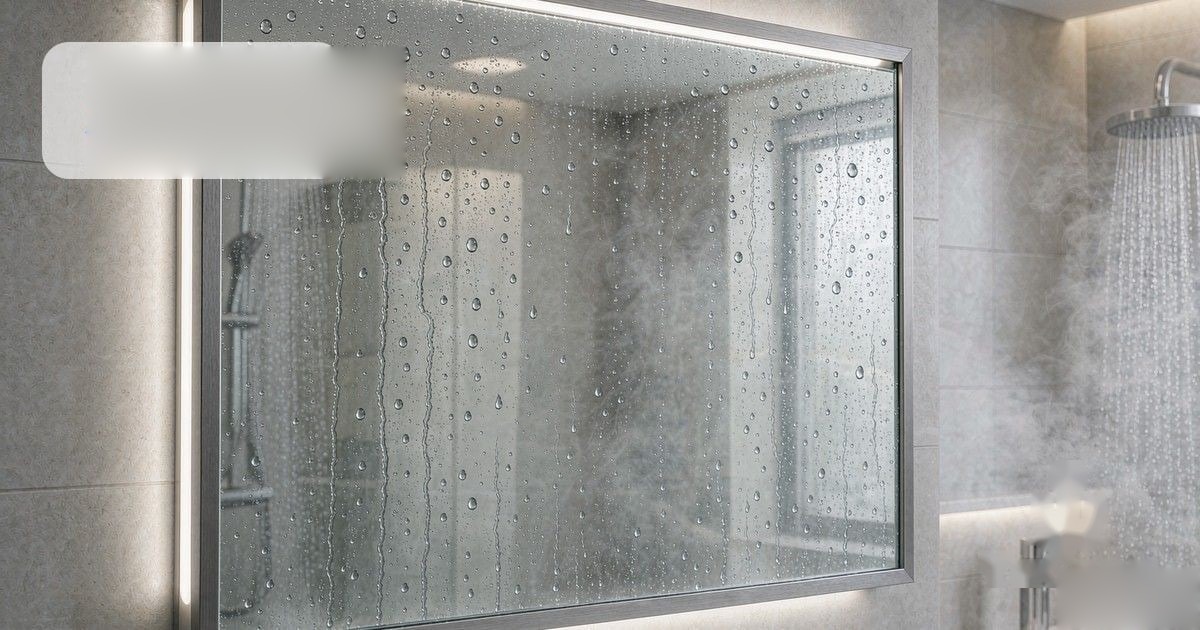
- Anti-fog — a heating pad covering the full mirror surface, not a patch behind the top edge. Condensation complaints are the quiet return driver in humid bathrooms.
- Glass — 5mm copper-free silver mirror. Copper-free is what stops black-edge corrosion, the failure mode that surfaces eight months into a humid bathroom and reads as "defective."
- Light quality — CRI Ra > 90 for skin tones that don't look grey, with 3000K / 4500K / 6500K switchable to cover warm residential and cool commercial preferences in one product.
- Control — touch dimming with a memory function, so the mirror returns to the last brightness instead of blinding whoever taps it at 6 a.m.
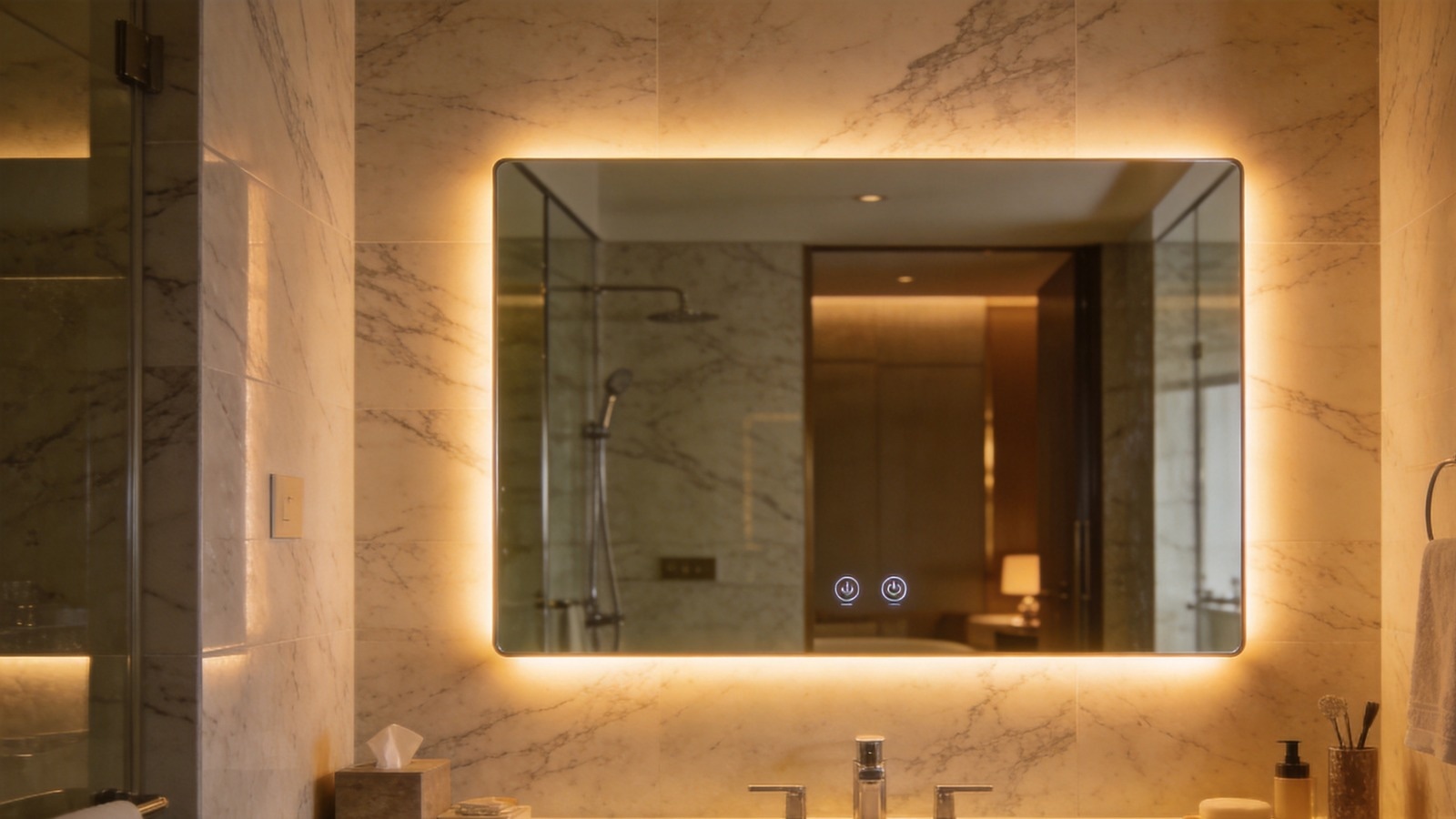
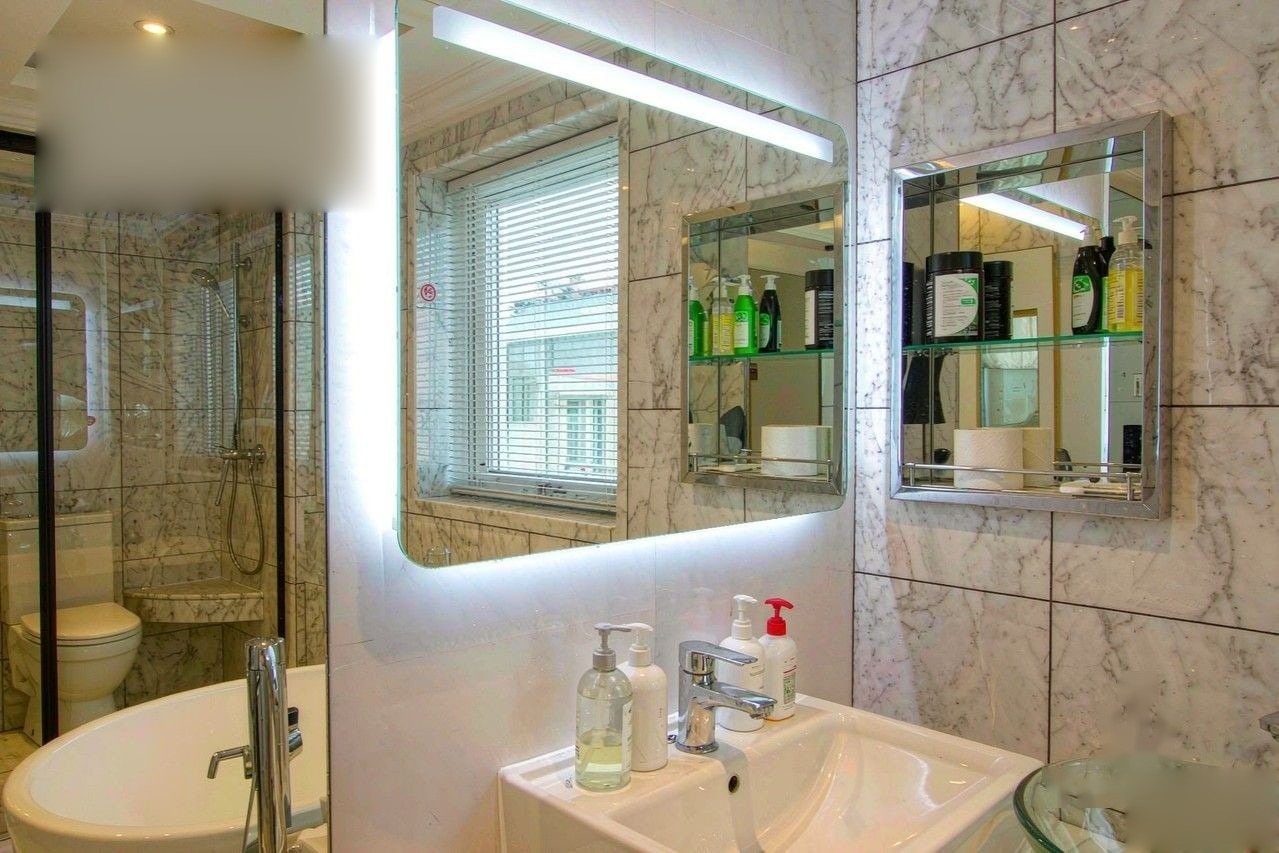
These are the specs on our frameless backlit LED bathroom mirror, which carries IP54 with a sealed aluminium back panel; IP65 and IP66 enclosures are built to order against the same chassis family — variant strategy, not four different products.
Voltage, Plugs and the Paperwork
Europe runs 230V/50Hz, and the UK runs its own plug geometry and post-Brexit UKCA marking — a UK order is a separate configuration, not a footnote. The CE file for an LED mirror needs LVD and EMC assessments plus RoHS documentation, with model numbers on the certificates matching the model numbers on your PO. For the full compliance walk-through — DoC structure, EU importer obligations, packaging EPR per country — our full-length mirror Europe guide covers it in detail.
What the Factory Order Looks Like
The YuCron bathroom mirror catalog spans the price ladder: the oval line runs $6.84–$7.12 FOB at MOQ 50, the round line $14–$26 at MOQ 100, and the frameless backlit unit $22–$38 at MOQ 50. Lead time is 15–25 days across lines, with custom sizes and laser logo engraving available per project.
Zone-to-IP Quick Map
| Bathroom position | Zone | Rating to require | What the digits buy |
|---|---|---|---|
| Basin splash radius | Zone 2 | IP44 minimum | Legal floor for splash from any direction |
| Near the shower in a wet room | Zone 1 | IP44 minimum, IP54 when dust control matters | Dust protection added on top of splash-proofing |
| Hotel bathrooms that get pressure-washed | Beyond zone minimums | IP65 | Dust-tight plus jet-resistant for commercial cleaning |
FAQ
Is IP44 enough for a bathroom mirror in Europe?
For a mirror over the basin in Zone 2, yes — IPX4 is the minimum and IP44 meets it. IP65 becomes the right spec for hotels, wet rooms and anywhere surfaces get jet-cleaned.
Do hospitality buyers require IP65?
In practice, yes. Commercial cleaning regimes use water jets, which push Zone 1 and 2 requirements to IPX5, and wet rooms erase Zone 2 entirely. An IP65 SKU avoids the per-project zone check.
What's the real difference between IP54 and IP65?
IP54 is dust-protected and splash-proof. IP65 is dust-tight and jet-resistant — sealed against pressure washing, which is the cleaning reality in hotels.
Can a plug-powered mirror be sold across Europe?
Yes, where the mounting position sits outside the restricted zones. An AC 110–240V input covers the continental 230V supply; the plug itself is configured per destination, and the UK needs its own plug and UKCA marking.
Does anti-fog actually reduce returns?
It removes the top non-defect complaint — a steamed mirror every shower — and a full-surface heating pad clears the whole pane, not just a band across the top.
What MOQ and lead time should I plan around?
MOQ 20 on the smart mirror lines, MOQ 50 on the front-lit and wall-mounted lines, 15–25 days production after spec confirmation. Custom frames and sizes are quoted per project.
Bring Your Zone Map
The buyers who move fastest arrive with the mounting position marked on a bathroom drawing: zone, mounting height, destination countries. Add a target quantity, and a sales engineer comes back within four working hours with unit pricing and the right IP variant for the job — request a quote to start.
Related Yucron Products
- IP54 commercial LED bathroom mirror
- what IP66 means in a bathroom mirror
- Standards note: the IP code system is published as IEC 60529 (view)