Asymmetrical Mirrors in Guestroom Layouts
Three languages in one brief: a lit vanity, a wardrobe wall, a dresser piece. A room-by-room walk-through that turns search words into mounting, height and finish data.

What Do Ayna, Espejos Grandes and Miroir de Chambre Carry?
A buyer sends one line: ayna for bathrooms, espejos grandes for the wardrobe wall, miroir de chambre for the dresser. Three languages, one guestroom, no sizes or drawings.
Clear the language first. Ayna is Turkish for mirror, espejos grandes is Spanish for large mirrors, miroir de chambre is French for a bedroom mirror.
None carries a specification; each carries an intention.
The ayna buyer is furnishing a bathroom. The espejos grandes buyer wants a wall filled without overwhelming it.
The miroir de chambre request is about viewing distance from a bed or dresser. Same glass, different jobs.
| Guestroom stop | Real job | Decisions that follow |
|---|---|---|
| Bathroom (ayna) | Lit vanity fixture | Electrical build, switching, surface tolerance |
| Wardrobe wall (espejos grandes) | Fill the wall honestly | Substrate, panel split, mounting height |
| Dresser (miroir de chambre) | Close-range scrutiny | Finish sample, edge detail, hardware alignment |
Why Does Ayna Usually Mean an LED Vanity?
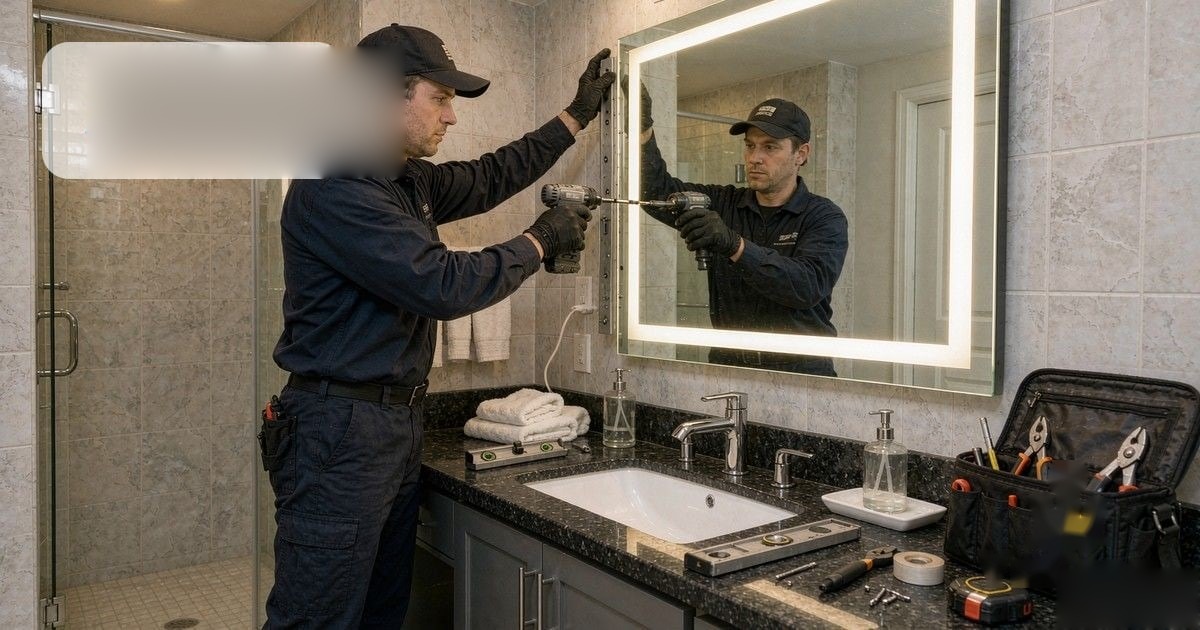
When a hotel project manager writes ayna, the piece behind it is a lit vanity most of the time. Three things matter, and one of them is the mirror.
The first is electrical. A lit mirror is a fixture, and fixtures need paperwork.
CE test reports are available on request for European programs, with equivalents for North American runs — say which regions the project spans at the enquiry stage.
The second is switching: hardwired to a wall switch or its own touch control. Both exist, and both change the wiring diagram and back-frame depth. Decide before drawings are approved.
The third is the wall. Hotel bathrooms are tiled, furred out for plumbing, and rarely flat.
Ask the contractor for the actual surface tolerance; a mirror that assumes a flat plane shows every millimetre.
What Is the Espejos Grandes Trap on a Wardrobe Wall?
Walk out of the bathroom: long wall, sliding wardrobe doors, and a note that says espejos grandes. Here is the trap — large is a shipping word as much as a design word.
A tall mirror is a fragile rectangle in a crate, and the bigger it gets, the more freight, handling and wall backing argue with the drawing. Three answers come before any number.
- What is the wall: drywall on studs, tile over cement board, or a wardrobe carcass?
- What is the split: one panel, or aligned panels with a deliberate gap that reads as a design decision?
- Who is looking, and from where? A wardrobe mirror is viewed standing and in motion, which pushes toward a taller format and a raised mounting height.
Espejos grandes on a purchase order without those answers is not a specification. It is a hope.
Why Is the Dresser Mirror Judged Closest?
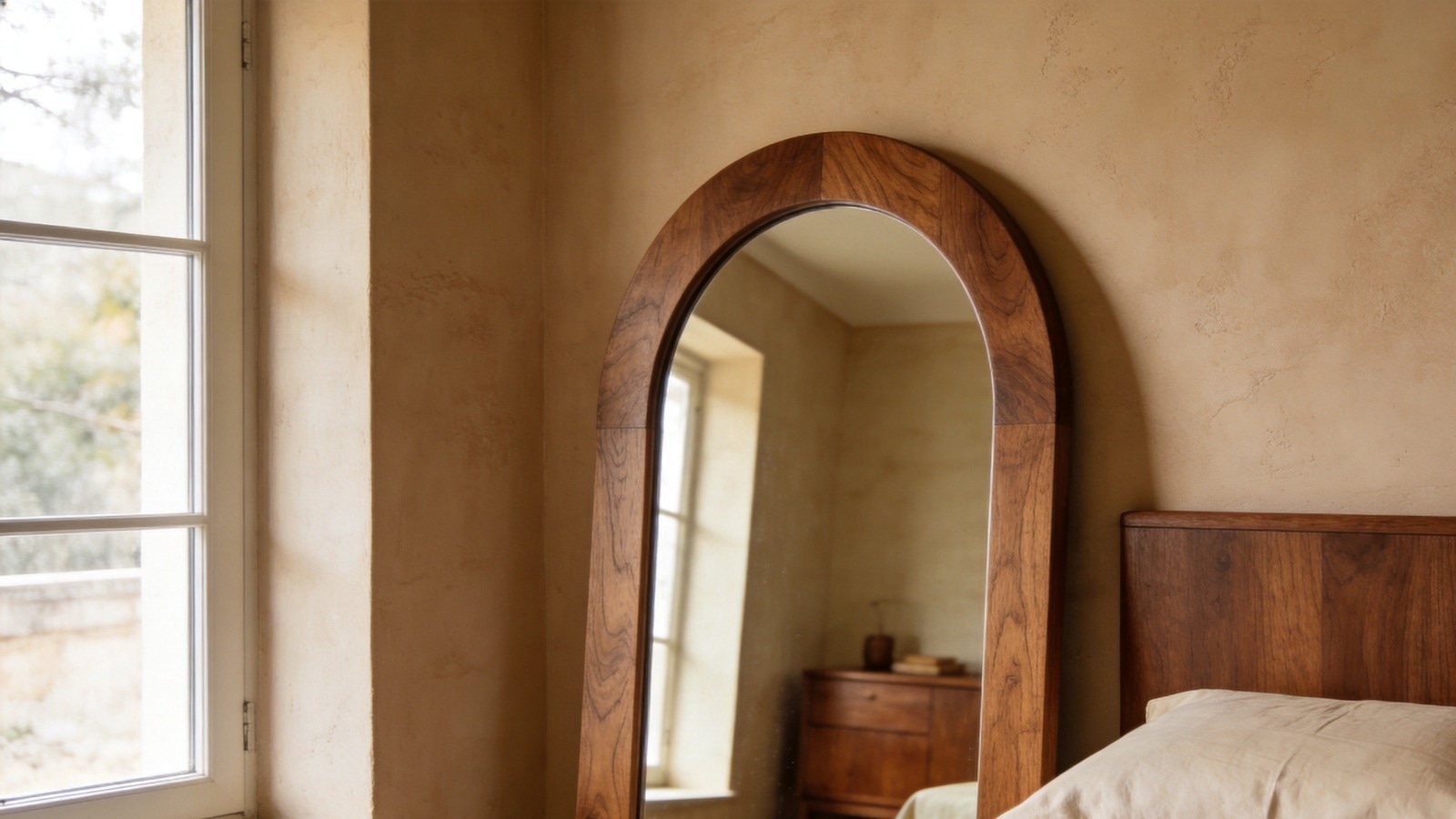
The bedroom mirror is the most scrutinised piece in the room, and it is scrutinised from about arm's length.
At sixty centimetres a guest sees the frame profile, finish consistency, the edge where glass meets frame, and the alignment of the hanging hardware.
Lobby mirrors are seen from four metres; a dresser mirror is seen by someone sitting down, tired, paying attention.
That is why we push for a finish sample before production. Wood tones and metal coatings behave differently under bedroom lighting than under factory light — warm in the sample room, grey upstairs.
Where Does an Asymmetrical Piece Earn Its Place?
An asymmetrical mirror is the piece people ask about last and remember first.
It gives a plain wall an axis that is not the wall's centre, which stops a long narrow room from feeling like a corridor with furniture.
It also adds work, and it is fair to say so.
An asymmetric shape needs a defined balance point, or the mirror looks crooked even when the level says otherwise, because the eye reads weight, not geometry.
It needs a paper template for the installer, corner protection that matches the profile, and consistency across the run.
The tenth piece must look like the first. None of that is exotic; it is detail, and detail is where mirror orders quietly succeed or fail.
What Goes Into a One-Page Guestroom Brief?
Seven items get you a quotation you can compare against another supplier's.
- Room and wall for each piece, with a rough elevation sketch.
- Viewing distance: standing, seated, or passing through.
- Lit or unlit, and if lit, the destination market.
- Mounting method: hardwired, plug-in, adhesive, or anchored.
- Finish direction, even if it is warm brass rather than shiny.
- Quantity per SKU.
- The date the first room must be ready.
The minimum is 50 pieces per order, and production runs 15 to 25 days. OEM and ODM work sits inside that: your frame profile, packing mark and control layout are normal for us, not a favour.
Which Mistake Shows Up in Every Third Project?
Buyers specify the mirror. They do not specify the wall, the light, or the installer.
Then the mirror arrives perfect and the room still looks wrong, because the piece hangs 200 mm too low, or the wall behind it is not flat, or the finish fights the joinery.
The mirror takes the blame. It usually is not the mirror.
So add the wall, the light, and who stands in front of the glass. The words get you to the right supplier; the context gets you the right mirror.
常见问题 → FAQ
Does an asymmetrical mirror cost more than a rectangular one of the same area?
Shape alone is not the cost driver; cutting yield, edge finishing, templates and packing protection are. We quote from the drawing rather than a catalog, so send the shape and we will tell you where the cost sits.
What does espejos grandes actually mean on a purchase order?
Nothing precise. It is a search phrase describing an intention, not a specification. A usable order line needs width, height, wall substrate and mounting method, or two suppliers will quote two different products.
Can bedroom mirrors and lit bathroom mirrors share one run?
Yes. Both sit inside our hotel custom mirror work under OEM and ODM in the same production cycle. Plan for the electrical build, since lit units carry market-specific documentation and unlit bedroom pieces do not.
Which documents apply to LED mirrors?
CE test reports are available on request for European programs, with equivalent documentation for North American runs. Tell us the destination at enquiry so the electrical build is right the first time.
How long does production take, and what is the minimum order?
The floor is 50 pieces and a run takes 15 to 25 days. Add freight and installation when building a room-ready date, and tell us that date early — it changes how we sequence the schedule.
Need pricing on any model mentioned? Send models and quantities — unit price, MOQ and lead time within 4 working hours.
Related Yucron Products
- oval LED hotel bathroom mirror
- arched dressing mirror for bedrooms
- Reference note: Guestroom mirror placement has design precedents in museum collections like the V&A (view)