A hotel mirror order isn't a retail purchase wearing a suit. When a property refreshes 180 guest rooms, the mirror spec becomes a facilities document. It has to survive housekeeping chemicals, decade-scale humidity, and a rollout calendar the GM has already promised to ownership. Miss a detail and you're not fixing one mirror — you're fixing 180 of them, in occupied rooms, on your budget.
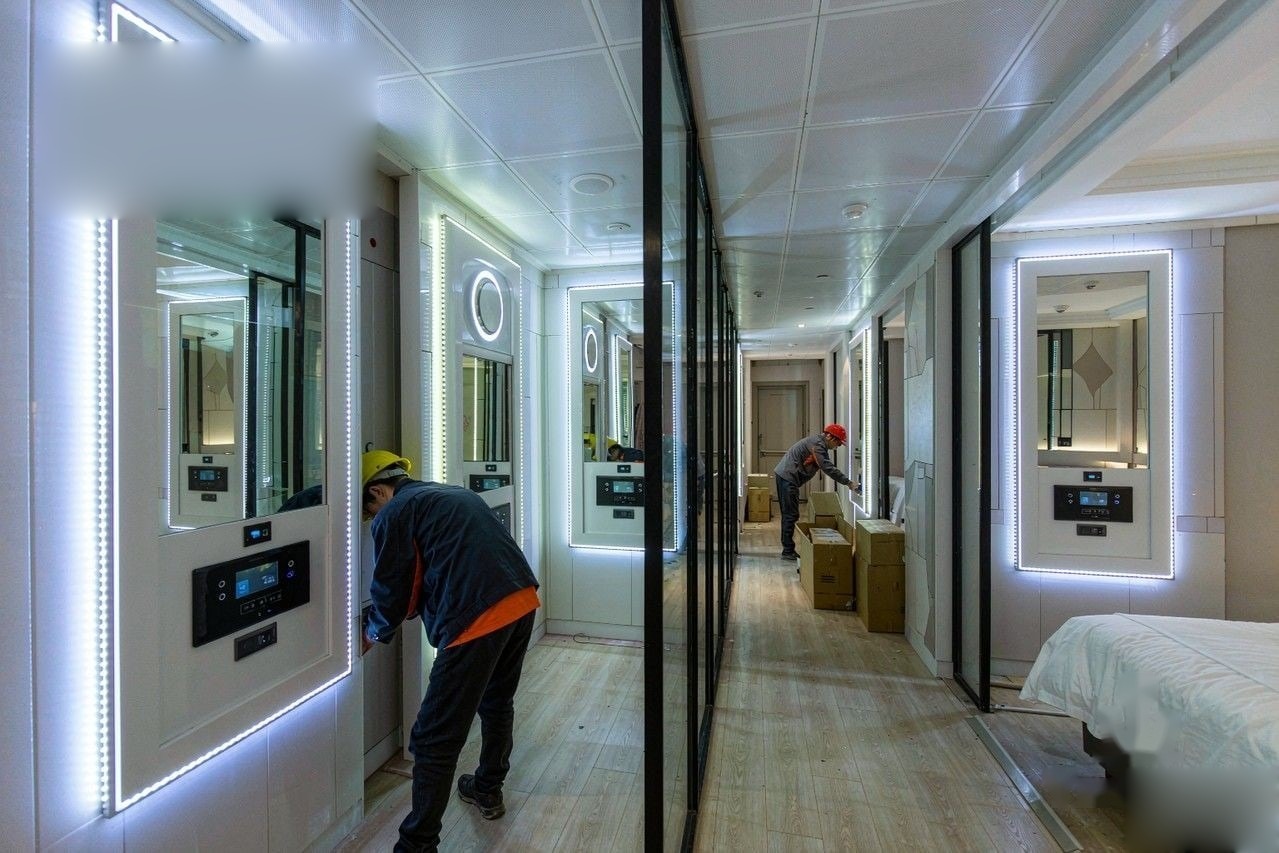
This one's for project buyers and designers specifying LED bathroom mirrors for US hotel properties and resort portfolios. The compliance-and-vetting side — cert files, factory checks, supplier red flags — lives in our LED mirror wholesale sourcing guide. Here we stay on what hotel work specifically demands. For retrofit work — swapping mirrors into existing vanities — see the anti-fog retrofit guide.
Where Hotel Work Differs From Showroom Stock
Retail tolerates variety. A property doesn't. Three things change the moment your order ships to a hotel instead of a showroom floor.
Batch consistency. Guests move between rooms. If room 412 reads warm and room 414 reads cool, that's a front-desk conversation by week two. Color temperature needs to match across every unit in the order — and across the follow-up order you'll place when the second tower renovates.
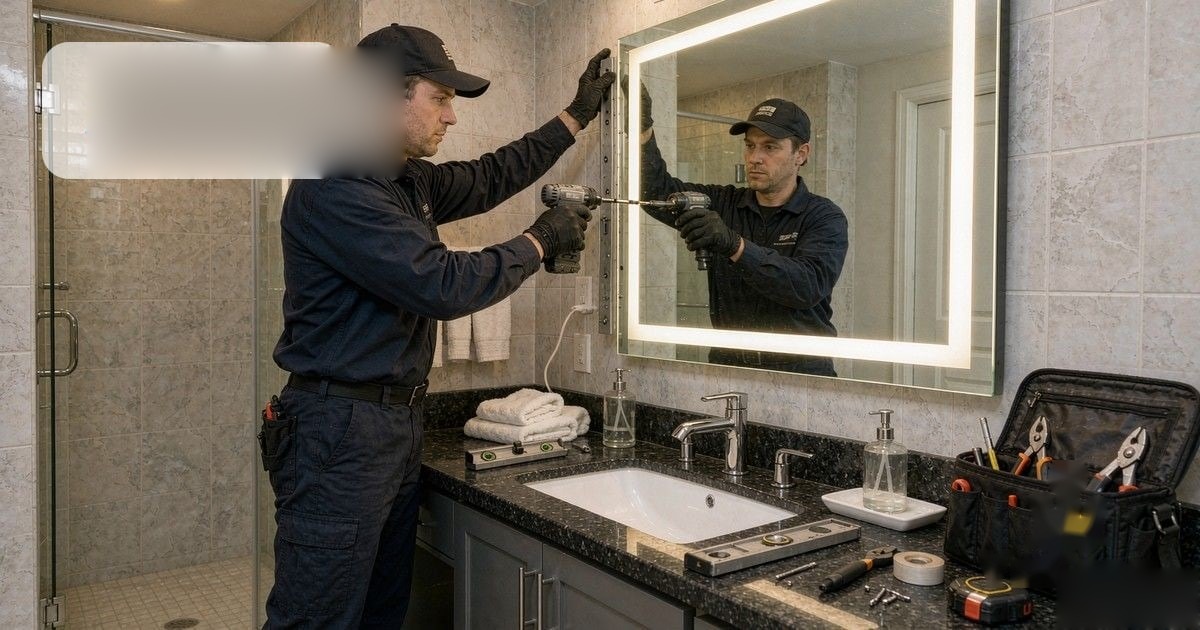
Service access. A mirror that has to be fully dismounted to swap a power component turns a ten-minute room stop into a maintenance ticket. Ask how the unit is serviced before you spec it, not after the first failure.
Chemical exposure. Housekeeping doesn't wipe these down with distilled water. Commercial cleaners hit the glass edge and frame daily for years. Mirror edges that weren't built for that develop black spotting — and the guest sees it before your maintenance dashboard does.
Wet-Area Ratings Aren't Decorative
A guest bathroom is a permanently wet environment — steam, splash, the occasional guest who thinks the mirror wants a shower too. Ingress Protection ratings exist for exactly this, and the rating should match the mounting zone.
For over-sink and shower-adjacent placements, IP65 is the sensible floor: sealed against water jets, not just splashes. Lower ratings have their place in sheltered spots, but a single rating across a mixed property usually means some mirrors are over-built and others quietly under-protected. The YuCron bathroom line, for what it's worth, ships at IP54 — a sealed junction box and silicone-sealed LED strip — which covers over-basin and sheltered wet-area positions; IP65 and IP66 enclosures are a custom build for in-shower mounts, so one product line still covers the zones instead of three vendors.
Lighting Guests Actually Notice
Guests almost never file a complaint that says "color temperature." They leave reviews that say the lighting felt harsh, or flat, or wrong for makeup. The mirror's job is to make that review never happen.
For hotel use, the practical spec is three switchable white settings — warm around 3000K for evening, neutral 4000K for general use, daylight 6000K for grooming — with touch dimming on the same control. One control, no wall switches to explain in six languages. Touch-dimmable units in the 3000K/4000K/6000K range are now standard on factory-direct smart mirrors, so accepting less is paying the same for less.
One more thing: get the CCT tolerance in writing. Two units both labeled "4000K" can land visibly apart if the factory doesn't bin its LEDs. A supplier who answers that question with a number is one who's measured it.
Glass That Outlives the Renovation Cycle
Hotel renovations run roughly every seven to ten years, and the mirror should not be the reason for an off-cycle one. The failure mode to design out is edge corrosion: standard silvered glass uses copper in the backing, and copper corrodes in sustained humidity — the black creep that starts at a corner and spreads.
The fix is 5mm copper-free silver glass. Our bathroom line states it on every model — the YC-SM-E0025 spec reads "5mm HD copper-free silver mirror, CRI > 90, anti-oxidation protective film" — and that anti-oxidation layer is the property-level promise you actually care about. Thicker glass also resists the slight bowing that shows up on larger rounds — and at 40 to 60 inches, a round mirror shows everything.
Rollout Math: MOQ, Lead Time, Phasing
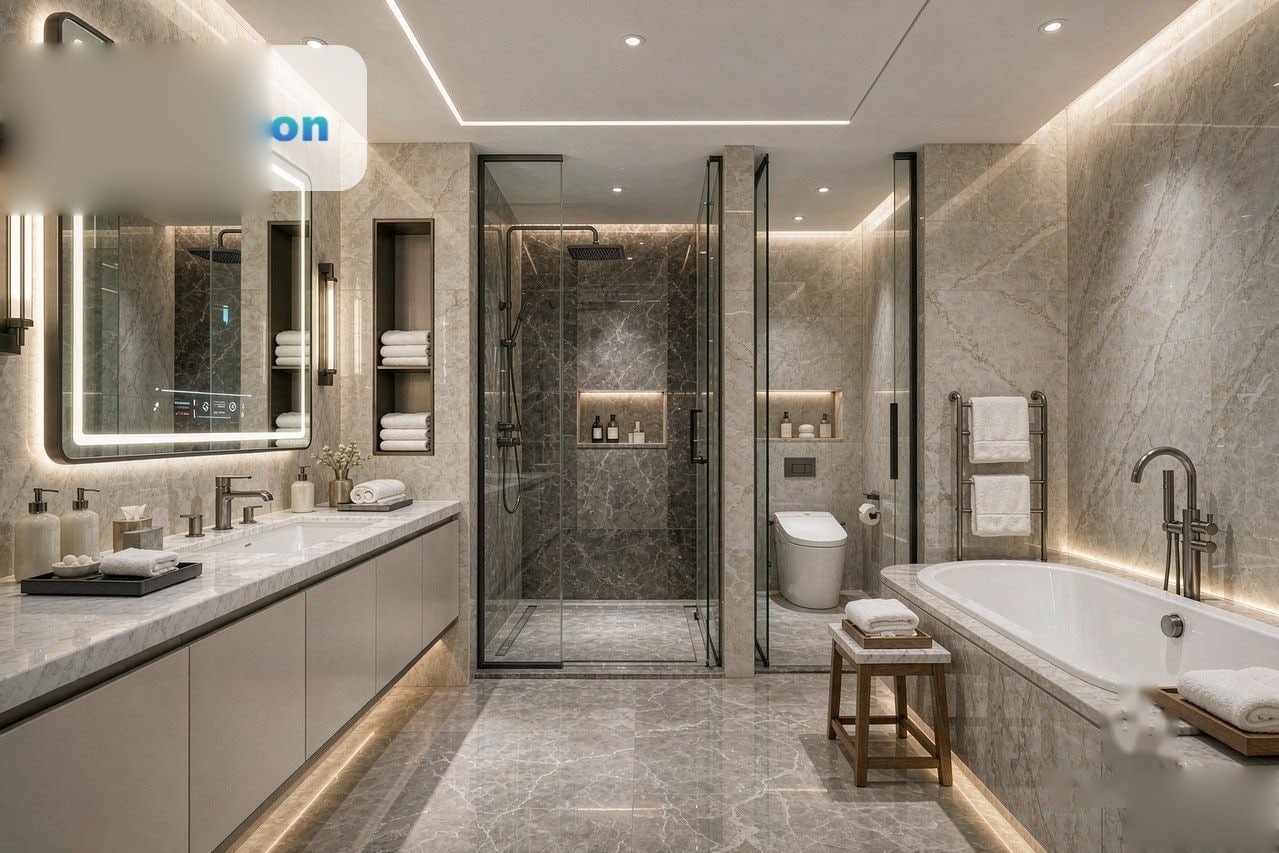
The numbers that shape a hotel project: factory-direct bathroom mirrors run MOQ 50 pieces with 15–25 day lead times after spec confirmation. That's small enough to phase a rollout floor by floor — order the mock-up room, live with it for two weeks, then release the full towers.
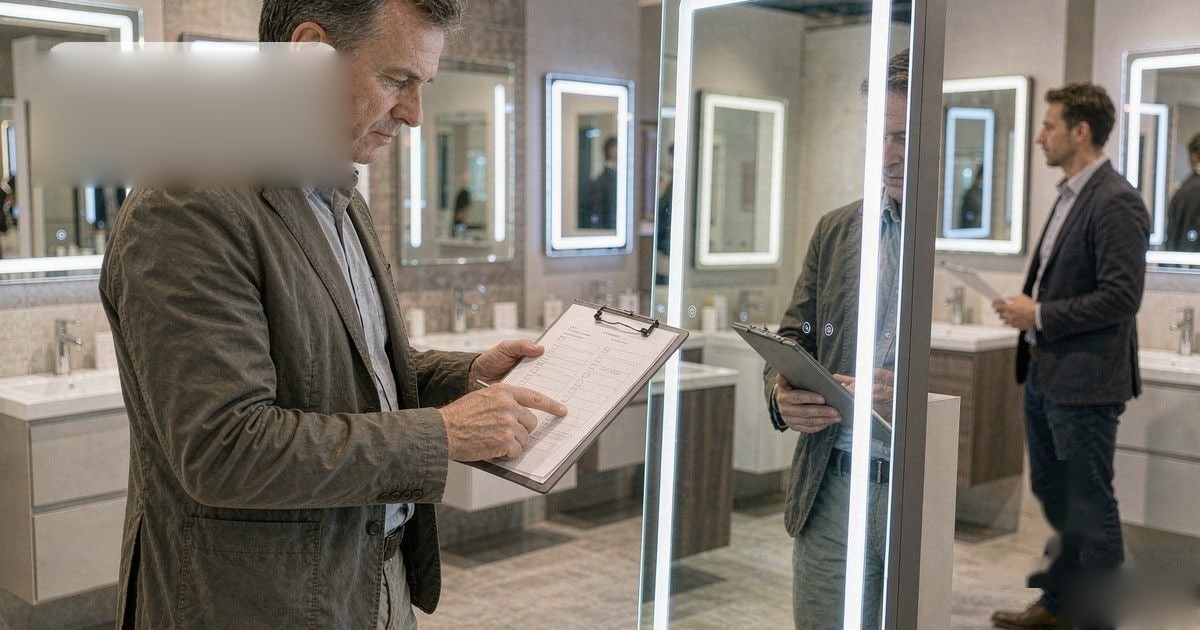
Push the phasing question on your supplier early. Can they hold the spec and price across two or three release waves? A factory building to order can; a reseller juggling spot inventory can't promise you February will match October. For chain work, custom sizes, logo printing and OEM finishes let each property in the portfolio carry the brand without a separate sourcing project.
A Round Built for This Kind of Work
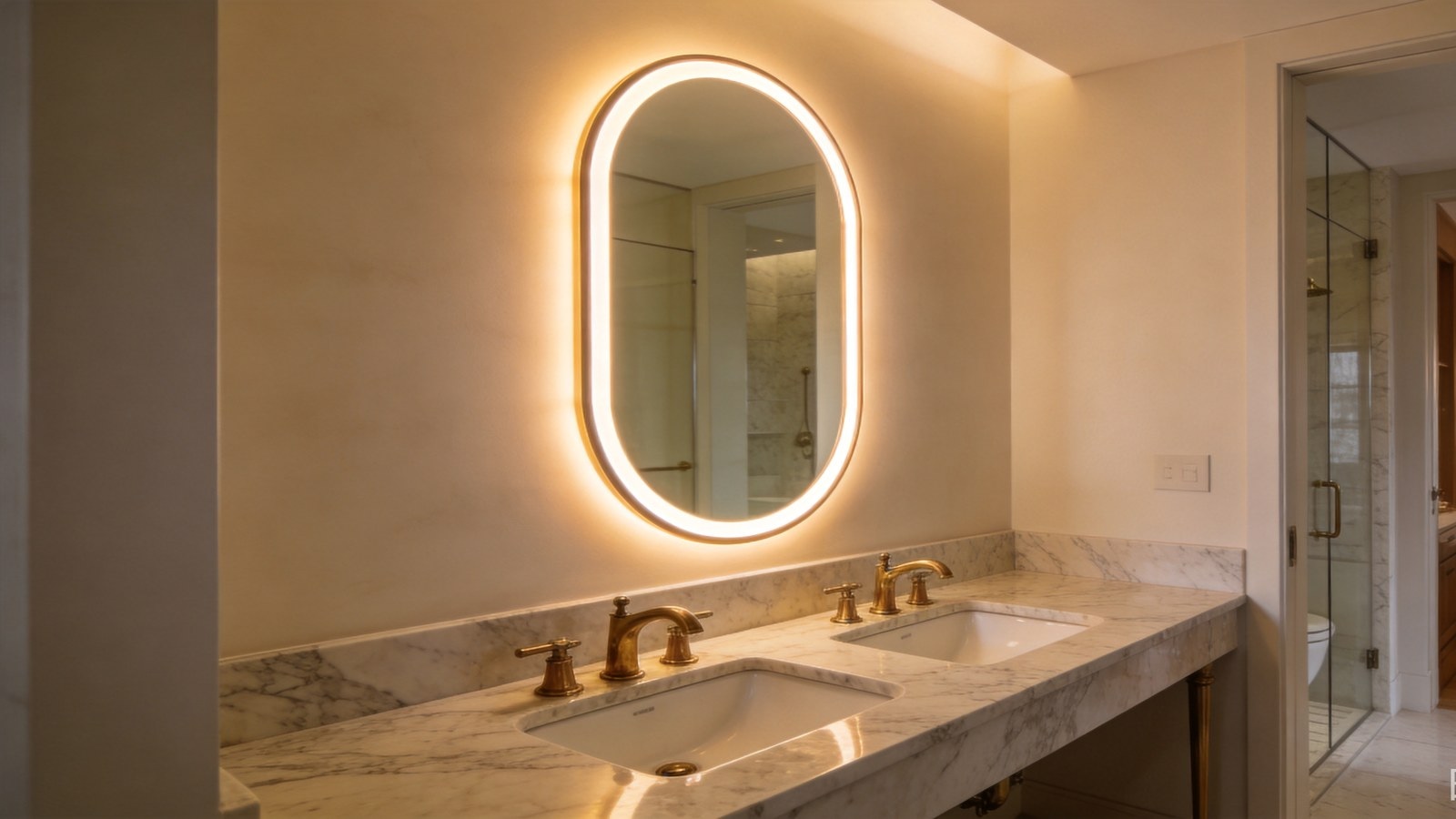
The YuCron Oval LED Hotel Bathroom Mirror (YC-SM-E0026) reads like a hotel spec sheet: frameless vertical oval at 40×80 to 70×150 cm, 5 mm copper-free silver glass with anti-shatter film, warm LED edge lighting with a touch switch, rapid-heating anti-fog pad with auto-off, IP54 sealed junction box, ETL / UL / CE / RoHS / SAA marks, hardwired or plug-in, and OEM/ODM sizing to drawing. MOQ 50, lead time 15–25 days.
That last line matters more than it looks. A spec that clears hotel review, a factory that answers in English within four working hours, and an MOQ that fits a mock-up-room-first rollout — that combination is what keeps a renovation calendar intact.
The References That Settle Spec Disputes
Facilities teams argue from documents, not adjectives. The wet-area rating on a bathroom mirror traces to the IEC 60529 ingress-protection code — ask for the test report that names the enclosure — and the US Consumer Product Safety Commission keeps the public record of mirror-related incidents and recalls a US project buyer can check before awarding a 180-room rollout.
| Spec-sheet claim | What to ask for | Where it is checkable |
|---|---|---|
| "IP65 wet-area rated" | Test report naming the enclosure | IEC 60529 |
| "Hotel-grade glass" | Impact-test class documentation | Supplier file + CPSC record |
| "10-year finish" | Salt-spray or humidity test data | Supplier QC record |
FAQ
What MOQ should a hotel mirror project expect?
For factory-direct bathroom mirrors, plan around 50 pieces minimum. That covers a mock-up room plus spares on smaller properties, and phases cleanly across floors on larger ones. Project volumes are negotiable — say the property count and room count when you ask.
How should a multi-floor rollout be sequenced?
Mock-up room first, always. Approve the finish and lighting in a real room, then release orders floor by floor against the 15–25 day lead time. Ask the supplier to lock spec and pricing across all waves before the first release.
What IP rating does a guest bathroom need?
IP65 for over-sink and shower-adjacent mounts. Sheltered placements can go lower, but keep one product family across the property so maintenance stocks one set of parts.
Can the mirrors carry our hotel brand?
Yes — logo printing and OEM/ODM finishes are standard on factory-direct lines, with up to 50 colour and size combinations per project on this model. Free sample development applies to qualified OEM projects.
How do we verify light consistency across a big order?
Ask for the CCT binning tolerance in writing, then check the delivered units against a meter at receiving, before installation crews touch the rooms.
Spec It Once, Sleep Through the Rollout
Wet-area rating, written CCT tolerance, copper-free glass, phased MOQ — get those four on paper and the mirror stops being the risky line item in your renovation budget. Category newcomers can start from the smart mirror wholesale guide. For a full spec sheet, pricing tiers and OEM options on the oval hotel line, request a quote — the factory replies in English within four working hours.